Click to Expand Table of Contents
Table of Contents
Introduction
Starting a private label dress shoe brand is far more achievable today than it was a decade ago. In the past, entering the footwear industry often required substantial investments in manufacturing facilities, production equipment, sourcing networks, and specialized labor. For many entrepreneurs, these requirements created significant financial barriers and made launching a premium footwear brand a high-risk endeavor.
The industry has evolved considerably. Advances in e-commerce, direct-to-consumer (DTC) sales models, and global manufacturing partnerships have transformed the way footwear brands are built. Today, entrepreneurs, menswear brands, retailers, and distributors can introduce their own dress shoe collections without owning a factory or managing complex production operations.
At the same time, consumer expectations have shifted. Buyers are no longer focused solely on brand names; they are increasingly paying attention to craftsmanship, leather quality, construction methods, comfort, and long-term value. This trend has created new opportunities for independent footwear brands to compete in the premium segment by offering well-made products and a clear brand identity.
One area that continues to attract strong consumer interest is Goodyear welted footwear. Known for its durability, resoleable construction, and heritage craftsmanship, Goodyear welting remains one of the most respected manufacturing methods in the men’s dress shoe industry. As a result, many emerging brands are choosing to position themselves in the premium market rather than competing solely on price.
From our experience at Hengxin Shoe Factory, we have seen a growing number of entrepreneurs successfully launch private label dress shoe brands by leveraging experienced manufacturing partners instead of investing in their own production facilities. This approach allows brands to focus on product development, marketing, customer acquisition, and long-term growth while relying on an established manufacturer to manage sourcing, sampling, production, and quality control.
Choosing the right manufacturing partner is often one of the most important decisions a new footwear brand will make. Factors such as product quality, leather sourcing capabilities, customization options, production flexibility, and scalability can directly influence a brand’s ability to grow and compete in the market.
With more than 14 years of experience specializing in premium men’s dress shoes and Goodyear welted footwear, Hengxin Shoe Factory has supported footwear brands, wholesalers, distributors, retailers, and start-up companies across the United States, Europe, Australia, and the Middle East. Through private label, OEM, and ODM manufacturing services, we help brands transform concepts into market-ready footwear collections.
In this guide, we will explore the key steps involved in launching a private label dress shoe brand—from defining your target market and selecting the right product categories to choosing a reliable manufacturing partner and building a scalable footwear business for long-term success.
Why Is Now the Best Time to Start a Private Label Dress Shoe Brand?
Over the past decade, the men’s dress shoe industry has changed significantly. What was once a business dominated by large footwear companies is now increasingly accessible to entrepreneurs, menswear brands, retailers, and e-commerce businesses seeking to launch their own private label collections.
From our experience at Hengxin Shoe Factory, one of the biggest changes has been the growing number of start-up brands entering the market without owning manufacturing facilities. Many of these businesses are leveraging private label, OEM, and ODM partnerships to launch premium footwear collections with significantly lower investment and operational risk than was possible ten years ago.
Several market trends are driving this shift, creating new opportunities for brands that can combine quality products with effective brand positioning.
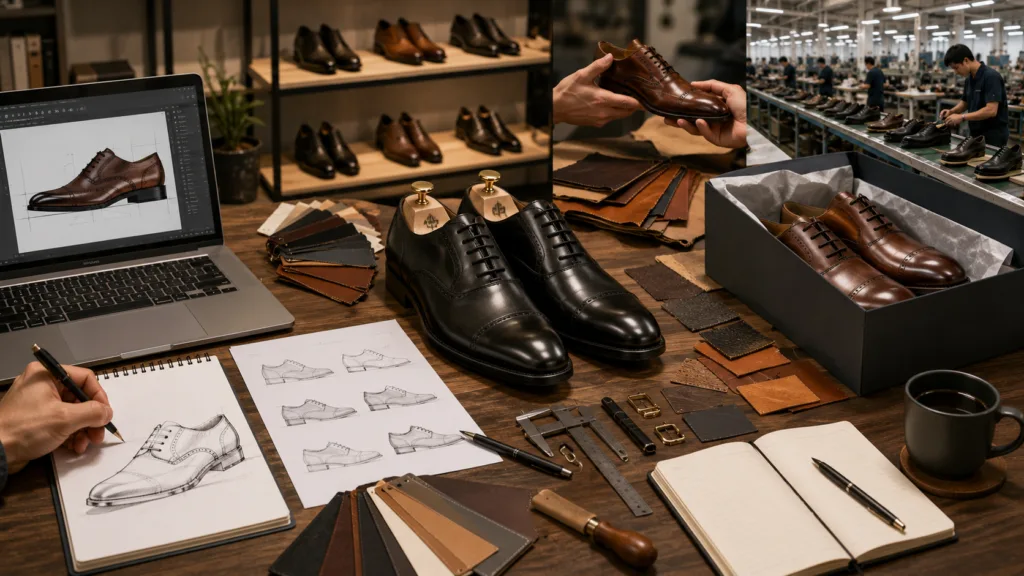
The Premium Men’s Dress Shoe Market Remains Resilient
While casual footwear has become increasingly popular, premium dress shoes continue to maintain strong demand across multiple customer segments.
Business professionals, wedding customers, luxury consumers, and style-conscious buyers still view high-quality dress shoes as an essential part of their wardrobe.
In recent years, we have observed that customers are placing greater emphasis on:
- Leather quality
- Construction methods
- Comfort and durability
- Long-term value
- Brand authenticity
This trend is particularly beneficial for emerging brands because consumers are increasingly willing to consider independent labels that offer superior products rather than relying solely on established brand names.
| Market Trend | Opportunity for New Brands |
|---|---|
| Premiumization | Higher profit margins |
| Growth of Wedding Market | Consistent seasonal demand |
| Consumer Focus on Quality | Easier premium positioning |
| Expansion of E-Commerce | Lower barriers to entry |
| Demand for Craftsmanship | Greater product differentiation |
For entrepreneurs willing to focus on quality and brand development, the market remains highly attractive.
E-Commerce Has Lowered the Barriers to Entry
One of the most significant developments in the footwear industry has been the growth of direct-to-consumer business models.
Ten years ago, launching a footwear brand often required relationships with wholesalers, distributors, or physical retailers. Today, platforms such as Shopify allow brands to reach customers globally without maintaining expensive retail infrastructure.
This shift gives new brands greater control over:
- Pricing strategy
- Customer experience
- Marketing campaigns
- Brand storytelling
- Product positioning
As a result, smaller brands can compete effectively in specialized market segments without requiring the resources of larger footwear companies.
Consumers Are More Open to Independent Footwear Brands
Another major industry shift is the way customers evaluate products.
Modern consumers increasingly purchase based on value rather than brand age or market size.
When shopping for premium dress shoes, customers often focus on:
- Leather selection
- Construction quality
- Design aesthetics
- Brand philosophy
- Product reviews
At Hengxin Shoe Factory, we have seen many young footwear brands successfully compete against established companies by focusing on product quality and customer experience rather than attempting to compete on price alone.
This trend creates significant opportunities for entrepreneurs launching private label footwear brands.
Demand for Goodyear Welted Shoes Continues to Grow
One of the strongest trends within the premium dress shoe market is the increasing demand for Goodyear welted footwear.
Experienced shoe buyers often view Goodyear welt construction as a benchmark of quality because of its durability, repairability, and long-term value.
Compared with cemented footwear, Goodyear welted shoes offer several advantages:
| Goodyear Welt Advantage | Customer Benefit |
|---|---|
| Resoleable Construction | Extended product lifespan |
| Enhanced Durability | Better long-term value |
| Improved Comfort | Better wear over time |
| Heritage Craftsmanship | Stronger premium appeal |
| Premium Positioning | Higher perceived value |
As consumers become more educated about footwear construction, many are actively seeking Goodyear welted shoes when purchasing premium dress footwear.
For emerging brands, incorporating Goodyear welted collections can create a strong competitive advantage while supporting premium pricing strategies.
You No Longer Need to Build Your Own Factory
Perhaps the most important reason why now is an ideal time to launch a private label dress shoe brand is that entrepreneurs no longer need to invest in their own production facilities.
Today, experienced manufacturing partners can provide:
- Product development
- Material sourcing
- Sample creation
- Production management
- Quality control
- Brand customization
This allows entrepreneurs to focus on building their business rather than managing manufacturing operations.
At Hengxin Shoe Factory, we have spent more than 14 years helping footwear brands develop and scale premium men’s dress shoe collections through private label, OEM, and ODM manufacturing services. From initial sample development to large-scale production, our goal is to help brands bring high-quality footwear products to market efficiently and with lower operational risk.
For most new brands, partnering with an experienced manufacturer remains the fastest and most practical path to entering the premium dress shoe industry.
5 Essential Questions Every Entrepreneur Should Answer Before Launching a Private Label Dress Shoe Brand
One of the most common misconceptions about starting a footwear brand is that success begins with product design. In reality, successful brands are usually built long before the first sample is produced.
After working with footwear brands for more than 14 years, we have found that the strongest private label dress shoe brands share one characteristic: they have a clear market position from the very beginning.
Before discussing leather options, shoe construction, or manufacturing details, every entrepreneur should answer the following five strategic questions.
Who Are You Building the Brand For?
Your target customer influences almost every decision you make, from shoe design and material selection to pricing and marketing strategy.
At Hengxin Shoe Factory, we have worked with brands targeting very different customer segments. Some focus on corporate professionals looking for reliable business footwear, while others specialize in wedding collections or premium Goodyear welted dress shoes for footwear enthusiasts.
The clearer your customer profile, the easier it becomes to develop products that meet their expectations.
| Target Customer | Typical Priorities | Recommended Product Direction |
|---|---|---|
| Business Professionals | Comfort, durability, professional appearance | Oxford Shoes, Derby Shoes |
| Wedding Customers | Elegance, premium presentation | Oxford Shoes, Monk Strap Shoes |
| Luxury Consumers | Craftsmanship, exclusivity, leather quality | Goodyear Welted Collections |
| Style-Conscious Professionals | Distinctive design and versatility | Monk Strap Shoes, Loafers |
Many successful brands begin by serving one specific customer group rather than attempting to appeal to everyone.
Which Product Categories Will Form Your Core Collection?
Another common mistake among new footwear entrepreneurs is launching too many products at once.
From our experience, brands often achieve faster market validation when they focus on a small number of carefully selected styles.
The most popular dress shoe categories include:
| Product Category | Positioning | Market Opportunity |
|---|---|---|
| Oxford Shoes | Formal and timeless | Corporate and wedding markets |
| Derby Shoes | Versatile business footwear | Daily professional wear |
| Monk Strap Shoes | Premium and fashion-oriented | Luxury and style-focused consumers |
| Loafers | Smart casual versatility | Growing lifestyle segment |
At Hengxin Shoe Factory, many new brands begin with two or three core styles before gradually expanding into broader collections.
This approach reduces inventory risk while allowing businesses to better understand customer demand.
Where Do You Want Your Brand to Sit in the Market?
Pricing is more than a financial decision—it is a positioning decision.
The price point you choose will influence:
- Product specifications
- Leather quality
- Construction methods
- Packaging standards
- Customer expectations
| Market Position | Typical Focus |
|---|---|
| Entry-Level | Affordability |
| Mid-Range | Balance between price and quality |
| Premium | Craftsmanship, materials, durability |
Over the past few years, we have seen increasing demand for premium dress shoes, particularly among consumers seeking better value and longer-lasting products.
This trend explains why many emerging brands are incorporating Goodyear welted construction, Full Grain Leather, and Calfskin Leather into their collections rather than competing solely on price.
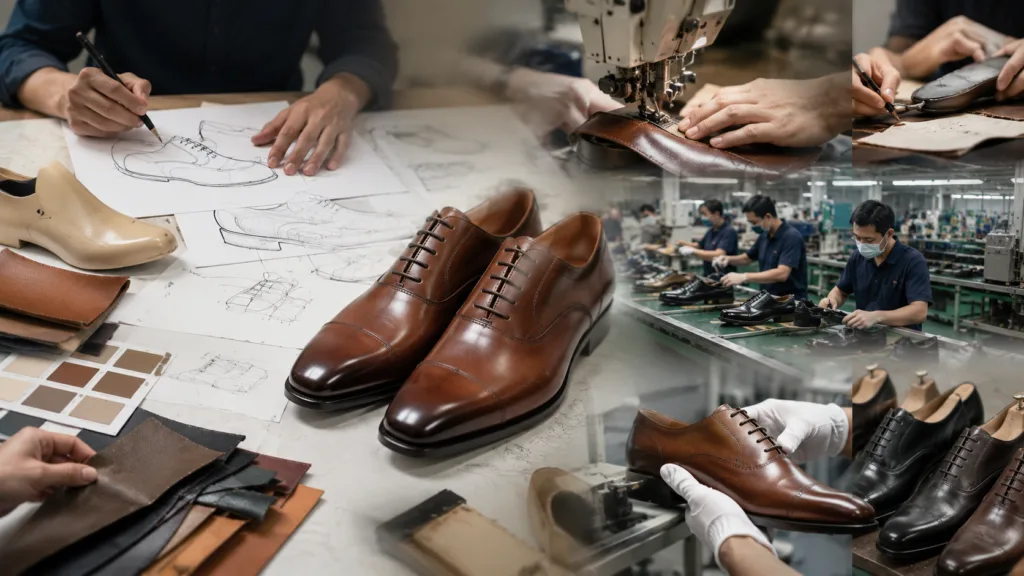
What Should Your Brand Be Known For?
A successful footwear brand needs more than products—it needs a recognizable identity.
Customers should immediately understand what makes your brand different from competitors.
Common positioning strategies include:
| Brand Direction | Key Characteristics |
|---|---|
| Classic Business Wear | Timeless designs and professional appearance |
| Luxury Footwear | Premium materials and exclusivity |
| Italian-Inspired Style | Contemporary elegance and fashion focus |
| British Heritage | Traditional craftsmanship and Goodyear welt construction |
Your positioning should be reflected throughout your business, including:
- Product design
- Leather selection
- Packaging
- Website design
- Marketing communications
The strongest brands maintain consistency across every customer touchpoint.
How Will You Reach Your Customers?
Even the best products cannot succeed without an effective sales strategy.
Before production begins, entrepreneurs should identify their primary sales channels.
| Sales Channel | Advantages | Considerations |
|---|---|---|
| Shopify Store | Complete brand control | Requires marketing investment |
| Amazon | Immediate access to large audiences | Higher competition |
| Wholesale Distribution | Larger order volumes | Lower margins |
| Retail Stores | Local market presence | Higher operating costs |
Many successful footwear brands start with a Shopify-based direct-to-consumer model before expanding into wholesale and retail channels.
This approach allows them to build brand awareness while maintaining greater control over pricing and customer relationships.
Building a Strong Foundation Before Production
Answering these five questions before developing samples can save considerable time, money, and effort later in the process.
At Hengxin Shoe Factory, we have found that brands with a clearly defined customer profile, product strategy, pricing model, and sales plan typically move through the development process much more efficiently than brands that begin production without a clear direction.
Whether you plan to launch a collection of Oxford Shoes, Derby Shoes, Monk Strap Shoes, Loafers, or premium Goodyear Welted footwear, a well-defined strategy will make every decision—from product development to marketing—more focused and more effective.
How to Find the Right Private Label Dress Shoe Manufacturer?
Selecting a manufacturing partner is one of the most important decisions you will make when building a private label dress shoe brand. Product quality, customer satisfaction, inventory performance, and long-term brand growth are all heavily influenced by the factory you choose.
After more than 14 years of manufacturing premium men’s dress shoes, we have seen many brands succeed—and some struggle—for reasons that often have little to do with marketing or product design. In many cases, the difference comes down to choosing the right manufacturing partner from the beginning.
While price is often the first factor entrepreneurs consider, experienced footwear brands typically evaluate manufacturers based on expertise, production capabilities, customization services, quality control systems, and long-term scalability.
Before committing to a factory, here are the key areas you should evaluate.
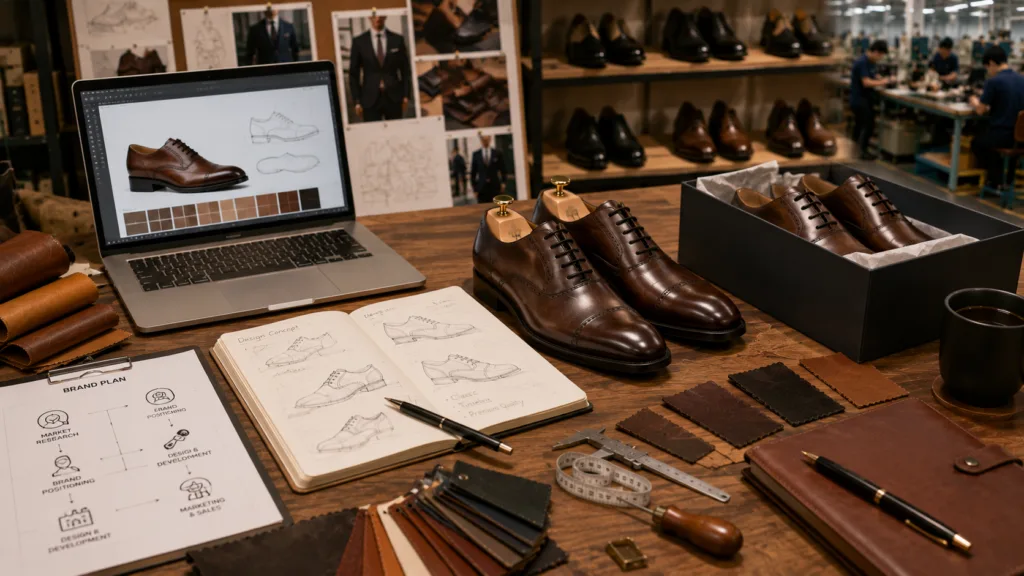
Look for Proven Experience, Not Just Production Capacity
Many factories can produce shoes. Far fewer have extensive experience manufacturing premium men’s dress shoes for international markets.
Experience matters because it affects every stage of production, including:
- Material sourcing
- Sample development
- Production efficiency
- Quality control
- Delivery reliability
At Hengxin Shoe Factory, our 14+ years of experience have allowed us to refine supply chain management, sampling procedures, and quality assurance systems that help brands reduce production risks.
| Experience Factor | Benefit for Brand Owners |
|---|---|
| Mature Supply Chain | Stable material sourcing |
| Refined Sampling Process | Faster development cycles |
| Experienced Craftsmen | Consistent product quality |
| Established QC System | Reduced defect rates |
| Export Experience | Reliable international fulfillment |
When evaluating a factory, ask about real-world experience—not just production capacity.
Choose a Manufacturer That Supports True Private Label Development
Many suppliers claim to offer private label services, but their capabilities are often limited to placing a logo inside an existing product.
A true private label manufacturer should help brands create products that reflect their own identity.
Important customization capabilities include:
| Service | Why It Matters |
|---|---|
| Logo Customization | Builds brand recognition |
| Custom Packaging | Improves customer experience |
| Leather Selection | Supports product differentiation |
| Color Customization | Aligns with brand aesthetics |
| Patina Development | Creates premium exclusivity |
| Collection Planning | Supports long-term growth |
At Hengxin Shoe Factory, private label development extends beyond manufacturing. We regularly assist brands with leather selection, collection planning, branding elements, and product positioning to help create footwear collections that stand out in competitive markets.
Make Sure the Factory Supports Small Batch Production
One of the biggest challenges facing new footwear brands is inventory risk.
Many entrepreneurs believe they need to place large orders to achieve competitive pricing. In reality, successful brands often validate products through small production runs before scaling.
This approach allows brands to:
- Test market demand
- Gather customer feedback
- Reduce inventory exposure
- Improve future product decisions
| Business Stage | Recommended Production Model |
|---|---|
| Product Validation | Sampling |
| Initial Launch | Small Batch Production |
| Market Expansion | Medium Production Runs |
| Brand Growth | Large Scale Manufacturing |
From our experience, brands that start with manageable production volumes often make better long-term decisions than those that overinvest in inventory during the early stages.
Evaluate High-End Manufacturing Expertise
If your goal is to build a premium dress shoe brand, construction quality should be one of your highest priorities.
One of the clearest indicators of advanced shoemaking expertise is experience with Goodyear Welt Construction.
Unlike standard cemented footwear, Goodyear welted shoes offer:
| Goodyear Welt Benefit | Business Advantage |
|---|---|
| Resoleable Construction | Higher customer value |
| Superior Durability | Longer product lifespan |
| Enhanced Comfort | Better customer satisfaction |
| Heritage Craftsmanship | Stronger brand story |
| Premium Positioning | Higher retail pricing potential |
This is one reason many successful premium footwear brands choose Goodyear welted collections as the foundation of their product strategy.
At Hengxin Shoe Factory, Goodyear welt manufacturing has been a core specialization for more than 14 years, serving brands that prioritize craftsmanship, durability, and long-term product value.
Choose a Partner That Can Grow With Your Business
The best manufacturing relationships are built for long-term growth.
As your business expands, your factory should be capable of supporting:
- Additional product categories
- New leather programs
- Increased production volumes
- New market opportunities
- Ongoing product development
Many of our clients initially launch a small collection of Oxford Shoes or Derby Shoes before expanding into Monk Strap Shoes, Loafers, and broader footwear collections.
Having a manufacturing partner capable of supporting that growth eliminates the need to rebuild supply chains as the business scales.
Why Many Global Brands Work With Hengxin Shoe Factory
A manufacturing partner should provide more than production capacity—it should provide expertise, consistency, and strategic support.
At Hengxin Shoe Factory, we combine:
- 14+ years of manufacturing experience
- Goodyear welt specialization
- Premium leather sourcing
- Private label development services
- Flexible production capacity
- Scalable manufacturing solutions
Our team supports footwear brands, wholesalers, distributors, retailers, and start-ups throughout every stage of product development, from initial concepts and sample creation to large-scale production and global distribution.
Ultimately, the right factory is not simply a supplier. It is a long-term partner that can help transform a product idea into a sustainable and profitable footwear brand.
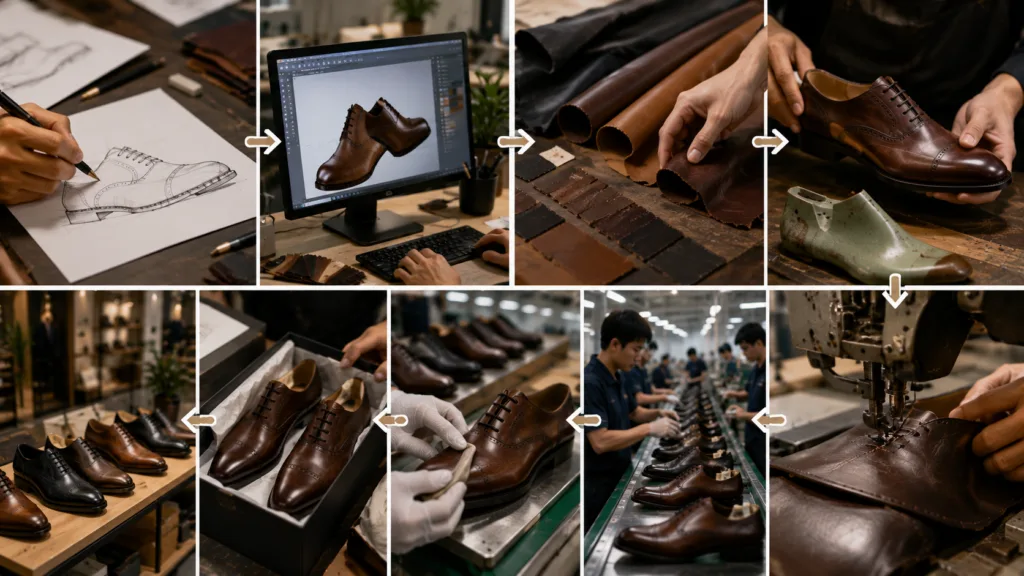
From Concept to Market: How Private Label Dress Shoe Brands Are Actually Developed
Many first-time entrepreneurs assume that launching a private label dress shoe brand is a highly complex process involving dozens of manufacturing decisions and significant technical expertise. While footwear development does involve multiple stages, the process becomes far more manageable when working with an experienced manufacturing partner.
After more than 14 years of developing premium men’s dress shoes for global brands, we have found that the most successful projects follow a structured workflow that moves from product planning and sample development to market testing and large-scale production.
Understanding this process can help entrepreneurs avoid costly mistakes, reduce development timelines, and launch products with greater confidence.
Stage 1: Define Your Core Product Collection
Every successful footwear brand begins with a clear product strategy.
One of the most common mistakes we see is brands attempting to launch too many styles at once. In most cases, starting with a focused collection allows for faster market validation and lower inventory risk.
Popular categories include:
| Product Category | Positioning | Typical Customer |
|---|---|---|
| Oxford Shoes | Formal and timeless | Business professionals and wedding customers |
| Derby Shoes | Versatile business footwear | Everyday professional wear |
| Monk Strap Shoes | Fashion-oriented premium footwear | Style-conscious consumers |
| Loafers | Smart casual and travel-friendly | Modern lifestyle customers |
At Hengxin Shoe Factory, many successful private label brands begin with two or three core styles before expanding into broader collections.
Before development begins, brands should clearly define:
- Target customers
- Product categories
- Price positioning
- Brand identity
A well-defined strategy provides direction for every decision that follows.
Stage 2: Select Materials That Match Your Brand Positioning
Material selection plays a significant role in both product quality and perceived value.
Different materials communicate different levels of quality to customers.
The most commonly selected leather options include:
| Leather Type | Key Characteristics | Recommended Positioning |
|---|---|---|
| Full Grain Leather | Natural texture and maximum durability | Premium collections |
| Calfskin Leather | Soft feel and refined appearance | Business and formal footwear |
| Premium Customized Leather | Custom colors and finishes | Private label collections |
From our experience, premium dress shoe brands often prioritize Full Grain Leather and Calfskin Leather because they offer the durability, comfort, and appearance expected by higher-end consumers.
Material decisions should always align with the brand’s target market and pricing strategy.
Stage 3: Transform Generic Products Into Your Brand
Private label manufacturing is about far more than placing a logo on a shoe.
The most successful brands create a consistent identity across every customer touchpoint.
Customization opportunities typically include:
| Brand Element | Purpose |
|---|---|
| Logo Embossing | Brand recognition |
| Custom Shoe Boxes | Improved unboxing experience |
| Dust Bags | Premium presentation |
| Hang Tags | Brand storytelling |
| Leather Colors | Product differentiation |
| Patina Finishes | Luxury positioning |
At Hengxin Shoe Factory, we regularly assist brands with packaging development, logo placement, leather selection, and collection planning to help create products that reflect their unique identity.
Stage 4: Develop and Refine Samples
Before production begins, every collection should go through a comprehensive sampling stage.
This is often where product quality is determined.
The sampling process typically includes:
Design Verification
Confirming that the final product matches the original concept.
Fit Evaluation
Reviewing:
- Comfort
- Last shape
- Sizing consistency
- Wearability
Material Confirmation
Verifying:
- Leather quality
- Color accuracy
- Sole specifications
- Hardware details
| Sample Evaluation Area | Purpose |
|---|---|
| Design Accuracy | Matches approved concept |
| Fit & Comfort | Meets customer expectations |
| Material Quality | Supports brand positioning |
| Construction Standards | Ensures durability |
| Packaging Review | Confirms brand consistency |
From our experience, brands that invest time in sample refinement encounter significantly fewer production issues later.
Stage 5: Validate the Market Through Small Batch Production
Once samples are approved, many successful footwear brands avoid immediately moving into large-scale production.
Instead, they begin with smaller production runs.
This approach allows brands to:
- Test customer demand
- Collect real-world feedback
- Evaluate product performance
- Reduce inventory exposure
- Improve future product decisions
| Launch Strategy | Business Benefit |
|---|---|
| Small Batch Production | Lower financial risk |
| Market Validation | Better forecasting |
| Customer Feedback | Faster product improvement |
| Controlled Inventory | Improved cash flow |
At Hengxin Shoe Factory, many start-up brands use small-batch production as a practical way to enter the market while minimizing risk.
Stage 6: Scale Production as Demand Grows
Once a product has demonstrated market demand, production can gradually be expanded.
At this stage, manufacturers should be capable of supporting both operational growth and product diversification.
A scalable manufacturing partner should support:
| Growth Stage | Manufacturing Requirement |
|---|---|
| Initial Launch | Small Batch Production |
| Market Expansion | Medium Production Volumes |
| Brand Growth | Large Scale Manufacturing |
| Product Diversification | New Product Development |
Many of our long-term clients began with a single Oxford shoe collection and later expanded into Derby Shoes, Monk Strap Shoes, Loafers, and broader premium footwear lines.
Having a manufacturing partner capable of supporting that growth simplifies operations and improves long-term stability.
How Hengxin Shoe Factory Supports the Entire Development Journey
A successful footwear collection is rarely the result of manufacturing alone. It requires strategic planning, material expertise, product development experience, and consistent quality control.
At Hengxin Shoe Factory, we support brands through every stage of development, including:
- Product planning
- Leather sourcing
- Private label customization
- Sample development
- Quality assurance
- Small batch production
- Large-scale manufacturing
With more than 14 years of experience specializing in premium men’s dress shoes and Goodyear welted footwear, our team helps brands move from concept to market more efficiently while reducing common development risks.
Whether you are launching your first collection or expanding an established footwear brand, a structured development process and an experienced manufacturing partner can significantly improve your chances of long-term success.
How to Reduce Risk and Successfully Launch Your First Dress Shoe Brand
Starting a private label dress shoe brand can be an exciting business opportunity, but it also comes with challenges that many first-time entrepreneurs underestimate.
After working with footwear brands, wholesalers, retailers, and start-ups for more than 14 years, we have found that most early-stage problems fall into a handful of predictable categories. In many cases, brand success is not determined by product ideas alone, but by how effectively risks are managed during the development and launch process.
The good news is that most of these risks can be significantly reduced with proper planning, realistic production strategies, and the support of an experienced manufacturing partner.
Below are five of the most common challenges we see among new footwear brands—and the practical steps that can help overcome them.
Risk #1: Investing Too Much Inventory Before Validating Demand
One of the most common mistakes made by new footwear brands is ordering large quantities before understanding real customer demand.
While higher production volumes can reduce the cost per pair, they can also create significant inventory pressure if products do not sell as expected.
Common consequences include:
- Excess stock sitting in warehouses
- Reduced cash flow
- Increased storage costs
- Discounting pressure
- Slower business growth
At Hengxin Shoe Factory, many successful start-up brands begin with smaller production runs to validate their collections before expanding.
Recommended Solution: Start with Small Batch Production
A controlled launch allows brands to:
- Test customer demand
- Gather market feedback
- Identify best-selling styles
- Improve future product decisions
- Minimize financial exposure
| Production Strategy | Risk Level | Recommended For |
|---|---|---|
| Large Initial Production | High | Established brands |
| Small Batch Production | Low | Start-up brands |
| Sampling and Market Testing | Very Low | Product validation stage |
Brands that scale production gradually often make better inventory decisions and preserve working capital during their early growth stages.
Risk #2: Product Quality Issues That Damage Brand Reputation
In today’s digital marketplace, product quality directly affects customer reviews, repeat purchases, and brand reputation.
A single poorly executed product launch can create long-term challenges for a new brand.
Customers purchasing premium dress shoes expect:
- Consistent sizing
- Comfortable fit
- Reliable construction
- Quality leather materials
- Long-lasting durability
This is particularly important for brands positioned in the premium segment.
Recommended Solution: Work With an Experienced Manufacturer
When evaluating factories, consider more than pricing.
Key indicators of manufacturing reliability include:
| Manufacturing Indicator | Why It Matters |
|---|---|
| Industry Experience | Consistent production standards |
| Quality Control Systems | Lower defect rates |
| Established Sampling Procedures | Better product validation |
| Premium Material Sourcing | Improved product performance |
| Export Experience | Reliable international quality standards |
At Hengxin Shoe Factory, every project undergoes sample verification, material inspection, and production quality control procedures designed to help brands maintain consistent product standards.
Risk #3: Lack of Product Differentiation
The men’s footwear market is highly competitive.
Many new brands enter the market with products that look nearly identical to existing offerings, making it difficult to stand out.
When products become interchangeable, competition often shifts to pricing rather than value.
Recommended Solution: Build a Distinctive Collection
Successful brands create differentiation through:
- Unique designs
- Premium leather programs
- Custom color options
- Exclusive packaging
- Signature collections
- Goodyear welted construction
| Differentiation Strategy | Business Benefit |
|---|---|
| Premium Leather Selection | Higher perceived value |
| Goodyear Welt Construction | Premium market positioning |
| Custom Packaging | Stronger customer experience |
| Exclusive Collections | Improved brand recognition |
| Unique Color Programs | Reduced price competition |
At Hengxin Shoe Factory, many brands use Goodyear welted construction as a core differentiator because it allows them to position products in the premium segment while communicating craftsmanship and long-term value.
Risk #4: Limited Start-Up Capital
Many entrepreneurs delay launching their footwear business because they believe manufacturing requires substantial financial resources.
Historically, this was true. Building a factory involved significant investment in facilities, machinery, labor, and supply chain infrastructure.
Today, the business landscape is very different.
Recommended Solution: Use the Private Label Manufacturing Model
Private label manufacturing allows brands to leverage established production systems without building their own facilities.
Instead of investing in manufacturing infrastructure, entrepreneurs can focus resources on:
- Brand development
- Product positioning
- Marketing
- Customer acquisition
- Business growth
| Traditional Manufacturing Model | Private Label Manufacturing |
|---|---|
| High capital investment | Lower startup costs |
| Requires factory ownership | No production facility required |
| Complex operations | Simplified workflow |
| Longer setup period | Faster market entry |
| Higher operational risk | Lower operational risk |
For most emerging footwear brands, private label manufacturing remains the most efficient and cost-effective route to market.
Risk #5: Unstable Supply Chains and Manufacturing Inconsistency
Many footwear brands struggle not because of weak demand, but because of unreliable manufacturing support.
Common issues include:
- Production delays
- Material shortages
- Inconsistent quality
- Supplier turnover
- Limited production flexibility
These challenges can negatively affect customer satisfaction and long-term growth.
Recommended Solution: Build a Long-Term Manufacturing Partnership
The most successful footwear brands typically view their factory as a strategic partner rather than simply a supplier.
Long-term manufacturing relationships provide:
| Partnership Benefit | Business Impact |
|---|---|
| Stable Supply Chains | Reduced operational risk |
| Consistent Product Quality | Stronger customer confidence |
| Faster Product Development | Improved responsiveness |
| Scalable Production Capacity | Easier business expansion |
| Better Forecasting | More predictable growth |
Over the years, many brands working with Hengxin Shoe Factory have expanded from a small collection of Oxford Shoes or Derby Shoes into broader product portfolios that include Monk Strap Shoes, Loafers, and premium Goodyear welted collections.
Why Experience Matters When Managing Risk
Risk is a natural part of building any business, but most footwear start-up challenges are both predictable and manageable.
From our experience at Hengxin Shoe Factory, the brands that achieve sustainable growth are not necessarily the ones with the largest budgets. They are the brands that validate products carefully, manage inventory responsibly, focus on product quality, and build strong manufacturing partnerships from the beginning.
With more than 14 years of experience in premium men’s dress shoe manufacturing, private label development, and Goodyear welted shoe production, our team helps brands reduce development risks while creating products capable of competing in global markets.
Launching a dress shoe brand will always require commitment and planning. However, with the right strategy and the right manufacturing partner, building a successful footwear brand is far more achievable than many entrepreneurs initially believe.
Conclusion
Building a private label dress shoe brand is no longer reserved for large footwear companies with extensive manufacturing infrastructure. Today, entrepreneurs, menswear brands, wholesalers, retailers, and distributors can enter the premium footwear market more efficiently by leveraging experienced manufacturing partners and proven production systems.
Throughout this guide, one theme remains consistent: successful footwear brands are built on clear positioning, quality products, and reliable execution. Choosing the right product categories, selecting premium materials, developing a distinctive brand identity, and working with an experienced manufacturer are all critical steps toward long-term success.
From our experience at Hengxin Shoe Factory, brands that achieve sustainable growth are rarely the ones that launch the largest collections or invest the most capital at the beginning. Instead, they focus on validating their products, understanding their target customers, and building a strong foundation before scaling production.
This is particularly true in the premium dress shoe segment, where customers value craftsmanship, leather quality, durability, and long-term value. Product categories such as Oxford shoes, Derby shoes, Monk Strap shoes, and Loafers continue to offer opportunities for brands that can combine quality manufacturing with a clear market position.
For more than 14 years, Hengxin Shoe Factory has partnered with footwear brands around the world to develop premium men’s dress shoes through Private Label, OEM, and ODM manufacturing services. Our expertise in Goodyear welted construction, premium leather sourcing, product development, and scalable production allows brands to move from concept to market with greater confidence and lower operational risk.
Launching a footwear brand will always require commitment, planning, and patience. However, with the right strategy and the right manufacturing partner, the process becomes significantly more manageable than many entrepreneurs initially expect.
If you are considering launching your own private label dress shoe brand, the best time to start is when you have a clear vision and a reliable team behind you. With proper preparation and experienced manufacturing support, a single product idea can evolve into a successful and recognizable footwear brand serving customers for years to come.
About Hengxin Shoe Factory
Hengxin Shoe Factory is a professional men’s dress shoe manufacturer with more than 14 years of experience in Private Label, OEM, and ODM shoe manufacturing.
We specialize in producing premium leather dress shoes for footwear brands, wholesalers, distributors, retailers, and e-commerce businesses around the world.
Our Core Product Categories
- Oxford Shoes
- Derby Shoes
- Monk Strap Shoes
- Loafers
- Goodyear Welted Shoes
Our Manufacturing Services
- Private Label Shoe Manufacturing
- OEM Dress Shoe Production
- ODM Shoe Development
- Logo Customization
- Custom Packaging Solutions
- Leather Sourcing
- Sample Development
- Small Batch Production
- Large Scale Manufacturing
Why Brands Work With Hengxin
| Manufacturing Strength | Benefit |
|---|---|
| 14+ Years of Experience | Reliable production expertise |
| Goodyear Welt Specialization | Premium product positioning |
| Flexible MOQ Options | Suitable for new and growing brands |
| Premium Leather Selection | Higher product quality |
| Experienced Development Team | Faster product launches |
| Global Export Experience | Smooth international cooperation |
Our mission is to help brands transform footwear concepts into successful products through dependable manufacturing, premium craftsmanship, and long-term partnership.