Click to Expand Table of Contents
Table of Contents
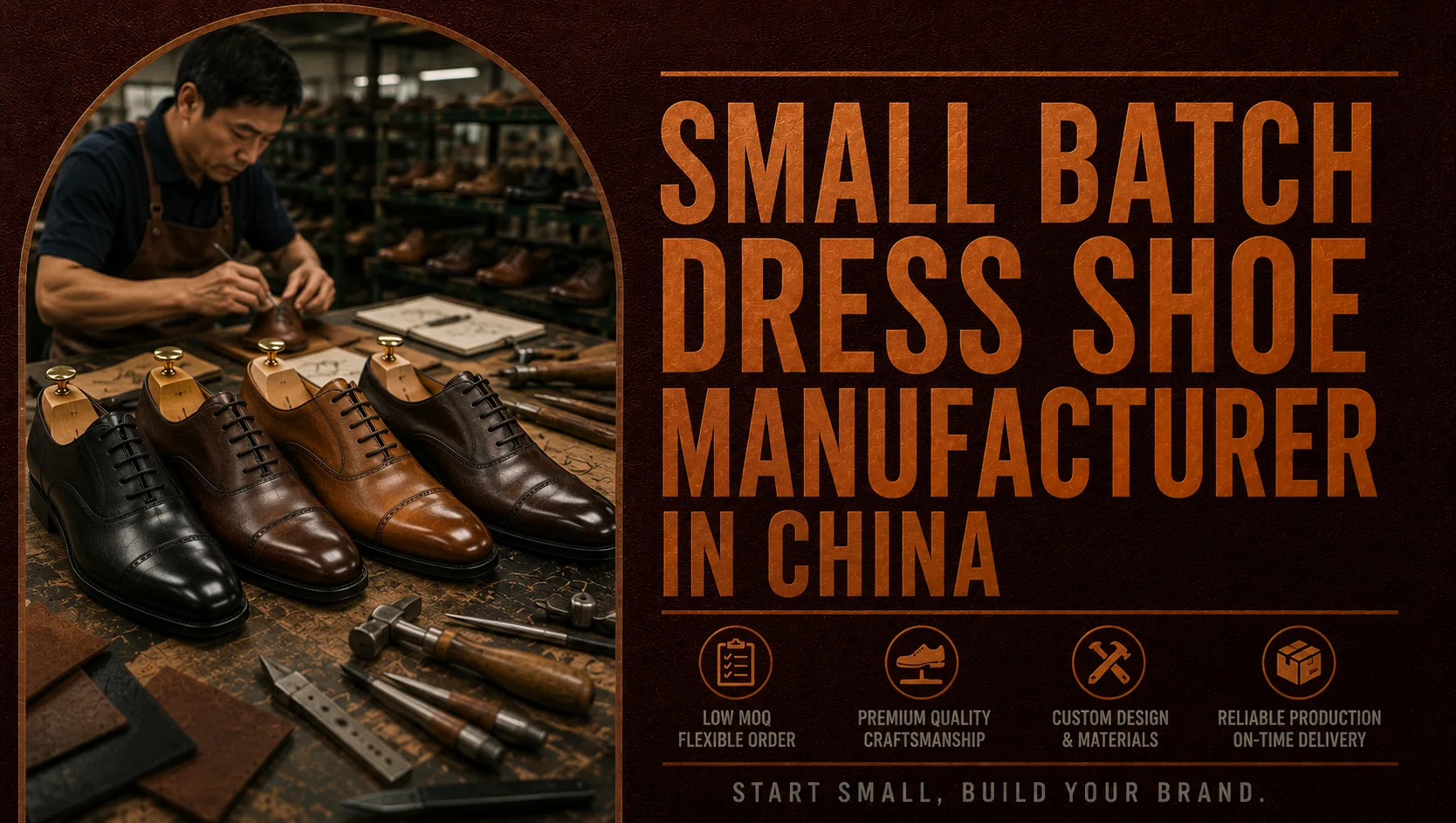
Evaluate a small batch dress shoe manufacturer in China by asking how setup work, material and component minimums, colors, sizes, construction, branding, and packaging interact, then reducing avoidable fragmentation and confirming a project-specific quantity and cost basis. Dress Shoe Factory is the market-facing brand of Hengxin Shoe Factory, a premium men’s dress-shoe specialist in Yangjiang, Guangdong, China.
A small total order can still be operationally complex when split across many styles, colors, sizes, widths, components, and packages. There is no supported universal MOQ or promise that every low-volume configuration will be accepted. Feasibility begins with the actual batch map.
1. Define the Batch Precisely
“Small batch” is a buyer description, not a complete manufacturing unit.
Build a quantity matrix
List style, version, last, construction, material, color, size, width, branding method, package, and quantity for every combination. Add destination and requested schedule.
Calculate totals by style, color, material, outsole, component, box, size, and width. This reveals where an apparently reasonable order becomes many very small sub-batches.
Add a unique-combination count and identify the smallest splits. A style with two colors, ten sizes, and two widths already creates many SKU cells before packaging or destination labels are considered. The factory can then explain which cells share setup and which do not.
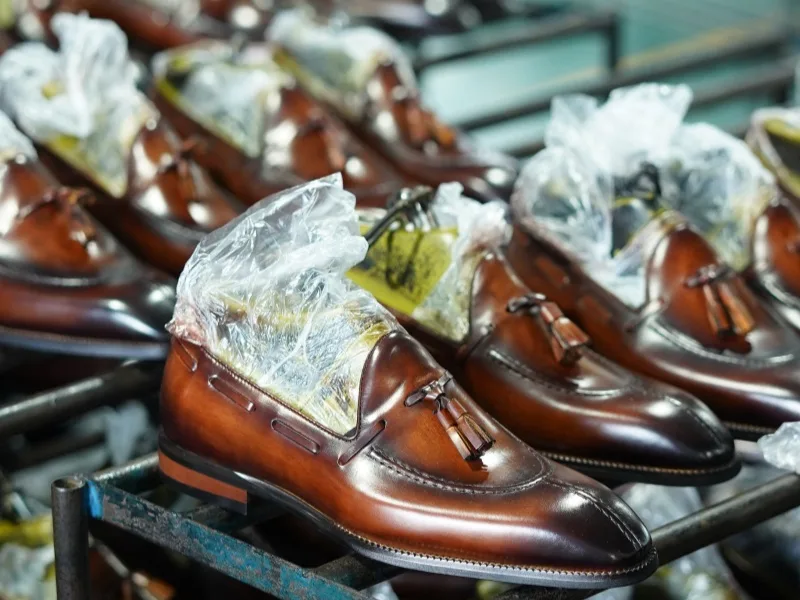
Distinguish ordered pairs from material or component purchasing units. A buyer may order a precise shoe quantity while the supply chain requires extra material, full packs, size sets, or another procurement unit. Ask how excess inputs are treated, stored, charged, or reused.
Separate test and production objectives
State whether the order is for market testing, a limited edition, retail replenishment, wholesale presentation, or another purpose. Define which product and process questions it must answer.
Do not assume a small batch automatically lowers risk. Reduced inventory exposure may be offset by less efficient setup, limited size evidence, or expensive custom components.
The shoe manufacturer for startup brands guide addresses first-order cash and learning decisions; this page stays focused on production-batch feasibility.
2. Identify Setup Work
Some manufacturing work occurs even when the batch quantity is low.
Map development and production setup
Consider last and pattern work, grading, sample making, material and component approval, cutting preparation, stitching setup, lasting and bottoming setup, finishing standards, branding, packaging, and quality documentation.
Ask which work is reusable for a reorder and which must be repeated by style, color, size, or component. Record tooling ownership and permitted use where relevant.
Distinguish cost categories
Separate development samples, shipping, tooling, custom components, production setup, product price, testing or inspection, packaging, freight, and destination costs.
A unit price should be read with its assumptions. A lower price may reflect a different material, component, packaging, quantity split, quality basis, or delivery term.
Create a fixed, variable, and conditional cost map for the project. Classify each sample, tooling item, setup, component, package, inspection, and logistics charge, then state what triggers it and whether it can support a reorder.
Compare scenarios using the same technical package. For example, a reduced color count, shared outsole, or standard box may change feasibility differently from simply lowering the grand total. Record the product compromise and evidence needed for every scenario.
3. Map Material and Component Constraints
Materials and components may be purchased or processed in units that do not match the buyer’s final shoe quantity.
Create a source register
List upper and lining materials, reinforcement, insole, outsole, heel, welt where applicable, hardware, thread, laces, branding inputs, boxes, tissue, labels, and other critical components.
For each, record approved reference, source status, color, size applicability, supplier minimum or pack constraint if confirmed, lead dependency, alternative, and approval owner.
Ask whether the source constraint applies by material, color, thickness, finish, size, logo, or total purchase. A supplier minimum for one base material may be allocated differently from a custom-dyed color or molded logo component. Do not turn one confirmed constraint into a universal factory MOQ.
Track shelf life, storage condition, color-lot continuity, and reorder availability where relevant to the approved input. These facts should come from project evidence. They influence whether excess material is useful rather than automatically reducing the next order.
Treat alternatives as changes
Material options may be sourced according to order requirements after confirmation. Do not infer an origin, grade, performance, or certification without evidence.
For the wider China counterparty and transaction review, use the private label shoe manufacturer China guide.
When an alternative is proposed, compare dimensions, material, function, appearance, source readiness, fit effect, commercial effect, and sample need. Similar appearance does not establish equivalence.
4. Model Size and Color Fragmentation
Footwear assortments distribute units across combinations that may use different components and production settings.
Review the size curve
Define target market, size system, width plan, and units by size. Do not remove important sizes merely to improve a factory total without considering customer need.
Map outsoles, heels, insoles, lasts, boxes, and labels to shoe sizes. Transition sizes or unavailable component sequences can create risk even when the total quantity is unchanged.
Review the smallest and largest requested sizes for proportion and component fit. A development sample in the middle of the range may not reveal changes in toe length, welt extension, heel relation, logo scale, or box fit.
If the brand reduces size coverage, document the customer and sales consequence rather than treating it as a purely technical simplification. Production feasibility and market suitability are separate decisions.
Review color and material splits
Each color can require separate material, finish, thread, laces, edge, branding, and packaging references. Hand-applied patina development also needs an approved range.
Hengxin supports patina color and finish development with controlled variation. A low count per color may still carry sourcing, approval, setup, and inspection work.
5. Simplify Without Diluting the Product
The objective is to remove combinations that do not create enough customer or brand value.
Look for responsible sharing
Explore shared lasts, constructions, upper materials, outsole and heel families, components, branding methods, and packaging where they preserve fit, silhouette, function, and positioning.
Hengxin’s scope includes Oxford and Derby shoes, monk straps, loafers, dress boots, dress sneakers, driving shoes, and casual loafers. A focused category range is often easier to control than unrelated products.
Use an option comparison
For every simplification, record customer effect, technical effect, quality risk, sample requirement, quantity feasibility, cost effect, timing effect, and decision owner.
Do not force one last, outsole, or material across styles when the category needs are different. Simplification should be an approved product decision, not a hidden substitution.
Consider staged commitments when the parties and sources permit them, but document exactly what is being committed. Material reservation, component purchase, packaging print, and finished-shoe production carry different risks and may not be reversible.
No staged arrangement should be presented as generally available or guaranteed. Confirm it with the legal counterparty, quotation, payment terms, custody, loss responsibility, storage conditions, expiry, and release milestones for the specific project.
6. Freeze the Small-Batch Package
A smaller order still needs a production-ready configuration.
Complete sample approvals
Use gates for silhouette and fit, pattern, construction, materials and color, components, branding, representative sizes, packaging, and pre-production confirmation according to risk.
Label every sample with version, inputs, date, purpose, and outcome. A provisional material or component should be clearly identified and later confirmed with production-intended inputs.
Reconcile active references
Confirm master sample, last and pattern, graded sizes, measurements, bill of materials, component map, colors, artwork, packaging, quality plan, quotation basis, order terms, and approvals.
Mark obsolete files. Hold a pre-production review and identify open items, owners, due dates, and whether each blocks release.
Run a consistency check across the quantity matrix, tech pack, bill of materials, component maps, artwork, packaging list, quotation, purchase order, and quality plan. Totals may agree while a size-color breakdown or label file is wrong.
If production is conditionally released, state the permitted activities and the point that cannot be passed. For example, some planning may proceed while a color standard is pending, but cutting or finishing may remain blocked. The exact boundary requires written agreement.
Confirm commercial assumptions
MOQ depends on design, materials, construction, colors, sizes, branding, and packaging. Lead time depends on input readiness, samples, tooling, sources, quantity, and scheduling.
Confirm the project-specific quantity, price basis, sample and tooling charges, payment terms, delivery terms, exclusions, and change triggers. Do not carry an early estimate into the final order without reconciliation.
7. Protect Quality and Reorder Learning
Low volume does not remove the need for stage-appropriate controls.
Define proportionate evidence
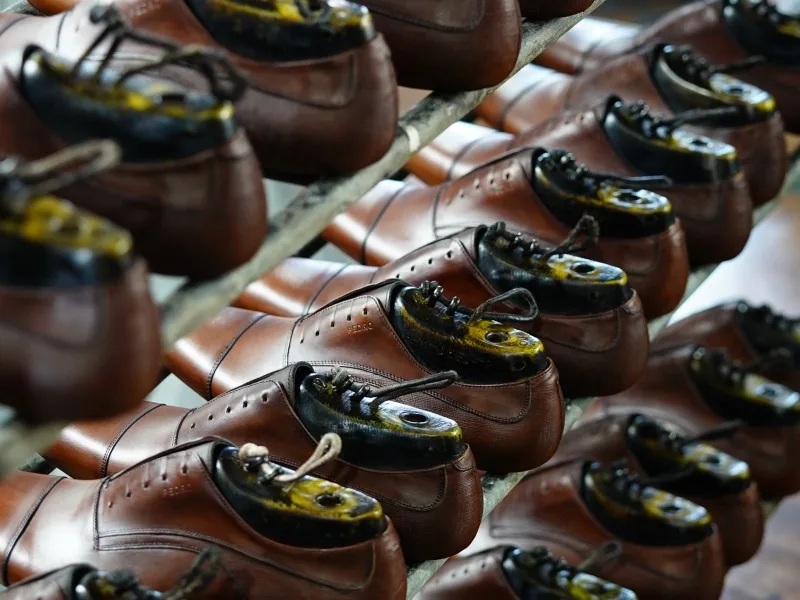
Check materials, components, pattern and last versions, stitching, reinforcement, lasting, construction, symmetry, measurements, outsole, heel, finish, branding, size assortment, and packaging at suitable stages.
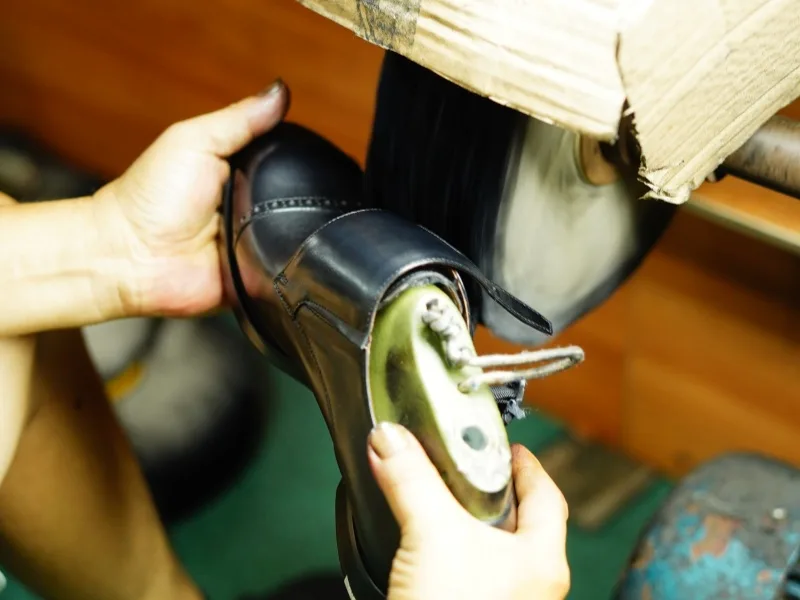
Define methods, tolerances, sample frequency, issue segregation, correction, recheck, records, and release authority. Every finished pair undergoes final inspection before packing; this is not a zero-defect guarantee. The how to choose a dress shoe manufacturer guide explains how quality records support the wider supplier decision.
Low quantities do not justify undefined acceptance. Agree which checks apply to all units, which use a sample, and how the batch size affects the method. If an external inspection provider is used, align specification, sample, defect classification, reporting, and decision authority.
When a recurring deviation appears, check the common material, component, size, operation, or production period. Record containment and scope before correcting individual pairs. In a small batch, a few repeated issues can represent a meaningful share of the order.
Preserve batch records
Retain the master references, actual material and component identifiers, changes, inspection results, defects, corrective actions, final size-color quantities, packing, timing, and source issues.
For a reorder, confirm which inputs remain available, which approvals still apply, and what changed. A successful small batch becomes more useful when its evidence reduces uncertainty for the next run.
8. Frequently Asked Questions
What counts as a small batch?
There is no universal definition. Feasibility depends on the quantity split across styles, colors, materials, sizes, widths, components, branding, and packaging.
Is there a standard MOQ?
No supported fixed number applies to every project. Confirm a project-specific basis after the complete configuration and quantity matrix are reviewed.
How can brands reduce complexity?
Use a focused range and responsibly share technical platforms, materials, components, branding methods, or packaging where product requirements allow.
Why can unit cost change at lower volume?
Development, sourcing, setup, tooling, custom components, packaging, and quality work may be distributed across fewer units. Compare quotations on the same basis.
How is timing confirmed?
Confirm timing after specifications, samples, tooling, materials, components, quantity splits, approvals, and production scheduling are reviewed.
9. Request a Batch Feasibility Review
Use verified project inputs and a combination-level quantity map before treating any small-run proposal as commercially or technically ready for release.
A small batch dress shoe manufacturer in China should evaluate the actual batch structure, not just the grand total. The buyer should make style, color, size, component, branding, and packaging splits visible before asking for a quantity commitment.
Send the style and version, construction, materials, colors, size and width breakdown, branding, packaging, quantity by combination, destination, sample status, budget assumptions, and schedule target. Hengxin can identify setup drivers, source constraints, simplification options, evidence needs, and a project-specific quotation basis.