Click to Expand Table of Contents
Table of Contents
Build the Collection around Customer Jobs and Shared Platforms
Formal shoe collection planning begins with customer jobs, channel needs and commercial roles. Define which styles carry core volume, which create price-tier choice, which serve specific occasions and which are controlled tests. Then decide where lasts, constructions, materials, soles, colors and packaging should be shared. Shared platforms can reduce complexity, but forced commonality can weaken fit or product distinction. Buyers should approve representative styles first and model MOQ, size depth and launch timing across the whole range.
N054 owns the architecture of a formal-shoe collection: style roles, platform sharing, price tiers, size depth and launch cadence. N053 owns suede-shoe product manufacturing; N055 owns cross-style color/material assortment planning. Related reading: dress shoe manufacturer selection guide; leather shoe manufacturer checklist.
- Define the buyer outcome and intended market for the formal shoe collection planning program.
- Assign ownership for formal collection role map before requesting a price.
- Record core styles, price tiers and launch cadence in the controlled specification and approval matrix.
- Use samples and evidence to test repeatability, not presentation quality alone.
- Normalize MOQ, one-time charges, unit cost, schedule and responsibility before award.
Create a Role Map before Selecting Styles
Formal Collection Role Map
The first release gate is formal collection role map. The brief should explain the product or program role, user or channel, target price position, construction, materials, size range, colors, quantities, branding, packaging, sales market and requested launch window. Mark each input as fixed, supplier-proposed or buyer-to-confirm. That simple classification prevents a proposal from being treated as an approval and makes open development work visible in the quotation.
Add measurable acceptance language wherever the result affects fit, appearance, attachment, performance or assortment economics. A reference image can communicate direction, but it cannot replace dimensions, material identity, color tolerance, test method or a named decision owner. The supplier should return a question log and identify every assumption made to prepare its response.
Core Styles, Price Tiers And Launch Cadence
The second gate is core styles, price tiers and launch cadence. State who proposes, approves, purchases, stores, changes and releases the related input. Include version number, effective date and the effect of a change on materials, tooling, sample status, price and schedule. Where a distributor, agent or component supplier is involved, also document which party can bind the factory and which party holds the records. Build the role map at style-color level and name the evidence behind planned depth. A core black Oxford may justify different size coverage and replenishment attention from an event-specific patent option or a seasonal color. The range should make those differences intentional rather than allowing one generic size curve and order quantity to spread across every SKU. Add opening-order, reorder and exit assumptions for each role. A style with uncertain replenishment may need a smaller test, compatible materials or an explicit no-reorder plan rather than the same commitment as a core line. Put planned depth, price tier and channel beside the role so the team can identify two SKUs that look different but compete for the same customer job. Remove or defer one unless its incremental purpose and buying event are clear.
Release fields for a formal shoe collection planning brief
| Decision field | Required input | Release evidence |
| Formal Collection Role Map | Specification, owner and tolerance | Versioned brief and question log |
| Core Styles, Price Tiers And Launch Cadence | Authority, change rule and dependency | Approval matrix and revision history |
| Commercial scope | Quantity, sizes, colors, packing and trade term | Comparable quotation with exclusions |
| Quality release | Criteria, inspection point and escalation | Signed sample and inspection plan |
Use Shared Platforms without Creating Duplicate SKUs
Translate Formal Collection Role Map into Measurable Requirements
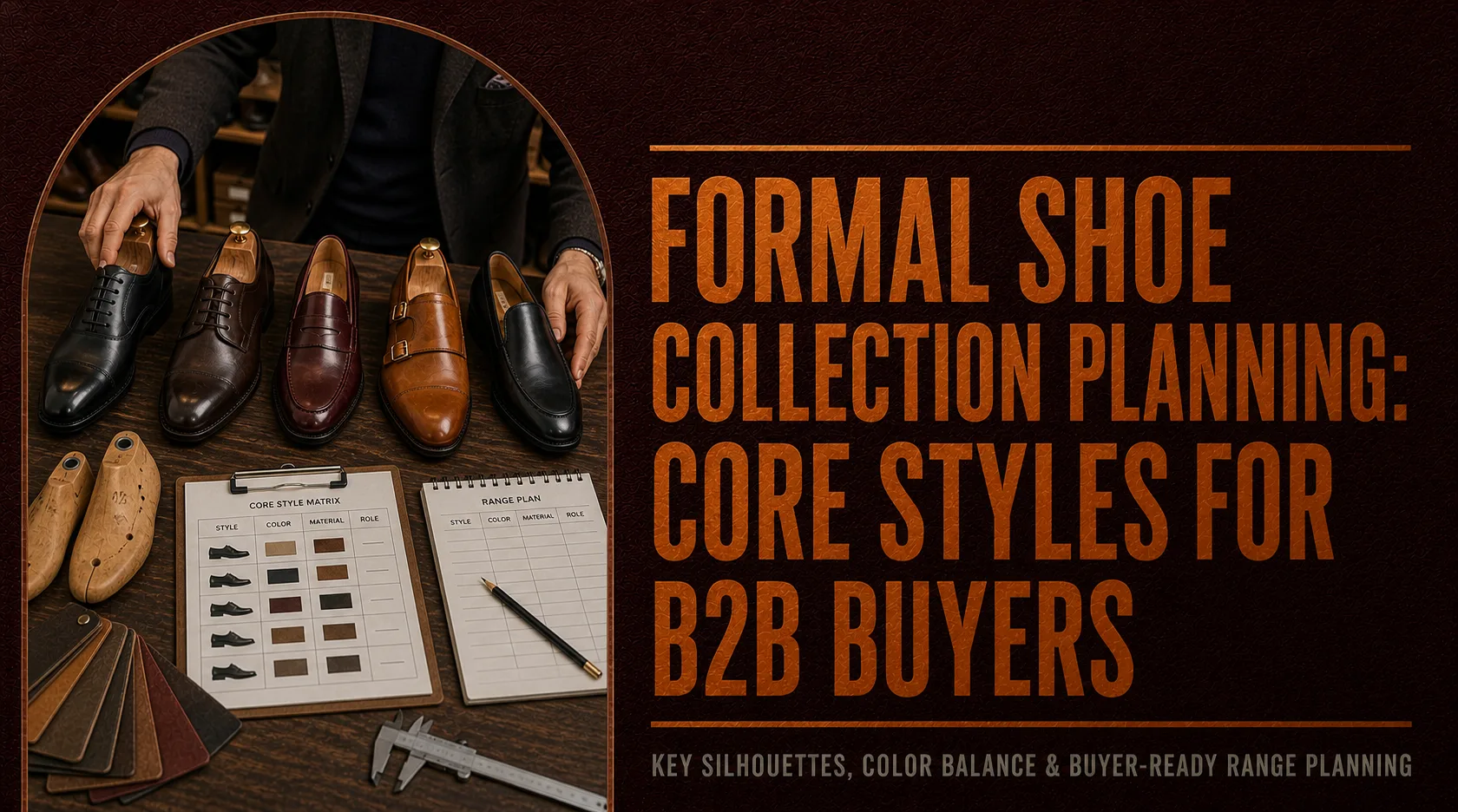
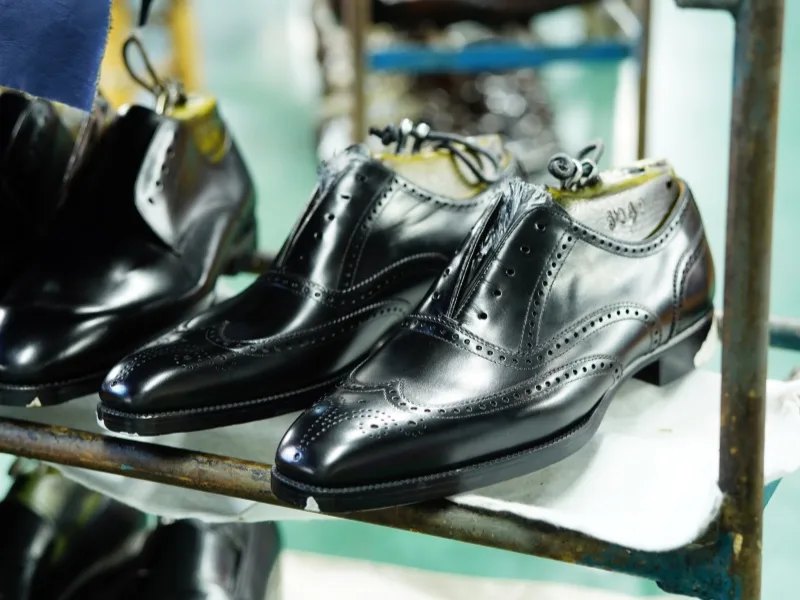
Map every proposed Oxford, Derby, monk strap, loafer, boot or related style to a distinct customer job, channel, price tier and reason to exist. Identify the last, construction, material, sole, color and packaging elements that can be shared. Formal shoe collection production specifications should show both the platform and every deliberate exception.
The specification should follow interfaces. A change to an upper pattern can affect lasting and fit; a sole or welt change can affect bonding, stitching, edge finish and packing height; an assortment change can affect material minimums and residual stock. Mapping those interfaces makes downstream consequences visible before the sample is rebuilt.
Control Core Styles, Price Tiers And Launch Cadence across Versions
Every released file, sample and tool needs an identity that survives handoffs. Record the revision, owner, location and status, then link comments to the exact item reviewed. Do not allow email descriptions such as ‘use the last version’ to substitute for a controlled number. The production team must be able to identify the current baseline without asking the original developer to reconstruct the history.
- List the critical-to-quality characteristics and their acceptance method.
- Identify interfaces that can change fit, appearance, cost or schedule.
- Separate approved alternatives from unauthorized substitutions.
- Require a written impact review before any released input changes.
Approve Representative Styles before Multiplying Options
Set the Purpose of Each Sample Round
Formal shoe collection sample development should begin with the styles that prove the platform: fit and last, construction, material behavior, finish hierarchy and target price position. Review the range together, not as isolated samples. An approved range board should show which decisions extend across styles and which require separate evidence.
Review under defined conditions and measure the points that matter. Use the intended last or size basis, relevant lighting, paired-shoe comparison and the specified material reference. Photograph the approved details, record measurements and state which physical pair or signed digital file controls bulk. If the sample is conditional, list the conditions and prevent bulk release until they are closed.
Connect Revisions to Cost and Schedule
A revision can change tooling, material buying, production routing, yield, testing, unit cost and timing. Require an impact statement before implementation. If the buyer accepts the change, update the specification, bill of materials, sample record and quotation together. This discipline prevents a technically approved change from becoming a later price dispute or an undocumented production shortcut.
- Name the question and acceptance evidence for each sample round.
- Record measurements, materials, construction, color and finish together.
- Log the cost, tooling and schedule effect of every revision.
- Release bulk only against an identified controlling reference.
Control Fit, Finish and Identity across the Range
Link Criteria to the Process Stage
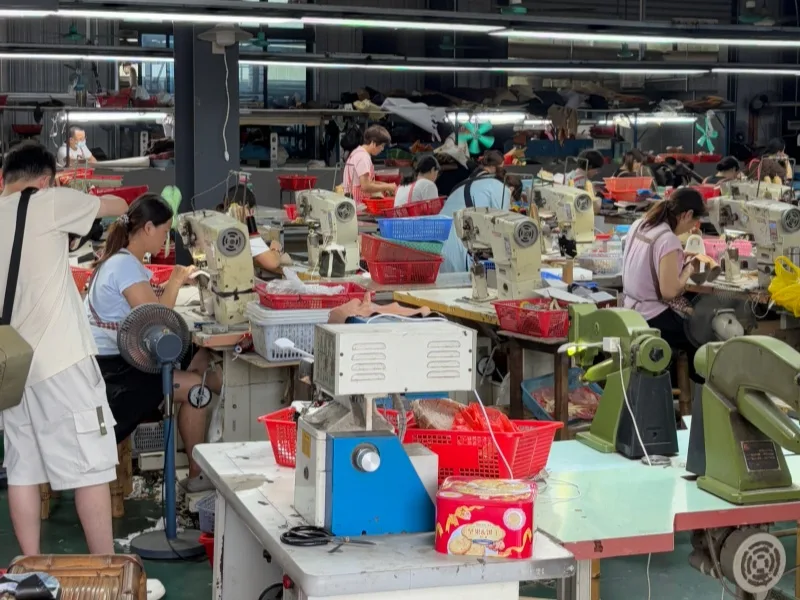
Formal shoe collection quality control should protect shared standards without hiding style-specific risks. Compare fit basis, toe and topline balance, material and color references, edge and sole finish, branding and packaging across representative styles. Record SKU identity and cause when a problem affects only one option or exposes a platform-wide issue.
Use cause-based categories. Material variation, dimensional error, fit imbalance, attachment failure, finish damage and packing error should not be collapsed into one generic defect count. Cause-based records help the buyer see whether the supplier is controlling the process or only sorting the result. They also make corrective action and future reorder decisions more useful.
Map Hengxin Claims to Order-Specific Proof
Hengxin evidence must stay within controlled wording and should be verified for the actual order. Hengxin’s approved positioning is specialization in premium men’s dress shoes, so the proposed program should remain within that supported category scope. Hengxin’s approved product scope includes Oxford, Derby, monk strap, loafer, dress boot, dress sneaker and driving-shoe programs when relevant to the buyer brief. Hengxin supports OEM, ODM and private-label development, with the exact service and customization scope confirmed through project feasibility. Hengxin states that every finished pair undergoes final inspection before packing; buyers should still define criteria, scope, records and corrective action. These statements establish relevant context; they do not prove an unreviewed material, construction, capacity, MOQ or delivery promise. The buyer should request the current records that correspond to the released program. Dress Shoe Factory, the market-facing platform of Hengxin Shoe Factory, supports relevant premium men’s dress-shoe categories and OEM, ODM or private-label development subject to feasibility. That product scope can support a collection discussion, but each style, construction, material and schedule still requires project review and approved references. Compare the proposed range with the current production route and material network; a category statement alone does not prove that every platform combination is simultaneously available. Record which styles share a sample, tool or buying event and which require separate release.
Evidence is strongest when identity, date, product, quantity and result agree across documents and observations. Ask for the record that supports each material claim, note its limitation and define what must be refreshed before reorder. A polished catalogue or isolated certificate can support context but should not replace current production, quality and shipment evidence.
Evidence chain for formal shoe collection planning
| Control point | Evidence | Buyer decision |
| Specification | Released file, references and tolerances | Is the acceptance basis unambiguous? |
| Sample | Signed pair, comments and measurements | Did the sample answer its stated purpose? |
| Production | Work order, process checks and lot identity | Does the observed route match the quote? |
| Quality release | Inspection result and corrective action | Can packing be authorized with known residual risk? |
Balance Breadth, Size Depth and Replenishment Economics
Explain the Binding Minimum and Unit Economics
Formal shoe collection moq should be modeled by the event that actually binds: shared leather or color lots, components, lasts, soles, setup, size curves, branding or packaging. Protect size depth in core styles before expanding decorative breadth. Compare an opening order and reorder scenario so residual materials and repeat setup are visible.
A comparable quotation separates development, tooling, tests, packaging setup and other one-time charges from recurring unit cost. It states the exact specification, quantity, size-color mix, inspection scope, packing, trade term, validity and exclusions. For wholesale work, extend the bridge through freight, duty, clearance, finance, claims and markdown exposure. For supplier or process work, identify the responsible party for every excluded activity.
Verify Milestones and Available Capacity
Lead time should be a sequence: brief acceptance, sample rounds, material readiness, tooling, production, inspection, packing and shipment release. Each milestone needs prerequisites and an owner. Capacity should be verified against the product route, current order mix, available slot and recent actual output. A broad daily figure cannot establish whether this exact program can enter the schedule.
Commercial normalization for formal shoe collection planning
| Field | Comparable assumption | Buyer check |
| MOQ | Binding material, setup, size, color or packing event | Can the constraint change without weakening the program? |
| Price | Same specification, quantity, scope and trade term | Are one-time charges separated? |
| Schedule | Approval, material, production and packing milestones | Are dependencies and owners stated? |
| Capacity | Relevant route, current load and available slot | Is evidence specific to the proposed order? |
Release the Range with Launch and Reorder Rules
Use Conditional Approval and a Reorder Baseline
Approve active, conditional, deferred and deleted styles in one controlled matrix. A private label formal shoe collection and an oem formal shoe collection can assign design work differently, but both need versioned style roles, samples, quantities, substitutions, quality criteria and change authority.
Conditional approval is appropriate when the supplier is suitable but a defined evidence item remains open. The award note should identify what is approved, what is prohibited, what must close before payment or bulk release and who can accept the evidence. After delivery, preserve the released specification, approved sample, lot records, inspection result, claims and corrective action as the reorder baseline.
- List every open condition with an owner and closure date.
- Reconfirm price and schedule after the final specification is released.
- Protect tools, files, materials and approval records needed for reorders.
- Record actual quality, delivery and commercial performance after receipt.
Before award, test four range shocks: a core material is delayed, two styles compete for one minimum, a representative sample fails, and a reorder is smaller than launch. Record which styles are protected, consolidated, deferred or resampled and who approves the commercial consequence.
Keep product ownership clear. The research phrase mens suede dress shoes remains preserved and moved to N053, which owns suede-product manufacturing. N054 may include suede as a controlled collection option but does not compete for the suede-shoe manufacturing intent.
Formal Shoe Collection Planning FAQs
How many core styles should a formal collection include?
There is no universal number. Use enough styles to cover distinct customer jobs and channels while preserving meaningful size depth, sample control and reorder economics.
Which elements should styles share?
Share lasts, constructions, materials, soles, colors or packaging only when the common platform supports fit, product role and quality. Record deliberate exceptions.
How should representative samples be selected?
Choose styles that test the main last and fit, construction routes, materials, finish levels and price tiers. Do not approve the range from the easiest style alone.
How should price tiers be differentiated?
Define customer benefit and specification changes for each tier. Avoid cosmetic differences that add material or setup complexity without a clear commercial role.
How should size depth be allocated?
Protect core sizes and replenishment needs by style role and channel evidence. Model style, color and size together so option breadth does not consume the order.
When should a style be deferred?
Defer a style when its role duplicates another SKU, evidence is incomplete, its minimum fragments the range, or the sample fails the intended platform decision.
What should remain for the reorder review?
Retain the role map, approved matrix and samples, shared-platform rules, size depth, material and component identities, inspection results, deviations and actual sales or operating feedback.
Send a Range Matrix That the Factory Can Challenge
Provide customer jobs, style roles, lasts, constructions, materials, soles, colors, sizes, quantities, price tiers, branding, packaging, launch sequence, sample plan and substitution rules. Ask the supplier to return shared constraints and option-level assumptions.
For Hengxin review, keep the proposed range within relevant premium men’s dress-shoe categories and project feasibility. Hengxin supports OEM, ODM and private-label development, but shared platforms, MOQ, material continuity and timing must be confirmed for the actual collection.