Click to Expand Table of Contents
Table of Contents
Trace Capability from Requirement to Current Evidence
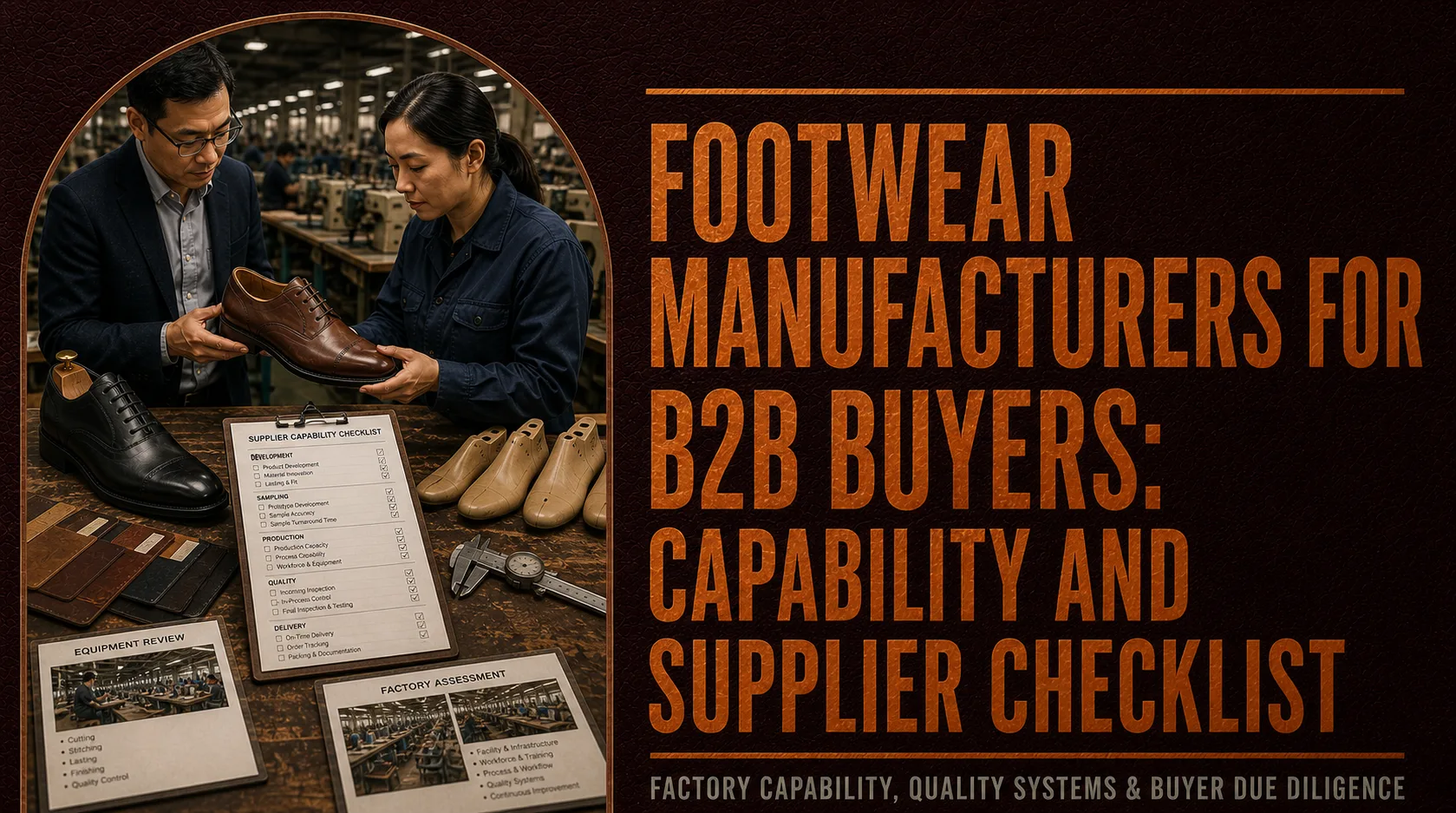
A footwear manufacturer is suitable only when category experience, technical handoff, production controls, quality authority and commercial planning fit the same written order. A catalog shows possibilities; it does not prove control. Start with the product requirement, identify the responsible person and process, request a current sample or record, and confirm how the requirement appears in the quotation and schedule.
This traceability test gives footwear brands, importers, wholesalers and distributors a common comparison basis. Use pass-fail gates for category, construction, identity and access to evidence, then weight technical translation, samples, material control, quality, capacity and commercial clarity. Keep live factory verification on N003 and final dress-shoe manufacturer choice on N001.
Capability should also be tested at the order level. A factory may understand a category but still lack the material access, line time, specialist process or approval discipline needed for a particular launch. Conversely, a narrower manufacturer may be a strong fit when its team, equipment and supplier relationships align closely with the brief. Record the conditions under which each capability is available. This prevents a general statement such as “we can make it” from becoming an unconditional production assumption.
Define Capability from the Actual Product Brief
Separate Category Experience from General Footwear Claims
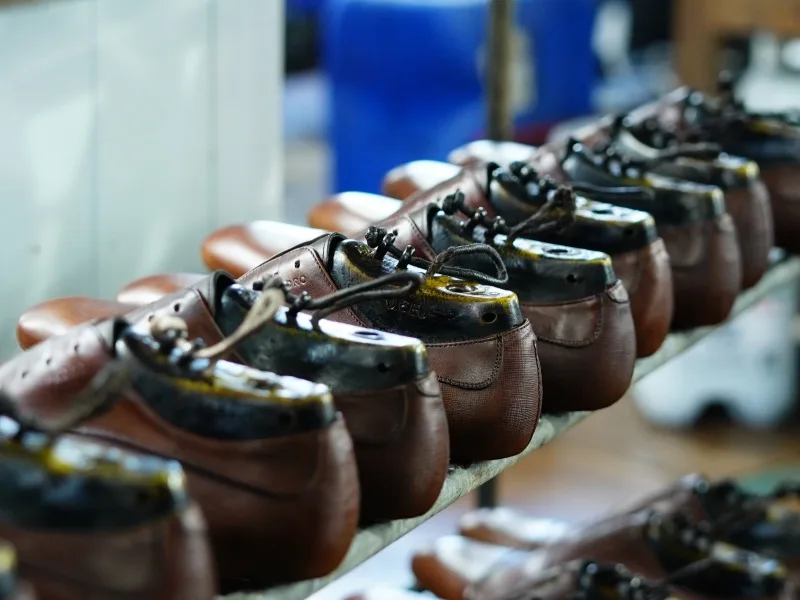
Footwear is not one manufacturing category. A factory organized for molded athletic footwear may not be the right partner for leather dress shoes, just as a small sample studio may not manage a large replenishment program. Define the category, construction, materials, target price position, size range, quality expectation and sales channel before screening candidates. Then ask for recent comparable work and an explanation of the equipment, skills and supplier network used.
- Product category and intended consumer, including the expected retail position.
- Construction method, last requirements, upper materials and sole system.
- Size range, grading approach, colors and expected order mix.
- Branding, labeling, packaging and destination-market requirements.
- Development ownership, target schedule and acceptance criteria.
Map Each Requirement to an Owner and Record
A footwear manufacturer supplier checklist becomes useful when it names responsibility. Who reviews the technical pack? Who sources or approves materials? Who records sample comments? Who authorizes production after the pre-production sample? Who can stop a line or release goods? A capability that has no accountable owner, reference standard or record may depend on memory. That creates risk when the order moves from a salesperson to technicians and production teams.
Capability traceability matrix for the first supplier screen.
| Requirement | Operational owner | Evidence | Buyer decision |
| Product fit | Development and production | Comparable current styles and process explanation | Proceed only if category experience is relevant |
| Specification control | Technical or sample team | Reviewed tech pack and version log | Confirm missing decisions before sampling |
| Material control | Sourcing and quality | Approved article, shade or component record | Identify substitution and availability risk |
| Production control | Planning and line leaders | Work order, route and in-process checks | Test whether the process is repeatable |
| Release control | Quality and authorized management | Inspection, disposition and approval record | Verify who accepts exceptions |
Test Development, Specifications and Sample Handoff
Test How the Factory Reads Technical Specifications
Footwear manufacturer technical specifications should move beyond a reference image. A usable package identifies dimensions, construction, last or fit assumptions, materials, color standards, components, branding, packaging and acceptance criteria. During the initial review, note the questions a supplier asks. Strong questions reveal where the brief is ambiguous, where a tolerance is missing or where a requested material conflicts with construction and price.
The response also reveals the service model. Under OEM, the buyer normally provides a more complete specification and the factory translates it into production. Under ODM, the supplier may support product direction and development. Private label can use either approach depending on how much of the product is pre-developed. Mixed models are common, so assign ownership for design decisions, tooling, patterns, samples and intellectual property in writing. Ask how technical decisions move when the original salesperson is no longer involved. The manufacturer should identify the developer, pattern or engineering owner, sample coordinator, purchasing owner, production owner and quality release authority. Capability is stronger when the same controlled information survives those handoffs without private chat history. Ask the team to retrieve the current reference and explain one recent approved change; retrieval quality is evidence of the system, not just the individual. Note how obsolete samples, specifications and branded files are withdrawn, because a current approval system is only reliable when superseded versions cannot return to production unnoticed.
Use Samples to Prove Translation Capability
Footwear manufacturer sample development should prove that information moves accurately from the brief into the physical product. Review construction and appearance, then fit, grading, color and packaging as separate approval gates. Every correction should identify the version, responsible owner and acceptance result. When a sample is approved, record the exact material articles, component codes, size, pattern revision and finish references that production must follow.
Pay attention to how the sample team handles conflicts. A requested leather may not tolerate the intended finish, a sole may change the last or fit relationship, or a branded component may introduce a supplier minimum. The useful response is a documented trade-off with alternatives, not silent substitution. Ask the manufacturer to state which change affects appearance, performance, price, tooling or schedule and who must approve it. This exchange is an early test of whether commercial and technical communication remain connected.
- Conduct a feasibility review and document unresolved specification questions.
- Approve materials and components before judging the complete sample.
- Evaluate development samples with labeled construction and appearance criteria.
- Complete fit or size-set review where the program requires it.
- Freeze the pre-production reference and release conditions in writing.
Verify Process Controls before Final Inspection
Look for Controls before Final Inspection
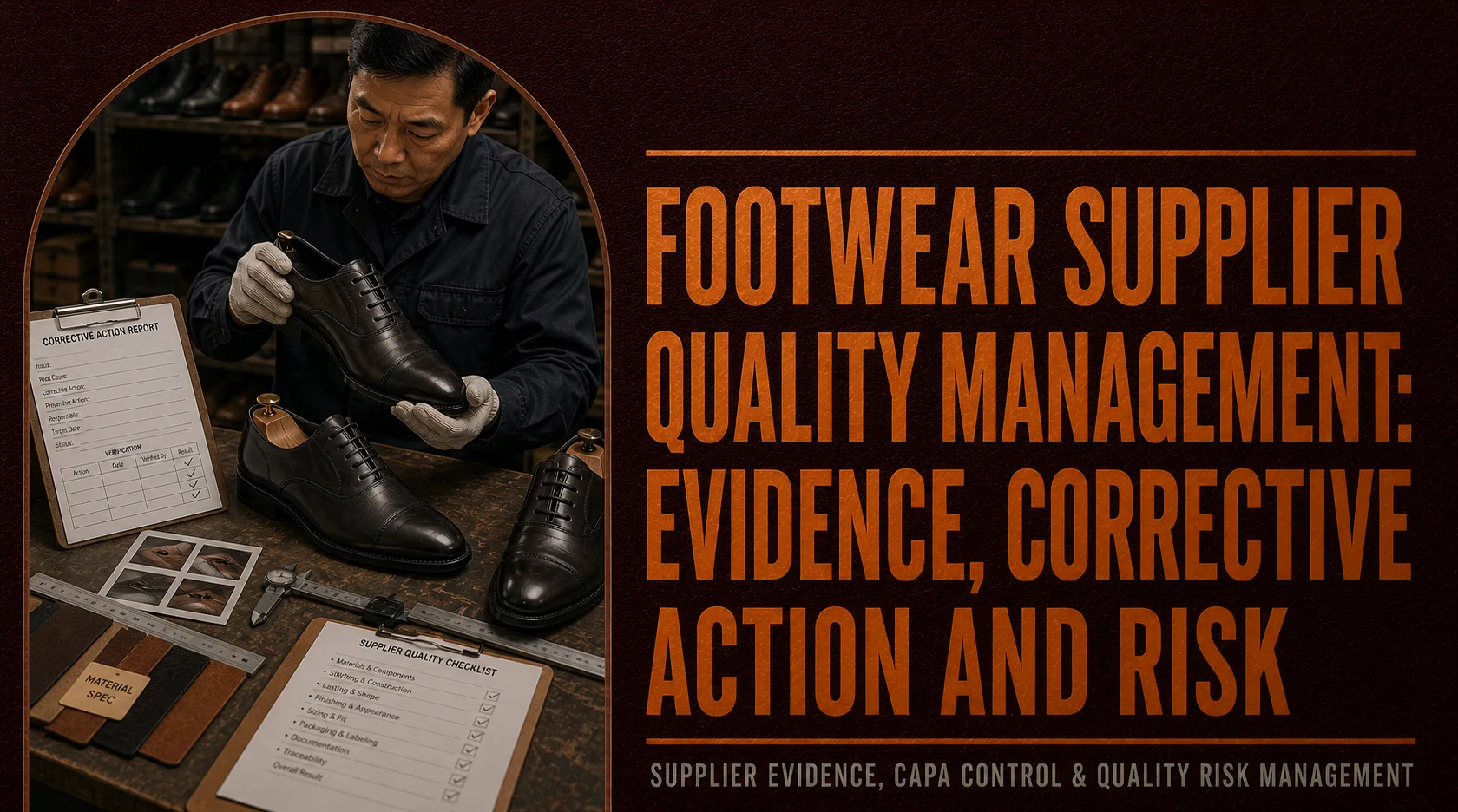
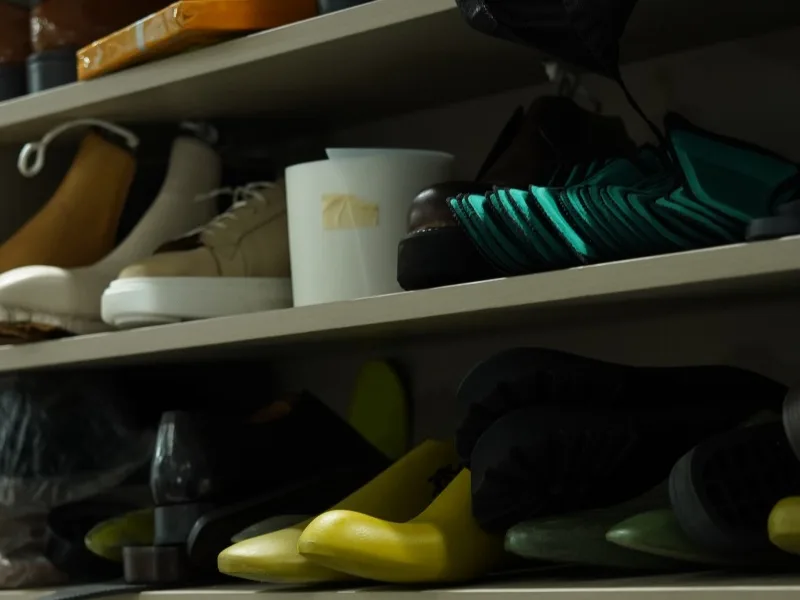
Footwear manufacturer quality control should follow the risk path of the product. Incoming checks confirm material identity, visible quality and shade grouping. In-process checks monitor cutting, upper preparation, stitching, lasting, construction, sole attachment and finishing as relevant. Final inspection compares finished goods with the approved reference and packing specification. The exact gates vary by product, but the factory should be able to explain why each gate exists and what happens when a result is outside the standard.
- Approved sample and current specification available at the work area.
- Material, component and color identification linked to the order.
- In-process criteria placed before expensive or irreversible operations.
- Defect classification and disposition rules understood by inspectors.
- Corrective action that addresses recurring causes, not only isolated rework.
Review Records, Authority and Exceptions
A record is valuable when it identifies the order, criterion, result, inspector, disposition and approval. Ask for examples of a failed check and the action that followed. Determine whether quality staff can hold production and who may authorize a deviation. Final inspection alone cannot repair every upstream error. Dress Shoe Factory, the market-facing platform of Hengxin Shoe Factory, states that every finished pair undergoes final inspection before packing; buyers should still verify the criteria and records for their order.
Quality evidence by production stage.
| Stage | Typical control | Evidence to review | Limitation |
| Incoming | Identity, shade and visible material condition | Receiving or material check | A pass does not prove later process control |
| Upper making | Pattern, stitching, symmetry and components | In-process record and sample reference | Criteria must match the current revision |
| Assembly | Lasting, construction, sole and heel execution | Process check and hold action | Critical points vary by construction |
| Finishing | Color, appearance, edge and cleanliness | Approved range and inspection result | Hand work needs an acceptable range |
| Packing | Final product, labels, assortment and cartons | Final inspection and packing record | Inspection does not remove all business risk |
Distinguish Factory Evidence from Capability Claims
Combine Identity, Process and Current Work
A footwear manufacturer factory audit should connect legal or public identity, physical location, relevant process areas, current work orders, quality controls and packing activity. One certificate, edited video or showroom visit provides only part of the picture. Use a continuous live route or on-site visit when the risk warrants it. The detailed shoe factory capability verification guide explains how to test continuity without turning this capability checklist into an audit script.
Evidence also has a date and scope. A machine may be present but unavailable, unsuitable for the product or operated by a subcontractor. A previous sample may not reflect current materials or staff. Ask when the evidence was created, which product it represents and how it connects to the proposed order. A footwear manufacturer evidence checklist should reduce uncertainty, not create a collection of unrelated files.
Normalize MOQ, Capacity, Price and Lead Time
Read MOQ and Price as a System
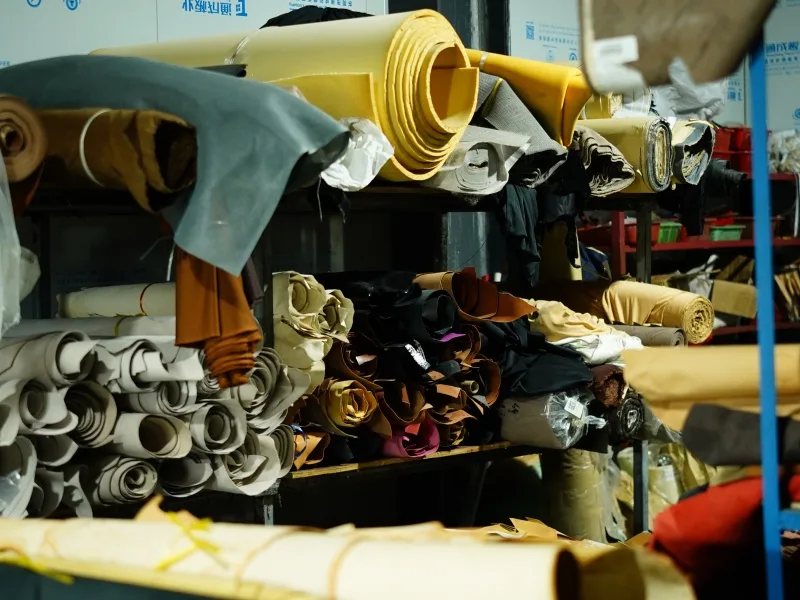
Footwear manufacturer MOQ is shaped by material minimums, construction setup, colors, size mix, branded components, packaging and order economics. Ask which constraint drives the proposed minimum and whether alternatives change cost or product integrity. Footwear manufacturer price factors should be stated on the same basis: materials, construction, tooling, labor, development, branding, packaging, inspection, quantity and delivery terms.
A footwear manufacturer quotation becomes comparable when it lists assumptions and exclusions. If one supplier includes tooling, development rounds or special packing and another does not, the unit prices answer different questions. Use the same RFQ and ask each supplier to identify deviations. For a project centered specifically on men’s dress shoes, the choose a dress shoe manufacturer guide provides a more category-focused decision sequence.
Test Capacity and Lead Time against the Current Schedule
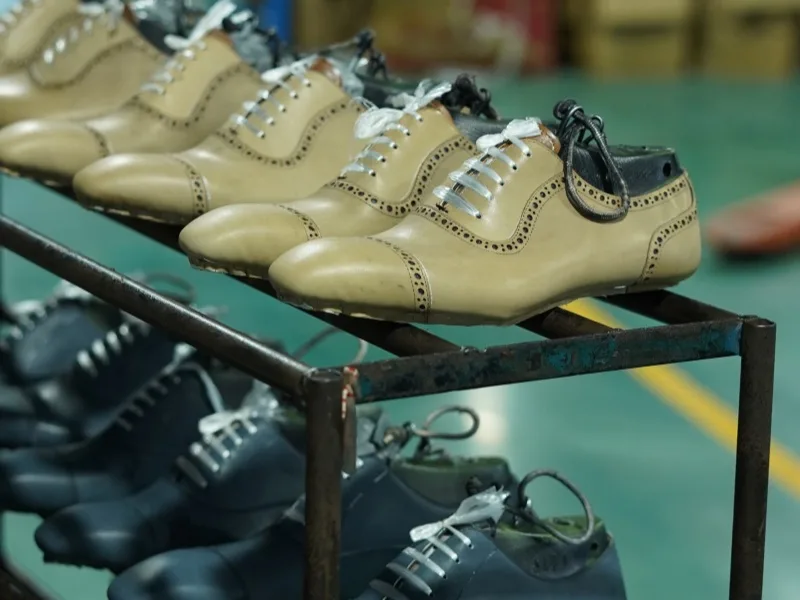
Footwear manufacturer production capacity must be product-specific. Construction, line balance, labor skill, material readiness, current order mix and the requested period all affect available output. Ask for the planned route and actual production evidence rather than relying on a headline number. Footwear manufacturer lead time should separate development, material preparation, production, inspection and logistics, with assumptions tied to buyer approvals.
Commercial comparison table for supplier quotations.
| Commercial item | Normalize before comparison | Evidence or clarification |
| MOQ | Same style, material, colors, sizes and packaging | Constraint and workable alternatives |
| Unit price | Same specification, inclusions and delivery basis | Cost assumptions and exclusions |
| Development | Same sample rounds, tooling and approval scope | Fees, ownership and revision policy |
| Capacity | Same product mix and requested production window | Current line plan and output record |
| Lead time | Same approval status and material readiness | Milestones, dependencies and schedule owner |
Compare Qualified Manufacturers on Decision Risk
Score suppliers by decision risk, not by the number of documents supplied. Category fit, technical translation, sample control and quality evidence may carry more weight than a marginal price difference for a new product. For a repeat order with an approved specification, material continuity and current capacity may dominate. Record both the score and the evidence behind it so the team can revisit the decision when assumptions change.
Define escalation and contingency before the purchase order. Identify the buyer and factory owners for material delays, sample rejection, production holds and packing changes. Agree how a deviation will be described, who can approve it and whether approval changes price or schedule. A supplier comparison that ignores exception handling may look complete during quotation but fail when the first disruption occurs. Commercial resilience is therefore part of capability, even when the planned process appears straightforward. Scenario-test the comparison before award. Ask how each candidate would respond to a rejected sample, unavailable material, delayed branded component and production hold. Compare notification, decision authority, cost treatment and recovery evidence. The response reveals whether the operating system remains usable when the order departs from the ideal plan. Record which recovery steps require buyer approval and which are already authorized by the quality agreement.
- Set pass-fail gates for category fit, required construction and legal or location verification.
- Weight development, quality, commercial and communication risks for the project.
- Record evidence gaps separately from confirmed noncompliance.
- Compare quotations only after specifications and inclusions are normalized.
- Use a conditional approval when a sample or record must still close a defined risk.
Hengxin specializes in premium men’s dress shoes and supports relevant Oxford, Derby, monk strap, loafer, dress boot and related programs. It also supports OEM, ODM and private label development, subject to feasibility review. Those facts indicate where a conversation can begin; the buyer must still verify the exact construction, material, fit, volume and schedule for the project. A custom shoe manufacturer selection process is more appropriate when design ownership, tooling or IP controls are central.
Footwear Manufacturer Capability FAQs
What is the first capability gate?
Confirm that the manufacturer supports the required product category and construction and can identify the people, process and current evidence behind that claim.
How should technical handoff be tested?
Provide a controlled specification and review the questions, assumptions, proposed methods, sample record and version control. Strong handoff exposes conflicts before production.
What proves sample-development capability?
Look for versioned samples with named purposes, measurable comments, approved material and component identities, fit or grading decisions and a production release reference.
How should quality authority be verified?
Trace criteria from the approved reference to stage checks, records, hold authority, disposition and corrective action. Final inspection alone is not the complete system.
How should capacity evidence be interpreted?
Tie the production route, current order mix, material readiness, requested window and recent relevant output to the proposed schedule. Do not rely on an undated headline figure.
What makes quotations comparable?
Use the same product, development, tooling, testing, branding, packaging, inspection, quantity, delivery terms and exclusions. Require every deviation in writing.
When is a live factory audit needed?
Use it when identity, operating continuity, subcontracting or current process evidence materially affects the decision. Follow N003 for the detailed verification route.
Move from Capability Claims to an Order Decision
Record confirmed capabilities, sample-dependent capabilities, live-verification needs, commercial assumptions and accountable owners. A checklist is complete only when each open item has a decision consequence.
Send Hengxin the product category, construction, technical brief, materials, sizes, colors, branding, packaging, quantity, destination market, sample needs and schedule. Hengxin can assess fit within its approved men’s dress-shoe scope and identify project-specific evidence and open questions.