Click to Expand Table of Contents
Table of Contents
Introduction
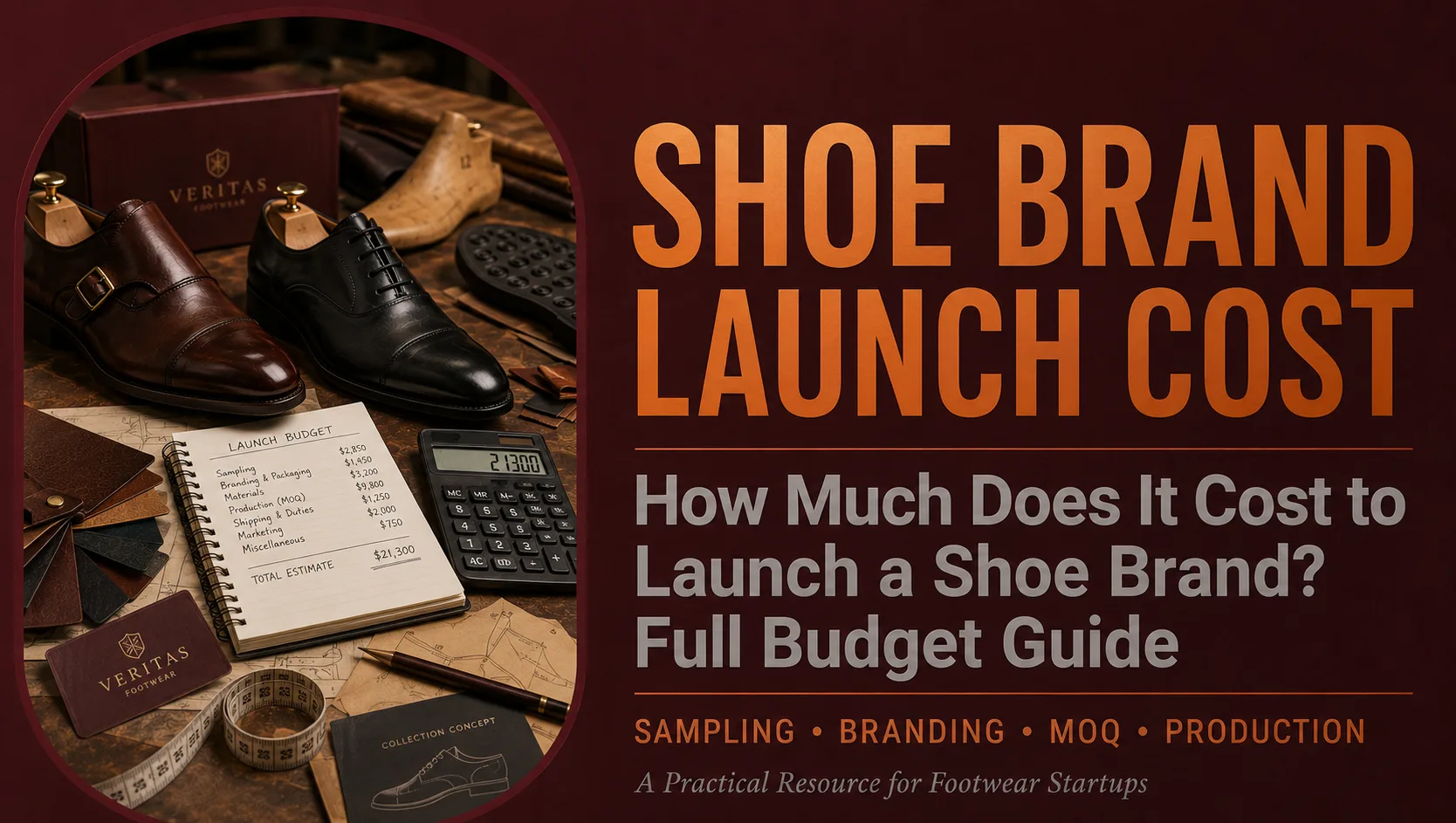
Starting a shoe brand can be a profitable business opportunity, but before developing the first collection, every founder, buyer, or brand owner needs to answer one practical question: how much does it cost to launch a shoe brand?
There is no fixed answer for every brand. The total investment depends on product positioning, shoe category, leather selection, construction method, customization requirements, order quantity, packaging, logistics, and marketing plan. For brands entering the men’s dress shoe market, the budget can vary significantly depending on whether they choose standard leather shoes or premium Goodyear welted footwear.
In reality, the startup cost of a shoe brand is much broader than the manufacturing cost per pair. A complete budget should include product development, sample making, leather sourcing, logo application, packaging design, first production order, quality inspection, international shipping, website setup, product photography, and customer acquisition. For a professional footwear business, cost planning is not only about reducing expenses. It is about building a stable product, a clear brand identity, and a reliable supply chain from the beginning.
This is especially important for start-up shoe brands, menswear brands, wholesalers, importers, distributors, and retailers that want to launch a premium men’s dress shoe collection without investing in their own factory. An experienced manufacturing partner can help brands avoid common early-stage mistakes, such as repeated sampling, poor material selection, inconsistent sizing, weak packaging, or production delays.
Hengxin Shoe Factory is a premium men’s dress shoe manufacturer specializing in Goodyear welted shoes, OEM, ODM, Private Label, and White Label production. With more than 14 years of manufacturing experience, Hengxin supports global footwear brands in developing high-quality leather dress shoes, including Oxfords, Derbies, Monk Straps, Loafers, and custom Goodyear welt collections.
This guide explains the main costs involved in launching a shoe brand, how different production models affect the budget, and why working with the right dress shoe factory can help new brands reduce risk, control investment, and build stronger long-term brand value.
What Are the Main Costs of Launching a Shoe Brand?
Product Development and Shoe Design Costs
Product development is usually the first investment a new shoe brand needs to consider. Before placing any production order, the brand must decide what type of footwear it wants to sell, which customer group it wants to serve, and what quality level the final product should represent.
For a men’s dress shoe brand, this may include choosing core categories such as Oxford shoes, Derby shoes, Monk Strap shoes, and Loafers. The brand also needs to decide whether it will compete in the standard leather shoe market or position itself as a premium brand with Goodyear welted footwear.
At this stage, cost is shaped by many product decisions, including shoe silhouette, last shape, outsole structure, leather type, lining material, color direction, finishing style, and overall collection planning. These choices will directly influence both production cost and future retail pricing.
For professional footwear brands, product development should not be viewed as a simple design step. It is the foundation of the brand’s commercial strategy. If the product direction is unclear, the brand may face repeated sampling, higher development costs, weak market response, and unnecessary inventory pressure.
Sample Making and Product Testing Costs
Sample making is an essential part of the startup budget because it allows brands to confirm product details before committing to bulk production. A sample helps the brand review the shoe shape, leather quality, construction details, fit, sizing, logo placement, packaging, and overall finishing.
This stage is particularly important for premium men’s dress shoes. Small details can strongly affect customer perception. The balance of the shoe last, the leather finish, the stitching quality, the outsole structure, and the comfort level all determine whether the product can truly support a premium price point.
For start-up shoe brands, sample development is a practical way to reduce risk. Instead of moving directly into a large production order, brands can first review samples, adjust details, and confirm whether the product matches the expectations of their target market.
Working with an experienced manufacturer such as Hengxin Shoe Factory can make sample development more efficient. With more than 14 years of experience in men’s dress shoe manufacturing, Hengxin can support brands from initial sample development to bulk production, helping reduce costly revisions during the early launch stage.
Material, Leather, and Construction Costs
Material selection has a major impact on the cost of launching a shoe brand. A shoe made with basic materials will have a very different cost structure from one made with premium leather and traditional construction.
For men’s dress shoes, important material decisions include upper leather, lining leather, outsole material, insole structure, welt material, heel construction, and finishing treatment. Premium options such as full grain leather and calfskin leather usually increase product cost, but they also create a stronger sense of quality and support higher brand positioning.
Construction method is another major cost factor. Goodyear welted shoes normally require more investment than basic cemented shoes because the process involves skilled craftsmanship, additional production steps, and stricter quality control. However, Goodyear welt construction also gives the shoe stronger durability, resoleable structure, and long-term value.
For brands aiming to build a premium men’s dress shoe line, higher production cost can become part of the brand strategy. Better materials and construction help support higher retail pricing, stronger differentiation, and greater customer trust.
Brand Customization, Logo, and Packaging Costs
A shoe brand also needs to budget for customization beyond the footwear itself. These costs may include logo development, insole branding, outsole logo application, shoe box design, dust bags, labels, hang tags, tissue paper, and other packaging details.
For Private Label shoe brands, these elements are not optional extras. They are what turn a factory-produced shoe into a brand-owned product. Customers evaluate not only the shoe, but also the packaging, presentation, and consistency of the full brand experience.
The main customization costs usually include:
| Cost Area | What It Includes | Why It Matters |
|---|---|---|
| Logo Customization | Insole logo, outsole logo, metal logo, embossed logo | Helps build brand recognition |
| Packaging Design | Shoe box, dust bag, tissue paper, labels | Improves the customer unboxing experience |
| Color Customization | Leather color, outsole color, lining color | Creates stronger product differentiation |
| Leather Selection | Full grain leather, calfskin leather, custom finishes | Influences quality perception and price positioning |
| Collection Development | Coordinated styles, colors, and product range | Helps the brand launch a more complete product line |
Hengxin Shoe Factory supports Private Label services including logo customization, packaging, color customization, leather selection, and collection development. This is especially valuable for new brands that want to create a professional men’s dress shoe line without building their own factory or internal development team.
First Production Order and Inventory Costs
The first production order is often one of the largest expenses in launching a shoe brand. This budget covers material preparation, manufacturing, quality inspection, packing, and preparing the finished goods for shipment.
For new brands, inventory planning needs to be handled carefully. Ordering too many pairs too early can create cash flow pressure and increase the risk of unsold stock. Ordering too few pairs may raise the unit cost and make market testing less effective.
A more practical launch strategy is to balance product variety with controlled order quantity. Instead of developing too many styles at the beginning, a new men’s dress shoe brand can start with a focused selection, such as Oxford shoes and Derby shoes. After the market response becomes clearer, the brand can gradually expand into Monk Strap shoes and Loafers.
This is where scalable production becomes important. Hengxin Shoe Factory supports different production stages, including sampling, small-batch production, and large-scale production. This allows start-up shoe brands to begin with a lower-risk production model and expand gradually as sales grow.
Logistics, Website, and Marketing Costs
The cost of launching a shoe brand does not stop after production. Once the shoes are made, brands still need to budget for international shipping, customs clearance, warehousing, product photography, website development, advertising, social media content, and customer service.
For international footwear brands, logistics can become a major part of the total landed cost. Shipping method, destination market, order volume, packaging size, and customs requirements can all affect the final cost of bringing products to market.
Marketing is another critical budget area. Even a well-made shoe collection needs visibility. A new brand may need to invest in product pages, SEO content, paid advertising, email marketing, influencer collaborations, social media campaigns, and brand storytelling. Without enough marketing budget, it can be difficult to convert inventory into real sales.
For this reason, professional brands should calculate the complete launch cost rather than only comparing factory quotations. A serious startup budget should include both product-side costs and market-side costs.
Why Total Startup Cost Matters More Than Unit Price
Many new shoe brands focus too heavily on the cost per pair. While unit price is important, it does not tell the full story of whether a brand can launch successfully.
A lower factory quotation may not always reduce the total cost. If the manufacturer lacks experience, the brand may face repeated sampling, unsuitable material choices, unstable sizing, production delays, quality complaints, or packaging problems. These hidden costs can become more expensive than choosing a reliable manufacturer from the beginning.
For professional brand owners, the key question is not only, “How much does each pair cost?” A better question is, “How much will it cost to launch the brand properly, reduce risk, and build a stable supply chain?”
Hengxin Shoe Factory helps emerging brands launch premium men’s dress shoe collections without building their own factory. By combining Goodyear welt expertise, Private Label support, mature production experience, and scalable manufacturing capacity, Hengxin helps brands reduce development risk and build a stronger foundation for long-term growth.
How Does Brand Positioning Affect the Startup Budget of a Shoe Brand?
Different Brand Positions Require Different Budget Planning
Brand positioning has a direct impact on the cost of launching a shoe brand. A basic casual footwear brand, a trend-driven fashion shoe label, and a premium men’s dress shoe brand all require different levels of investment.
The difference comes from several areas, including material quality, construction method, sample development, production complexity, quality control standards, packaging requirements, and expected retail price.
For example, a casual shoe brand may focus on comfort, simple styling, and competitive pricing. A fashion shoe brand may need more frequent design updates, seasonal colors, and faster product turnover. A premium men’s dress shoe brand, however, usually requires higher-quality leather, more refined craftsmanship, stricter inspection, and a stronger brand story.
For this reason, professional brand owners should not only ask how much it costs to produce one pair of shoes. They should first define what level of product quality, market positioning, and customer expectation the brand needs to support.
Basic Shoes vs. Premium Men’s Dress Shoes
Product category is one of the clearest factors affecting launch cost. Basic shoes usually require a lower initial budget because the materials, construction, and finishing are simpler. Premium men’s dress shoes require more development work because buyers expect better leather, more accurate fit, cleaner finishing, and longer-lasting construction.
The table below shows how different brand positions can influence the startup budget:
| Brand Positioning | Typical Product Focus | Cost Level | Main Budget Factors |
|---|---|---|---|
| Basic Casual Shoes | Daily wear, simple comfort, affordable pricing | Lower | Basic materials, simple construction, limited customization |
| Fashion Shoes | Trend-led styles and seasonal collections | Medium | More color options, frequent sampling, faster style updates |
| Standard Leather Shoes | Entry-level business and formal footwear | Medium | Leather selection, basic dress shoe construction, packaging |
| Premium Men’s Dress Shoes | Oxford, Derby, Monk Strap, Loafers | Higher | Premium leather, refined workmanship, stricter quality control |
| Goodyear Welted Shoes | High-end dress shoes with durable construction | Highest | Skilled labor, longer production process, welt construction, detailed inspection |
For brands planning to enter the premium men’s dress shoe market, the budget should match the level of craftsmanship and product value expected by professional customers.
Why Goodyear Welted Shoes Require a Higher Launch Budget
A brand that chooses Goodyear Welt Construction should usually prepare a higher startup budget than a brand producing basic cemented shoes or simple fashion footwear.
The reason is that Goodyear welted shoes involve more production steps, more skilled labor, and stricter process control. The construction requires a welt to be stitched into the shoe structure, creating a stronger and more durable foundation than many basic shoe construction methods.
Although this increases the initial production cost, it also gives the final product stronger commercial value. Goodyear welted shoes are valued for durability, resoleable construction, long-term wear, and traditional craftsmanship.
For a premium men’s dress shoe brand, this higher cost can become part of the product strategy. Instead of competing only on low price, the brand can position itself around quality, durability, craftsmanship, and long-term value.
How Shoe Type Influences Budget Planning
Within the men’s dress shoe category, different shoe types also affect the first collection budget. Some styles are better suited for classic formal positioning, while others help the brand enter business casual, luxury, or lifestyle markets.
| Shoe Type | Brand Positioning | Budget Consideration |
|---|---|---|
| Oxford Shoes | Classic formal and business footwear | Strong choice for a premium core collection |
| Derby Shoes | Business casual and comfortable formal wear | Suitable for broader customer demand and daily office use |
| Monk Strap Shoes | Distinctive business and fashion footwear | Requires refined details and stronger design presentation |
| Loafers | Smart casual and travel-friendly footwear | Useful for expanding beyond traditional formal shoes |
| Goodyear Welt Collection | Premium long-term brand positioning | Higher development cost but stronger perceived value |
For a new brand, launching too many styles at the beginning can increase sample costs, inventory pressure, and product development risk. A more practical approach is to start with a focused core range.
For example, a premium men’s dress shoe brand can begin with Oxford shoes and Derby shoes as the foundation of its business collection. After the brand receives market feedback, it can gradually add Monk Strap shoes, Loafers, and a broader Goodyear welt collection.
Premium Positioning Requires Better Leather and More Consistent Craftsmanship
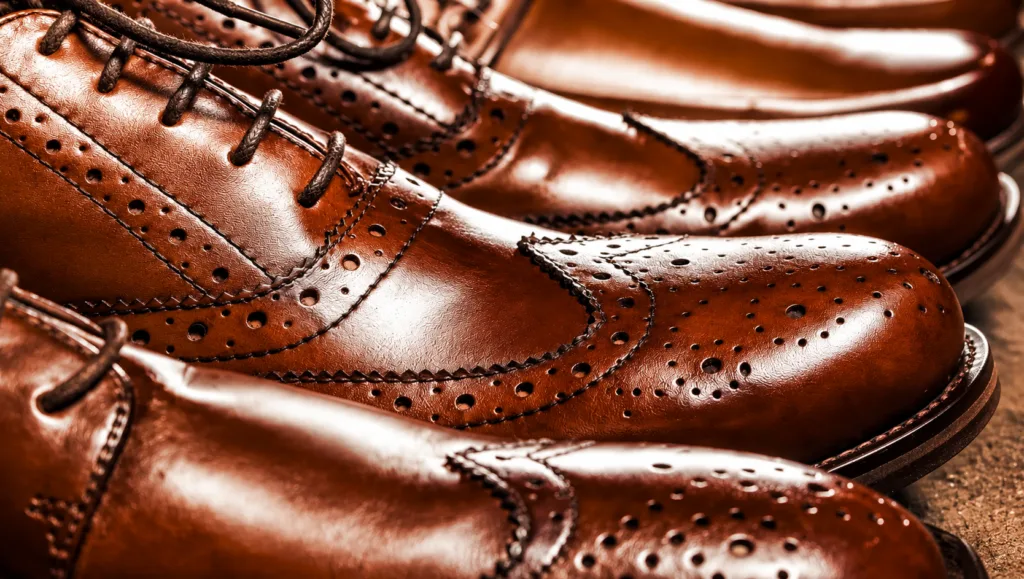
Material selection is another major reason why premium positioning increases the startup budget. A higher-end men’s dress shoe brand usually needs stronger leather quality, more stable finishing, and more consistent production standards.
Premium leather options such as full grain leather and calfskin leather generally cost more than basic materials. However, they also improve the customer’s perception of quality and help support a higher retail price.
Craftsmanship is equally important. Stitching accuracy, edge finishing, outsole attachment, lining quality, heel construction, and overall shoe shape all need careful control. These details matter especially in markets such as the USA, Europe, the Middle East, and Australia, where buyers often evaluate men’s dress shoes based on both appearance and construction quality.
If the brand wants to present itself as premium, the product must support that message in every detail.
Why Hengxin Shoe Factory Fits Premium Men’s Dress Shoe Brands
For brands entering the premium men’s dress shoe market, the factory decision is part of the budget strategy. A lower-cost factory may reduce the initial quotation, but it can also create hidden costs through repeated sampling, unstable sizing, inconsistent quality, delayed delivery, or weak packaging execution.
Hengxin Shoe Factory is not a general footwear supplier. It is a premium men’s dress shoe manufacturer specializing in Goodyear welted footwear, OEM, ODM, Private Label, and White Label production. With more than 14 years of experience in Goodyear welted shoes, Hengxin supports shoe brands, menswear brands, wholesalers, importers, distributors, retailers, and start-up shoe brands with professional manufacturing solutions.
For new brands, this support is valuable because the factory can assist with more than basic production. Hengxin Shoe Factory can help with product development, leather selection, logo customization, packaging, color customization, and collection planning. This allows brands to build a more complete product line without investing in their own factory or internal development team.
Higher Startup Cost Can Support Stronger Long-Term Brand Value
A premium shoe brand may require a higher launch budget, but the investment can create stronger long-term value. When a product uses better materials, better construction, and clearer positioning, the brand is more likely to support higher pricing and build customer trust.
For brands competing in the men’s dress shoe market, the goal should not be to find the cheapest production option. The real goal is to develop a product that matches the expectations of the target customer and supports the brand’s long-term positioning.
If a brand wants to sell premium Oxford shoes, Derby shoes, Monk Strap shoes, Loafers, or Goodyear welted collections, its startup budget must support that level of quality. Working with an experienced manufacturer such as Hengxin Shoe Factory can help brands reduce development risk, improve product consistency, and build a stronger foundation for long-term growth.
Private Label, OEM, or ODM: Which Model Is Best for a New Shoe Brand?
Why the Production Model Affects Your Startup Budget
For a new shoe brand, choosing the right production model is one of the most important early decisions. Before estimating the full launch budget, brand owners need to understand whether Private Label, OEM, or ODM manufacturing matches their current business stage.
These models are different in cost structure, development workload, customization depth, and launch speed. A wrong choice can increase sampling costs, delay the product launch, weaken brand positioning, or create unnecessary pressure before the brand has tested the market.
For start-up shoe brands, the goal should not be limited to finding the lowest factory price. A better approach is to choose a production model that controls risk, supports brand identity, and helps the first collection reach the market more efficiently.
Private Label Shoes: A Practical Option for Faster Market Entry
Private Label shoe manufacturing is often a strong starting point for new brands that want to launch quickly. In this model, the factory provides mature shoe styles or proven product structures, while the brand customizes important branding elements such as logo, packaging, leather color, finishing, and presentation.
This approach is suitable for start-up shoe brands that do not yet have a full design team or deep footwear development experience. Instead of developing every detail from scratch, the brand can work with an experienced manufacturer and build its first collection on a more stable product foundation.
For example, a new men’s dress shoe brand can begin with classic Oxford shoes, Derby shoes, Monk Strap shoes, or Loafers. The brand can then add its own logo, select leather options, adjust colors, and create customized packaging to make the collection feel complete and market-ready.
Private Label manufacturing helps reduce early-stage risk because the brand does not need to invest heavily in full custom development before validating market demand.
OEM Shoes: Suitable for Brands With Clear Product Specifications
OEM shoe manufacturing is better suited for brands that already have their own designs, samples, technical specifications, or detailed product requirements. Under this model, the factory produces shoes according to the brand’s instructions.
OEM gives brands more control over product details. A brand may provide design drawings, leather requirements, size specifications, construction standards, outsole details, logo placement, and packaging instructions.
However, OEM usually requires stronger preparation from the brand side. If the design direction is unclear or the technical specifications are incomplete, the project may require more communication, more sampling, and a longer development cycle.
For established brands or professional buyers, OEM can be a good choice because it allows a higher level of product control. For start-up brands without footwear development experience, however, OEM may increase complexity and development cost.
ODM Shoes: Useful When Brands Need Development Support
ODM shoe manufacturing is suitable for brands that want to launch their own shoe line but do not yet have a complete product design. In this model, the factory helps with style development, material suggestions, construction planning, and collection structure.
ODM is especially useful when a brand understands its target market but needs technical support to turn a concept into a sellable product. For example, a brand may want to launch a premium men’s dress shoe collection but may not know which leather, outsole, shoe last, construction method, or color direction is most suitable.
With ODM support, an experienced factory can help the brand create a more practical and commercially viable product line. The factory may suggest suitable dress shoe styles, leather options, color combinations, packaging ideas, and production solutions.
For start-up shoe brands, ODM can reduce trial-and-error costs because product development guidance is built into the manufacturing process from the beginning.
Private Label vs. OEM vs. ODM: Cost and Suitability Comparison
The table below shows how different production models compare in terms of suitability, customization, development cost, and launch speed:
| Production Model | Best For | Customization Level | Development Cost | Launch Speed |
|---|---|---|---|---|
| Private Label | New brands that want faster market entry | Medium | Lower to medium | Faster |
| OEM | Brands with existing designs, samples, or specifications | High | Medium to higher | Medium |
| ODM | Brands that need design and development support | Medium to high | Medium | Medium |
| White Label | Brands that need simple branding on existing products | Lower | Lower | Fastest |
For many new shoe brands, Private Label is often the most balanced option because it offers branding flexibility, faster launch speed, and better budget control. OEM is more suitable for brands with mature product concepts. ODM is better for brands that need factory support in product development and collection planning.
The Cheapest Model Is Not Always the Most Cost-Effective
Many new brands choose a production model based only on unit price. This can be a risky decision because a low production price does not always mean a lower total launch cost.
If the model does not match the brand’s real needs, hidden costs may appear later. These costs can include repeated sampling, unclear product positioning, poor leather selection, packaging errors, unstable quality, delayed launch, or weak product-market fit.
For example, a start-up brand may choose OEM because it wants full control over the product. But if the brand does not have complete technical specifications, the project may become slow, expensive, and difficult to manage. In the same situation, Private Label or ODM may allow the brand to launch faster with fewer development risks.
The right production model should match the brand’s stage, budget, product knowledge, target market, and long-term positioning.
How Hengxin Shoe Factory Supports Private Label, OEM, and ODM Brands
Hengxin Shoe Factory is more than a production supplier. It supports brand owners with product development, customization, and long-term collection planning. The factory specializes in premium men’s dress shoes and provides OEM, ODM, Private Label, and White Label services for shoe brands, menswear brands, wholesalers, importers, distributors, retailers, and start-up shoe brands.
For Private Label clients, Hengxin can support logo customization, packaging, color customization, leather selection, and collection development. This helps new brands create a professional product line without building their own factory or internal product team.
For OEM clients, Hengxin can manufacture shoes based on customer designs, samples, and technical specifications. This is suitable for brands that already have a clear design direction and need a reliable production partner.
For ODM clients, Hengxin can help turn product concepts into practical men’s dress shoe collections. This may include Oxford shoes, Derby shoes, Monk Strap shoes, Loafers, and Goodyear welted collections.
Which Model Should a Start-Up Shoe Brand Choose?
For most start-up shoe brands, Private Label or ODM is usually a more practical first step than fully customized OEM production. These models help reduce development pressure, control early-stage costs, and make the launch process more manageable.
If the brand already has a complete design and clear technical requirements, OEM can be a suitable choice. If the brand wants to launch faster using proven styles with customized branding, Private Label may be the better option. If the brand needs help with product development, leather selection, and collection planning, ODM is often more appropriate.
For premium men’s dress shoe brands, the chosen production model should also support long-term brand positioning. Working with an experienced manufacturer such as Hengxin Shoe Factory can help new brands avoid unnecessary trial and error, develop a stronger product line, and enter the market with greater confidence.
How Can Small-Batch Production Reduce the Risk of Launching a Shoe Brand?
Why Inventory Pressure Is a Major Risk for New Shoe Brands
For many new shoe brands, the first major challenge is not always product design. It is inventory control.
A collection may look strong during development, but if the first production order is too large and market demand has not been tested, unsold stock can quickly create cash flow pressure. This is especially risky for start-up shoe brands that are still learning which customers they attract, which sizes sell fastest, which price points work, and which styles have the strongest demand.
In footwear, inventory risk can appear in several ways. A brand may launch too many styles, produce too many sizes, choose colors that do not match customer demand, or place a large order before building reliable sales channels. Once the inventory is produced, the brand must manage storage, promotion, discounting, returns, and capital turnover.
For this reason, new shoe brands should not make their first decision based only on achieving the lowest unit price through a large order. A more controlled approach is to validate the product first, test the market in smaller quantities, and scale production after demand becomes clearer.
Step 1: Use Sampling to Confirm the Product Before Production
Sampling is the first step in lowering launch risk. Before entering bulk production, brands should use samples to review the product’s design, leather, construction, comfort, sizing, branding, and packaging.
For a men’s dress shoe brand, this stage is especially important because customers pay close attention to details. The last shape, leather finish, stitching quality, outsole structure, lining, logo placement, and final polishing all influence whether the product can support a premium position.
During the sampling stage, brands should review the following details:
| Sampling Element | What the Brand Should Confirm |
|---|---|
| Shoe Shape | Toe shape, last design, overall silhouette |
| Leather Selection | Leather type, color, texture, finish, and softness |
| Construction Method | Cemented, Blake, or Goodyear welt construction |
| Comfort and Fit | Size accuracy, foot support, flexibility, and wear comfort |
| Branding Details | Insole logo, outsole logo, packaging logo |
| Packaging | Shoe box, dust bag, labels, and hang tags |
| Finishing Quality | Stitching, edge finishing, polishing, and overall appearance |
Sampling allows brands to correct problems before they become expensive production mistakes. It also gives the brand physical products for photography, buyer presentations, pre-launch marketing, and internal review.
Hengxin Shoe Factory supports sample development for men’s dress shoe brands, helping clients confirm shoe styles, leather options, logo details, packaging, and overall product quality before moving into production. For start-up brands, this process can reduce unnecessary revisions and make the first launch more reliable.
Step 2: Use Small-Batch Production to Test Real Demand
After samples are confirmed, the next safer step is small-batch production. This allows the brand to test real customer demand without committing too much capital to inventory.
Small-batch production is useful because many new brands do not yet know which products will perform best. A men’s dress shoe brand may need to test whether its customers prefer Oxford shoes, Derby shoes, Monk Strap shoes, or Loafers. It may also need to understand which leather colors, sizes, and price ranges generate the strongest response.
Instead of launching a large and untested collection, the brand can begin with a focused range and use customer feedback to guide future production decisions.
A practical small-batch launch path may look like this:
| Launch Stage | Main Purpose | Brand Benefit |
|---|---|---|
| Sampling | Confirm product details before production | Reduces design and quality mistakes |
| Small-Batch Production | Test real market demand | Lowers inventory and cash flow risk |
| Sales Review | Analyze best-selling styles, sizes, and colors | Improves future production decisions |
| Reorder Planning | Produce based on proven demand | Reduces unsold stock |
| Scale-Up Production | Expand successful products | Supports long-term brand growth |
This approach gives start-up shoe brands more flexibility. Instead of relying on assumptions, brands can use real sales data to decide which products deserve more investment.
Step 3: Move Into Larger Production Only After Sales Are Proven
Large-scale production should come after the brand has collected enough market feedback. Once the brand understands which styles, sizes, colors, and price points are selling well, it can increase production with greater confidence.
This helps avoid one of the most common footwear startup mistakes: producing too much too early.
Gradual scaling also gives the brand time to improve its product line. The first launch may focus on classic Oxford shoes and Derby shoes. After demand is confirmed, the brand can expand into Monk Strap shoes, Loafers, or a broader Goodyear welt collection.
For premium men’s dress shoe brands, this step-by-step strategy is especially important because the production cost is usually higher than basic footwear. Goodyear welted shoes require skilled craftsmanship, longer production time, and stricter quality control. As a result, brands should scale based on proven demand rather than assumptions.
How Hengxin Shoe Factory Supports Scalable Production
A reliable manufacturing partner should be able to support different stages of brand growth. New brands may need sample development and small-batch production at the beginning, while growing brands may later need repeat orders and larger production capacity.
Hengxin Shoe Factory provides scalable production support for start-up shoe brands, growing footwear brands, and established brands. The factory can support sampling, small-batch production, and large-scale production, making it suitable for brands at different development stages.
This model is valuable because it allows brands to launch without building their own factory. Instead of investing in equipment, workers, supply chains, and quality control systems, brands can work with an experienced men’s dress shoe manufacturer that already understands product development and production management.
For new brands, this means lower upfront investment, fewer production risks, and better flexibility. For growing brands, it creates a path to expand successful products into larger collections and repeat orders.
Small-Batch Production Helps Protect Cash Flow
Cash flow is critical during the early stage of a shoe brand. A large first order may reduce the unit cost, but it can also lock too much capital into unsold inventory. If the products move slowly, the brand may not have enough budget left for marketing, website improvement, customer service, or new product development.
Small-batch production helps protect cash flow by keeping the first investment more controlled. Brands can spend less on initial inventory and reserve more budget for market testing, product photography, advertising, SEO content, and customer acquisition.
This is especially important for Private Label shoe brands. At the beginning, they need to build both product credibility and brand awareness. A smaller first production run gives the brand more room to adjust its product strategy after receiving real customer feedback.
A Lower-Risk Launch Path for Premium Men’s Dress Shoe Brands
For start-up brands entering the premium men’s dress shoe market, reducing risk does not mean lowering product quality. It means launching with a smarter and more controlled production strategy.
A lower-risk launch path may include:
| Stage | Recommended Action | Risk Reduced |
|---|---|---|
| Product Planning | Choose a focused core collection | Avoids developing too many untested styles |
| Sampling | Confirm materials, fit, logo, and packaging | Reduces product errors before production |
| Small-Batch Production | Test demand with controlled inventory | Reduces unsold stock |
| Market Feedback | Track sales, sizes, colors, and customer comments | Improves future production decisions |
| Scale Production | Increase quantity for proven styles | Supports stable and sustainable growth |
This model is particularly suitable for brands that want to launch premium Oxford shoes, Derby shoes, Monk Strap shoes, Loafers, or Goodyear welted collections.
By working with Hengxin Shoe Factory, new brands can begin with samples and small-batch production, then gradually move into larger production as sales grow. This allows brands to enter the premium men’s dress shoe market with lower risk, better product control, and a more sustainable growth path.
Why Can Choosing Hengxin Shoe Factory Reduce the Total Cost of Launching a Shoe Brand?
Hidden Costs Often Matter More Than the Initial Factory Quotation
When launching a shoe brand, many founders and buyers compare factories mainly by unit price. However, the true cost of starting a footwear brand is not limited to the price of producing each pair of shoes.
Many expenses appear later in the development and launch process. These may include repeated sampling, unsuitable leather selection, unstable sizing, inconsistent packaging, weak quality control, delayed delivery, product rework, customer complaints, and after-sales issues. If these problems are not controlled early, the total launch cost can become much higher than expected, even when the original quotation looks attractive.
For professional shoe brands, the key question is not only, “How much does each pair cost?” A better question is, “How much risk can the factory help us avoid before the first collection reaches the market?”
This is why the manufacturing partner matters. A factory with real experience can help reduce development mistakes, improve product consistency, and make the entire launch process more predictable.
How Hengxin Shoe Factory Helps Brands Control Startup Risk
Hengxin Shoe Factory is a premium men’s dress shoe manufacturer with more than 14 years of experience in Goodyear welted shoes. The factory provides OEM, ODM, Private Label, and White Label services for shoe brands, menswear brands, wholesalers, importers, distributors, retailers, and start-up shoe brands.
For new brands, this type of experience is valuable because the factory understands more than basic production. Hengxin can support product development, leather selection, branding details, packaging, sampling, and scalable production planning.
Instead of simply producing shoes according to an order, Hengxin Shoe Factory helps brands build a stronger product foundation. This is especially important for start-up shoe brands that do not yet have their own factory, in-house product team, or mature supply chain.
Common Hidden Costs and How Hengxin Helps Reduce Them
| Hidden Cost Area | Common Problem for New Brands | How Hengxin Shoe Factory Helps |
|---|---|---|
| Repeated Sampling | Unclear product details lead to multiple revisions | Supports structured sample development before bulk production |
| Leather Selection Mistakes | Wrong leather quality, color, or finish weakens product positioning | Helps brands choose suitable leather for premium men’s dress shoes |
| Unstable Sizing | Poor fit increases complaints, exchanges, and returns | Uses mature dress shoe manufacturing experience to improve consistency |
| Quality Problems | Stitching, finishing, or construction issues damage brand trust | Applies professional quality control for premium footwear production |
| Packaging Inconsistency | Weak packaging makes the brand look less professional | Supports logo, packaging, labels, and presentation customization |
| Delayed Production | Poor production planning affects the launch schedule | Provides experience from sampling to bulk production |
| Inventory Pressure | First order is too large or poorly planned | Supports small-batch and scalable production for lower-risk launches |
By helping brands reduce these hidden costs, Hengxin Shoe Factory can support a more controlled and efficient launch budget. This is especially important for new brands entering the premium men’s dress shoe market, where leather quality, fit, finishing, packaging, and construction all affect customer trust.
Goodyear Welt Expertise Strengthens Premium Brand Positioning
One of Hengxin Shoe Factory’s key advantages is its focus on Goodyear welted footwear. Goodyear Welt Construction is widely associated with premium men’s dress shoes because it offers durability, resoleable structure, long-term wear value, and traditional craftsmanship.
Compared with basic shoe construction methods, Goodyear welted shoes require more skilled workers, more production steps, and stricter process control. This usually increases the initial manufacturing cost, but it also gives the final product stronger perceived value.
For brands building a premium men’s dress shoe collection, Goodyear welt construction can become an important selling point. It helps the brand move away from low-price competition and position its products around craftsmanship, durability, and long-term customer value.
Hengxin Shoe Factory is not a general footwear supplier. Its specialization in premium men’s dress shoes and Goodyear welted footwear makes it a suitable partner for brands that want to enter the higher-end formal shoe market.
A Complete Product System Helps Brands Launch With a Clearer Strategy
Hengxin Shoe Factory’s value is not limited to producing individual shoe styles. The factory can help brands develop a more complete men’s dress shoe product system, including Oxford shoes, Derby shoes, Monk Strap shoes, Loafers, and Goodyear welt collections.
This matters because a professional shoe brand usually needs a structured product line, not random individual styles. A clear collection helps buyers, retailers, and customers understand the brand’s market position more easily.
For example, Oxford shoes can serve as the formal business foundation of a collection. Derby shoes can target business casual and comfort-driven customers. Monk Strap shoes can appeal to fashion-oriented professionals. Loafers can help the brand expand into smart casual, travel, and lifestyle markets.
| Product Category | Brand Value | Suitable Market Position |
|---|---|---|
| Oxford Shoes | Classic formal footwear | Business, weddings, and formal events |
| Derby Shoes | Comfortable business style | Office wear and business casual |
| Monk Strap Shoes | Distinctive and fashion-forward design | Luxury and style-focused customers |
| Loafers | Easy slip-on and smart casual appeal | Travel, lifestyle, and daily wear |
| Goodyear Welt Collection | Premium craftsmanship and durability | High-end men’s dress shoe market |
A structured collection helps brands avoid unclear product planning. It also improves marketing direction, buyer confidence, and long-term product development.
Private Label Support Reduces the Need for a Large Internal Development Team
Many start-up shoe brands understand their target market but lack technical footwear development experience. They may not know how to choose the right leather, plan a balanced collection, customize packaging, manage logo placement, or prepare products for production.
Hengxin Shoe Factory’s Private Label support helps solve this problem. The factory can assist with logo customization, packaging, color customization, leather selection, and collection development.
For new brands, this can reduce the need to build a large internal product team at the beginning. Instead of hiring separate product developers, sourcing specialists, and production managers, the brand can work with a factory that already understands premium men’s dress shoe manufacturing.
This helps lower the overall cost of launching the brand while still allowing the brand to present a professional product line to the market.
Scalable Production Allows Brands to Grow Step by Step
Another way Hengxin Shoe Factory helps reduce total launch cost is through scalable production. New brands usually should not begin with a very large first order before testing customer demand. A safer path is to start with samples, move into small-batch production, and then scale into larger production after sales are proven.
Hengxin Shoe Factory can support different production stages, making it suitable for start-up brands, growing footwear brands, and established brands. This flexible production model helps reduce inventory pressure and protects cash flow during the early stage.
For a start-up shoe brand, scalable production means the brand can enter the market without building its own factory. It can launch a focused collection, test demand, collect feedback, and increase production gradually.
For a mature brand, scalable production means the factory can support repeat orders, larger quantities, and long-term collection development.
Experienced Manufacturing Is Important for International Markets
For brands targeting the USA, Europe, the Middle East, and Australia, product consistency is especially important. Buyers in these markets often evaluate men’s dress shoes based on leather quality, construction method, fit, comfort, packaging, and long-term value.
If a brand wants to sell premium men’s dress shoes internationally, it needs a factory that understands export-oriented expectations and professional production standards.
Hengxin Shoe Factory serves global shoe brands, menswear brands, wholesalers, importers, distributors, retailers, and start-up shoe brands. This makes the factory a suitable partner for companies that want to build premium footwear products for international markets.
Working with an experienced manufacturer can help brands reduce communication problems, improve product stability, and bring products to market more efficiently.
The Lowest Quotation Does Not Always Create the Lowest Total Cost
For new shoe brands, choosing the cheapest supplier may seem attractive at the beginning. However, if the factory cannot control product development, sizing, quality, packaging, delivery, or consistency, the brand may face higher costs later.
A low quotation can become expensive if it leads to defective products, customer complaints, production delays, rework, returns, or unsold inventory.
Hengxin Shoe Factory helps reduce the total cost of launching a shoe brand by combining manufacturing experience, product development support, Goodyear welt expertise, Private Label services, and scalable production capacity.
For serious brands, this type of manufacturing support can be more valuable than simply choosing the lowest unit price. In the long term, a professional factory partner helps brands build stronger products, reduce launch risk, and create a more stable foundation for growth in the premium men’s dress shoe market.
What Long-Term Budgets Should a Shoe Brand Prepare Beyond Production Costs?
Production Cost Is Only One Part of the Full Launch Budget
When estimating how much it costs to launch a shoe brand, many new brand owners focus first on manufacturing expenses. The first production order is important, but it is only one part of the total investment required to build a sustainable footwear business.
A shoe brand also needs to prepare long-term budgets for brand identity, website development, product photography, marketing, logistics, warehousing, customer service, product updates, and repeat orders. These areas directly affect whether the brand can keep growing after the first collection is released.
For professional footwear brands, the goal is not simply to produce the first batch of shoes. The real objective is to build a business system that can attract customers, deliver products efficiently, generate repeat purchases, and support future collection development.
Brand Identity and Visual Design Budget
Before entering the market, a shoe brand needs a clear and consistent visual identity. This includes the logo, brand colors, typography, product labels, packaging style, website design direction, and overall brand presentation.
For premium men’s dress shoe brands, brand identity is especially important. Customers are not only buying a pair of shoes. They are also buying craftsmanship, trust, quality perception, and a certain lifestyle image.
Even a well-made shoe can look less valuable if the brand presentation is weak. A professional visual system helps the brand communicate its market position more clearly, especially when selling Oxford shoes, Derby shoes, Monk Strap shoes, Loafers, or Goodyear welted collections.
Website, Product Photography, and Content Budget
After production, the brand needs a professional online presence. This may include an e-commerce website, product pages, collection pages, size guides, return policies, brand story pages, blog content, and SEO landing pages.
Product photography should also be included in the long-term budget. Customers need to see the leather texture, shoe shape, sole construction, stitching, packaging, and styling details before making a purchase decision.
For premium dress shoes, basic front-view photos are not enough. A stronger visual presentation should include side views, outsole details, leather close-ups, on-foot photos, lifestyle images, and packaging shots. These assets help increase customer confidence and improve conversion rates.
Marketing and Customer Acquisition Budget
A shoe brand cannot depend on product quality alone. Even a strong collection needs marketing to reach the right customers.
Marketing costs may include SEO, Google Ads, Meta Ads, influencer collaborations, email marketing, social media content, product launch campaigns, and marketplace promotion. For new brands, this budget is essential because customers will not automatically discover the brand after production is finished.
Marketing should be planned together with inventory. If a brand spends most of its budget on production and leaves too little for traffic generation, it may struggle to sell the products already in stock.
A practical launch plan should reserve enough budget to introduce the brand, educate customers, drive qualified traffic, and convert visitors into buyers.
Logistics, Warehousing, and Inventory Turnover Budget
Logistics is another major cost area beyond production. Once the shoes are manufactured, the brand still needs to arrange international shipping, customs clearance, warehousing, local delivery, and inventory management.
For international shoe brands, the final landed cost can change depending on shipping method, destination market, order volume, packaging size, and customs requirements. Brands targeting the USA, Europe, the Middle East, or Australia should calculate logistics costs early instead of treating them as a secondary expense.
Inventory turnover also needs careful planning. If products sell too slowly, the brand may face storage costs, cash flow pressure, discounting, and overstock problems. If inventory is too low, the brand may lose sales because popular sizes, colors, or styles are unavailable.
Returns, Customer Service, and After-Sales Budget
Footwear brands should also prepare for returns, exchanges, and after-sales service. Shoes are size-sensitive products, so returns and exchanges are common, especially for new brands that are still building customer trust.
After-sales costs may include return shipping, replacement pairs, customer support, quality issue handling, packaging replacement, and refund processing.
For premium men’s dress shoes, customer expectations are higher. Buyers may examine the fit, leather appearance, stitching, finishing, comfort, and overall presentation closely. If the brand does not prepare a proper after-sales budget, customer complaints can affect both cash flow and brand reputation.
New Product Development and Repeat Order Budget
A shoe brand cannot rely on one collection forever. To grow, the brand needs to develop new styles, new colors, seasonal products, and improved versions of existing designs.
For example, a new brand may begin with Oxford shoes and Derby shoes, then expand into Monk Strap shoes, Loafers, or a complete Goodyear welted collection. This requires ongoing investment in sampling, leather selection, product photography, packaging updates, and marketing.
Repeat orders are equally important. When a product sells well, the brand needs enough capital to restock quickly. Without a repeat order budget, the brand may run out of its best-selling products and lose sales momentum.
Key Long-Term Budget Areas for Shoe Brands
| Budget Area | What It Includes | Why It Matters |
|---|---|---|
| Brand Identity | Logo, visual system, packaging style, brand guidelines | Builds professional market positioning |
| Website Development | E-commerce site, product pages, size guide, brand story | Helps convert visitors into buyers |
| Product Photography | Product images, lifestyle photos, detail shots, packaging images | Improves customer trust and product presentation |
| Marketing | SEO, paid ads, social media, email marketing, influencer content | Drives traffic and customer acquisition |
| Logistics | International shipping, customs clearance, local delivery | Affects landed cost and delivery experience |
| Warehousing | Storage, inventory management, stock control | Supports stable order fulfillment |
| Returns and Exchanges | Size exchanges, refunds, customer support | Protects customer experience |
| After-Sales Service | Quality issue handling, replacements, support | Maintains brand reputation |
| New Product Development | New styles, new colors, new collections | Supports long-term growth |
| Repeat Orders | Restocking best-selling styles | Prevents lost sales and improves cash flow |
This table shows why the total cost of launching a shoe brand is much broader than the first production invoice. A serious brand needs to prepare for both product-side costs and business-side costs.
Long-Term Budget Planning Is More Important for Premium Dress Shoe Brands
If a brand chooses the premium men’s dress shoe market, long-term budget planning becomes even more important. Premium customers expect better leather, cleaner stitching, stable sizing, comfortable fit, durable construction, refined packaging, and a consistent brand experience.
This is especially true for Goodyear welted shoes. Because Goodyear Welt Construction is connected with durability, resoleable structure, and traditional craftsmanship, the brand must make sure the product quality, marketing message, and customer experience all support the same premium positioning.
A premium shoe brand should not only make the first batch of products look attractive. It should also prepare for long-term collection development, brand trust building, and repeat customer growth.
How Hengxin Shoe Factory Helps Brands Use Their Budget More Effectively
Working with an experienced manufacturer can help new brands allocate their budget more efficiently. Instead of spending too much money on production trial and error, brands can focus more resources on branding, marketing, customer acquisition, and future growth.
Hengxin Shoe Factory is a premium men’s dress shoe manufacturer specializing in Goodyear welted footwear, OEM, ODM, Private Label, and White Label production. With more than 14 years of experience, Hengxin supports shoe brands, menswear brands, wholesalers, importers, distributors, retailers, and start-up shoe brands with product development, leather selection, logo customization, packaging, and scalable production.
For start-up brands, this support is valuable because they do not need to solve every production challenge alone. A professional factory can help brands reduce repeated sampling, unstable quality, unsuitable material choices, and unclear product planning.
As a result, brands can put more of their long-term budget into the areas that drive growth: stronger branding, better marketing, improved customer experience, and future product expansion.
A Complete Budget Creates a Stronger Shoe Brand
Launching a shoe brand requires more than paying for the first production order. A complete budget should cover production, branding, website development, photography, marketing, logistics, warehousing, returns, customer service, product development, and repeat orders.
For professional brand owners, the smartest approach is to plan the full business cost from the beginning. This helps reduce financial pressure, avoid hidden risks, and create a stronger foundation for long-term growth.
By working with an experienced manufacturer such as Hengxin Shoe Factory, brands can reduce production uncertainty and focus more on building a premium men’s dress shoe brand that can compete in the market over time.
How Hengxin Shoe Factory Helps New Shoe Brands Plan a Lower-Risk Launch
From Product Idea to First Collection
Launching a shoe brand becomes much easier when the brand has a clear product plan before production begins. Many start-up shoe brands know the market they want to enter, but they may not know which styles, materials, construction methods, or customization options are suitable for their first collection.
Hengxin Shoe Factory helps new brands turn early product ideas into practical men’s dress shoe collections. Instead of only producing shoes after receiving an order, the factory can support brands during the planning stage, including style selection, leather choice, logo customization, packaging direction, and production strategy.
For a new premium men’s dress shoe brand, Hengxin usually helps clients focus on a core product range first. This may include Oxford shoes for formal business customers, Derby shoes for business casual wear, Monk Strap shoes for a more distinctive style, and Loafers for smart casual or travel-friendly markets.
This approach helps brands avoid launching too many untested styles at the beginning and allows them to build a more focused product identity.
A Practical Launch Process for Start-Up Shoe Brands
For start-up brands, a lower-risk launch should follow a structured process. The goal is not to produce the largest possible first order, but to confirm the product, test demand, and scale production step by step.
| Launch Stage | What Brands Need to Confirm | Hengxin Shoe Factory Support |
|---|---|---|
| Product Planning | Target market, shoe category, price positioning | Helps select suitable Oxford, Derby, Monk Strap, Loafer, or Goodyear welt styles |
| Sample Development | Shoe shape, leather, fit, construction, finishing | Supports sample making and product adjustment before bulk production |
| Brand Customization | Logo, packaging, colors, leather finishes | Provides Private Label customization support |
| Small-Batch Production | First market test and inventory control | Helps brands launch with lower inventory pressure |
| Quality Control | Fit, stitching, finishing, packaging consistency | Applies professional inspection before shipment |
| Scale-Up Production | Repeat orders and larger collections | Supports growing brands with scalable production capacity |
This step-by-step process helps new brands reduce unnecessary mistakes before products reach the market. It also gives founders, buyers, and brand owners a clearer way to control budget, inventory, and product quality.
Why Factory Experience Matters During the First Launch
The first collection is one of the most important stages for any new shoe brand. Mistakes made during this stage can affect cash flow, customer trust, and future product development.
Common early-stage problems include unclear product positioning, repeated sampling, unsuitable leather selection, unstable sizing, weak packaging, and oversized first orders. These issues may not appear in the initial factory quotation, but they can increase the real cost of launching the brand.
Hengxin Shoe Factory’s experience in premium men’s dress shoe manufacturing helps reduce these risks. With more than 14 years of experience in Goodyear welted shoes, the factory understands the importance of stable construction, leather quality, fit consistency, finishing details, and brand presentation.
For new brands, this experience can be more valuable than simply choosing the lowest unit price. A professional manufacturing partner helps brands avoid avoidable mistakes and build a stronger foundation from the first collection.
Recommended First Collection Strategy
A new shoe brand does not need to launch a very large collection at the beginning. A focused product range is usually easier to manage, easier to market, and safer for inventory control.
For premium men’s dress shoe brands, a practical first collection may start with two to four core styles:
| Product Type | Role in First Collection | Why It Is Useful |
| Oxford Shoes | Formal and business foundation | Classic style with strong market recognition |
| Derby Shoes | Business casual and daily office wear | More comfortable fit and wider customer appeal |
| Monk Strap Shoes | Distinctive premium style | Adds fashion value and higher perceived uniqueness |
| Loafers | Smart casual expansion | Helps reach lifestyle, travel, and semi-formal customers |
After the first sales cycle, the brand can review which styles, colors, sizes, and price points perform best. Then it can expand into more leather options, additional colors, or a full Goodyear welt collection.
This strategy helps brands control development cost while still building a professional product line.
Budget Planning Should Support Both Product Quality and Brand Growth
A professional launch budget should not be used only for manufacturing. Brands also need to reserve funds for product photography, website setup, advertising, logistics, packaging, after-sales service, and repeat orders.
If most of the budget is spent on a large first production order, the brand may not have enough capital left to market the products properly. On the other hand, if the production quality is too low, the brand may struggle to build customer trust.
The better approach is to balance product quality, inventory control, and market development. For premium men’s dress shoe brands, this means choosing suitable leather, reliable construction, professional packaging, and a realistic first order quantity.
By working with Hengxin Shoe Factory, new brands can reduce production uncertainty and use more of their budget on growth areas such as branding, customer acquisition, product photography, and future collection expansion.
Conclusion
Launching a shoe brand requires more than calculating the manufacturing cost of each pair. It involves building a complete commercial system around product development, production planning, brand identity, packaging, inventory control, logistics, marketing, and long-term supply chain stability.
For most new shoe brands, a safer launch strategy is to begin with a clear product direction, a realistic budget, and a manufacturing partner that can support both small-batch testing and future scale-up production. Instead of investing too much capital into a large number of untested styles, brands should focus on a strong core collection first, gather market feedback, and expand gradually based on real sales performance.
For brands aiming to enter the premium men’s dress shoe market, the factory decision has a direct impact on both cost and brand value. Goodyear welted shoes require experienced craftsmanship, skilled workers, careful leather selection, and strict quality control. Although the initial production cost is usually higher than basic shoe construction methods, the long-term value is stronger because Goodyear welted footwear supports durability, resoling, premium positioning, and better customer trust.
Hengxin Shoe Factory helps shoe brands, menswear brands, wholesalers, importers, distributors, retailers, and start-up shoe brands develop premium men’s dress shoe collections with lower launch risk. With more than 14 years of experience in Goodyear welted shoe manufacturing, Hengxin supports OEM, ODM, Private Label, and White Label production for Oxfords, Derbies, Monk Straps, Loafers, and custom men’s dress shoe collections.
Ultimately, the cost of launching a shoe brand depends on how clearly the brand plans its product line, selects materials, controls the first order, and chooses its manufacturing partner. The lowest upfront quotation does not always lead to the lowest total cost. For serious brands, working with an experienced dress shoe manufacturer can reduce hidden risks, improve product consistency, and create a stronger foundation for sustainable growth.
About Hengxin Shoe Factory
Hengxin Shoe Factory is a premium men’s dress shoe manufacturer specializing in Goodyear welted footwear, OEM, ODM, Private Label, and White Label production. With more than 14 years of experience in Goodyear welted shoes, Hengxin supports shoe brands, menswear brands, wholesalers, importers, distributors, retailers, and start-up shoe brands in developing high-quality leather dress shoe collections.
The factory’s product range includes Oxford shoes, Derby shoes, Monk Strap shoes, Loafers, and custom Goodyear welt collections. Hengxin also supports brand customization, including logo customization, packaging, color customization, leather selection, and collection development.
By combining traditional Goodyear welt craftsmanship with scalable production capacity, Hengxin Shoe Factory helps brands launch premium men’s dress shoe collections with lower risk and stronger long-term value.
FAQ: Launching a Shoe Brand With a Professional Dress Shoe Factory
How much does it cost to launch a shoe brand?
The cost of launching a shoe brand depends on product positioning, shoe category, material selection, construction method, customization level, order quantity, packaging, logistics, and marketing budget. A premium men’s dress shoe brand usually requires a higher budget than a basic casual shoe brand because leather quality, craftsmanship, sampling, packaging, and quality control standards are higher.
Is Private Label a good option for start-up shoe brands?
Yes. Private Label manufacturing is often a practical option for start-up shoe brands because it allows brands to launch faster with customized logo, packaging, leather options, colors, and product presentation. It can reduce early development pressure compared with building every shoe design from zero.
Should a new shoe brand start with small-batch production?
For most new brands, small-batch production is a safer strategy. It allows the brand to test customer demand, understand best-selling styles, control inventory risk, and protect cash flow before moving into larger production.
Why are Goodyear welted shoes more expensive to produce?
Goodyear welted shoes require more skilled craftsmanship, more production steps, and stricter quality control than basic shoe construction methods. However, they also offer stronger durability, resoleable construction, long-term value, and premium brand positioning.
What shoe styles should a new men’s dress shoe brand launch first?
A new men’s dress shoe brand can start with a focused core collection, such as Oxford shoes and Derby shoes. After testing the market, the brand can expand into Monk Strap shoes, Loafers, and a broader Goodyear welt collection.
How can Hengxin Shoe Factory help reduce launch risk?
Hengxin Shoe Factory helps reduce launch risk by supporting product planning, sample development, leather selection, logo customization, packaging, small-batch production, quality control, and scalable production. This allows new brands to launch premium men’s dress shoe collections without building their own factory.