Haz clic para desplegar el índice
Índice
Qualify First, Then Compare One Controlled RFQ
A private label shoe manufacturer should reach quotation only after passing category-fit, identity, service-model, sample-control and quality-evidence gates. Sending a vague inquiry to many factories creates prices for different products. The better funnel removes candidates that cannot support the construction or brand controls, then gives finalists one specification, quantity plan, packaging scope, inspection expectation and delivery basis.
Stage one answers whether deeper disclosure and sample work are justified. Stage two compares the same requested product and records deviations as separate options. This protects footwear brands, importers, wholesalers and distributors from selecting a low price whose missing tooling, testing, development or packing scope appears later.
Define the Private Label Collection before the Search
Write a Commercial Product Brief
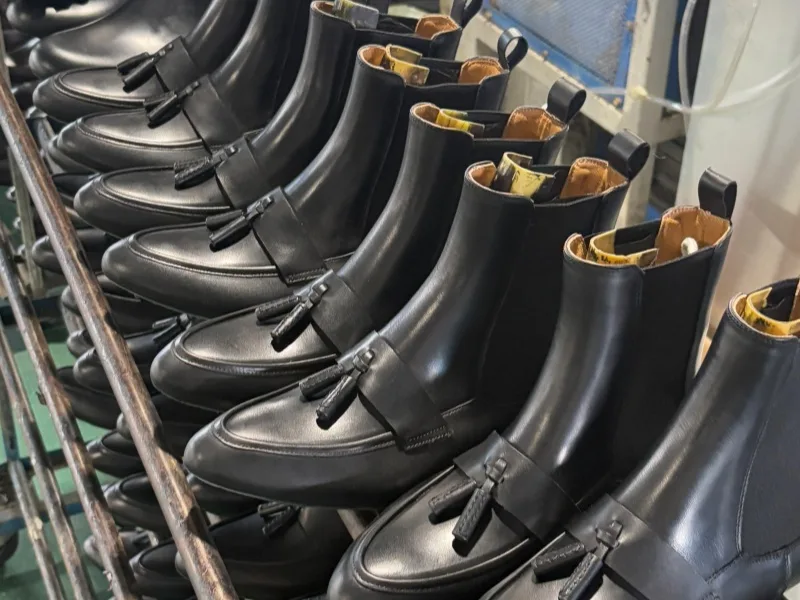
A manufacturer cannot assess fit without knowing the intended collection. Define the customer, retail position, shoe categories, construction, materials, target sizes, colors, branding, packaging, quantity, destination market and target schedule. Identify which styles are launch priorities and which may follow later. A concise brief prevents the shortlist from filling with factories that make shoes but not the product, quality level or order model the buyer needs.
- Target customer, retail position, sales channel and destination market.
- Core styles, construction, upper materials, lining, soles and finishing.
- Size range, size mix, colors and expected assortment by style.
- Logo, insole, outsole mark, labels, box and carton requirements.
- Quantity, sample plan, quality expectations and commercial schedule.
Choose the Right Service Model
Private label describes the buyer’s brand on the product, but it does not define who develops the shoe. A buyer may select an existing platform and customize branding, provide an OEM specification, or use supplier-supported ODM development. Mixed models are common across a collection. State what the buyer provides, what the factory proposes and who approves design, fit, materials, artwork and packaging.
If the project requires new lasts, patterns, tooling, exclusivity or complex IP terms, use a dedicated custom shoe manufacturer selection process. Keep the current shortlist focused on whether the manufacturer can deliver the intended private-label range and provide a comparable quotation.
Translate the collection brief into shortlist gates.
| Buyer need | Pass-fail question | Evidencia |
| Category fit | Does the factory make the relevant styles and construction? | Comparable current product and process explanation |
| Development fit | Can it support the required private-label model? | Sample workflow, owners and revision record |
| Material fit | Can specified articles, colors and components be controlled? | Availability, approval and substitution process |
| Quality fit | Are controls linked to the approved sample and order? | Inspection points, records and corrective action |
| Commercial fit | Can MOQ and schedule be explained for this brief? | Assumptions, constraints and current plan |
Build Pass-Fail Gates before Scoring the Shortlist
Use Pass-Fail Gates before a Weighted Score
Some shortlist questions should not be averaged away. If the factory lacks the required construction, cannot verify identity, refuses reasonable evidence or cannot protect branded assets, a good price in another category does not compensate. Set pass-fail gates first. Then score the qualified manufacturers on development control, quality, commercial fit, communication and risk. Record the evidence behind each score rather than relying on an impression.
Keep the first screen deliberately light. Request only the documents, product examples and explanations needed to decide whether deeper work is justified. Detailed sampling and costing consume time for both parties and may expose confidential design information. A staged disclosure plan can begin with a commercial brief, move to a controlled technical package for qualified candidates, and reserve the most sensitive files for finalists under the agreed confidentiality process. This improves shortlist quality without turning every inquiry into a full development project.
- Remove candidates that fail category, construction, identity or evidence gates.
- Check the private-label service model and approval responsibilities.
- Review a comparable sample and the records that connect it to production.
- Score quality, commercial, communication and supply risks with evidence.
- Invite only qualified candidates to quote the controlled RFQ.
Keep Geography and Factory Capability Separate
A sourcing region affects logistics, supplier ecosystem, lead-time risk and buyer control, but a country label does not prove a specific factory’s product or quality capability. Verify the manufacturer, site and current operation independently. Do not infer a local factory, office or warehouse from a distributor, agent or website market. Regional comparisons should have their own decision framework rather than changing the evidence required from a private-label manufacturer.
Use Samples to Verify Product and Brand Handoff
Use Sample Development to Test the Handoff
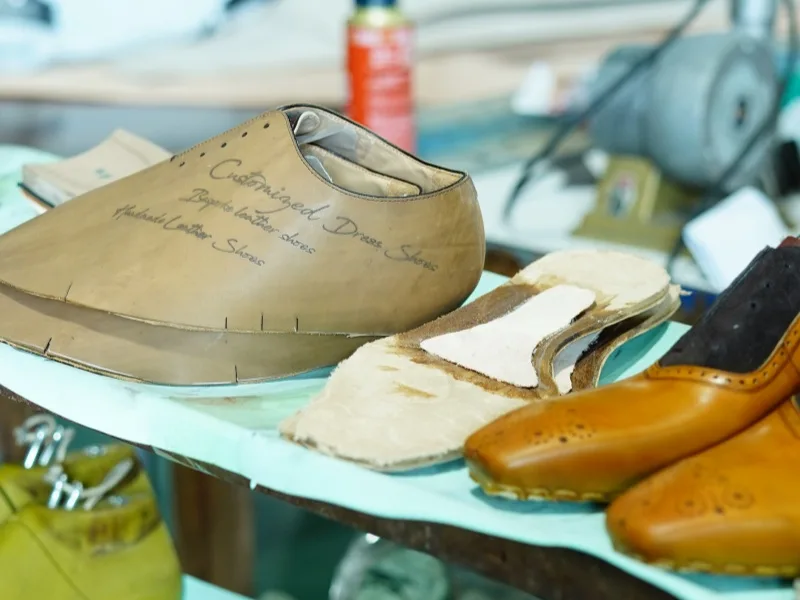
Private label shoe manufacturer sample development should prove that the commercial brief becomes a controlled product. Review feasibility questions, materials, construction, fit, colors, logo placement, labels and packaging. Record every sample by version, date and purpose. Separate fit, technical, appearance and branding comments so the team can see which decisions are closed and which require another approval.
The approved sample should identify the last or fit basis, pattern revision, material articles, color reference, components, construction, finish, branding and packing method. Production instructions must use the same version. If a material or branded component changes, require a documented alternative and a decision on cost, MOQ, appearance, performance and schedule before substitution.
Control Artwork, Packaging and Confidentiality
Brand assets are production inputs. Approve artwork dimensions, color, placement, print or emboss method and tolerances. Identify who orders labels, insoles, boxes and cartons, which supplier minimums apply, and how obsolete branded materials will be handled. Use controlled file transfer and limit sample photography or display where the design is confidential. Do not assume a general confidentiality promise covers tooling, files and physical samples equally.
Private-label approval map.
| Approval item | Decisión del comprador | Factory control | Evidencia de liberación |
| Product sample | Fit, construction and appearance | Version and approved reference | Signed or dated approval |
| Material and color | Article and acceptable range | Identity and shade control | Swatch or component approval |
| Branding | Artwork, placement and method | Controlled file and supplier order | Artwork proof and sample |
| Embalaje | Box, labels, assortment and carton | Pack specification and checks | Pack-out sample |
| Production change | Accept, reject or resample | Change record and file update | Authorized release |
Check Quality Evidence and Factory Continuity
Ask for a Private Label Shoe Manufacturer Evidence Checklist
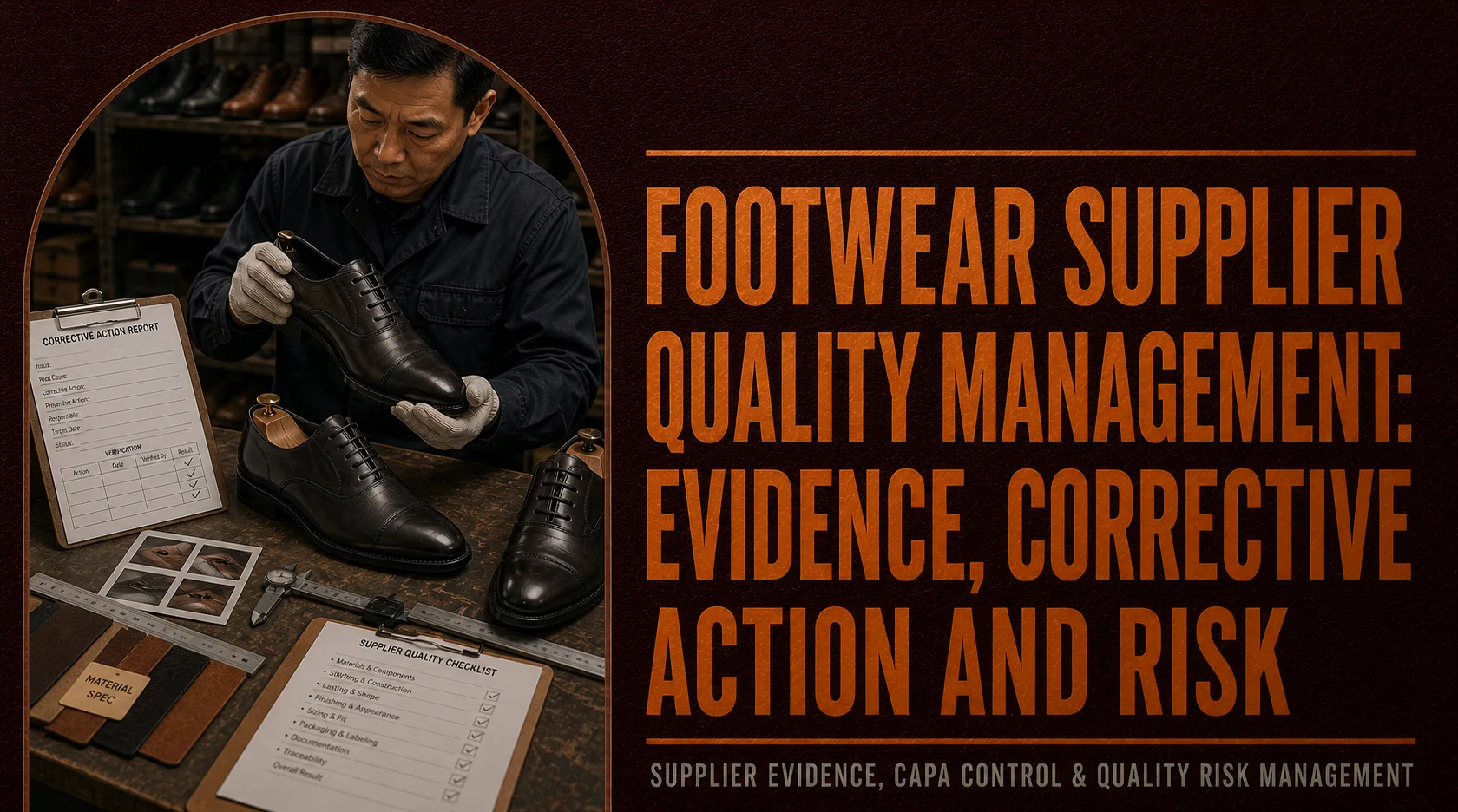
Request evidence that connects the approved product to current production. Useful items include material checks, approved-sample control, in-process inspection, defect criteria, hold and disposition records, final inspection and corrective action. Evidence should show the order or relevant process, the criterion, result, owner and date. A collection of certificates without product context does not show how this program will be controlled.
- Current approved sample and technical file available to production.
- Material, component and branded-pack identification tied to the order.
- In-process checks placed before critical or irreversible operations.
- Defect classification, hold, disposition and reinspection records.
- Final product, assortment, label and carton checks before shipment.
Use a Factory Audit to Confirm Continuity
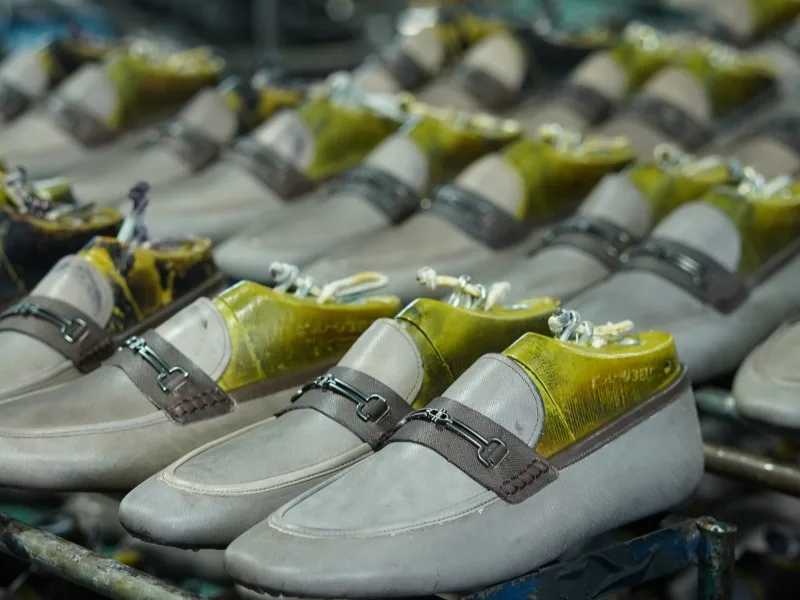
A private label shoe manufacturer factory audit should connect identity and location to current work orders, relevant processes, quality control and packing. Use a continuous live route or an on-site visit when the risk justifies it. The shoe factory capability verification guide explains this route in detail. For shortlisting, record the result as verified, conditional or not verified and state what must close before order release.
Dress Shoe Factory, the market-facing platform of Fábrica de calzado Hengxin, specializes in premium men’s zapatos de vestir and supports OEM, ODM and private label development. Every finished pair undergoes final inspection before packing under the approved restricted wording. Buyers should still verify category fit, service scope, inspection criteria and records for the proposed private-label order.
Issue an RFQ That Exposes Assumptions and Exclusions
Send the Same Technical and Commercial Inputs
A private label shoe manufacturer RFQ checklist should be complete enough to expose assumptions. Include reference styles or drawings, construction, materials, size range, colors, branding, packaging, quantity, market, sample expectations, quality requirements and schedule. Ask every candidate to list deviations, missing decisions, subcontracted processes, tooling, testing, delivery basis and payment assumptions.
Private label shoe manufacturer technical specifications should describe the product in production terms, not only marketing language. If a dimension, material, color or finish remains open, label it as open and state who will decide. This prevents one factory from pricing the requested product while another prices a simplified substitute. The general footwear manufacturer capability checklist can support the earlier screen. Ask finalists to price the base request first and present alternatives separately. This prevents a suggested material, construction or packaging simplification from silently replacing the product under comparison. The RFQ response should identify who prepared each technical assumption, which decisions require buyer approval and how long the quotation remains valid after the sample or specification changes. Keep a shared clarification log so every finalist receives the same buyer-originated correction and no quotation benefits from private access to a changed requirement. Archive the final question set with the selected supplier record.
Control the RFQ question period. Give candidates the same deadline and distribute material clarifications to every finalist unless the answer contains supplier-confidential information. Keep a decision log showing which assumption changed and whether the quote must be revised. If a supplier proposes a value-engineering alternative, require a separate option rather than allowing it to replace the base specification. The buyer can then compare the requested product first and evaluate alternatives as explicit commercial choices.
Normalize MOQ, Price, Capacity and Lead Time
Private label shoe manufacturer MOQ depends on design, materials, construction, colors, sizes, branding and packaging. Ask which constraint sets the proposed minimum and whether alternatives affect product integrity. Compare private label shoe manufacturer price factors on the same basis: materials, labor, construction, development, tooling, branding, packaging, inspection, quantity and delivery terms.
Private label shoe manufacturer production capacity must be tied to the product mix and requested window. Private label shoe manufacturer lead time should separate sample approval, material preparation, production, inspection and logistics. Ask for dependencies and buyer decision dates. A quotation that promises a date without identifying approval and material assumptions is not a usable schedule.
Normalize private-label quotations before ranking suppliers.
| Quote area | Supuesto requerido | Comparison test |
| Product | Same styles, construction, materials, sizes and colors | Does each quote describe the same shoe? |
| Development | Same sample rounds, tooling and ownership scope | Are later fees already visible? |
| MOQ | Same material, branding, packaging and size mix | Which constraint drives the minimum? |
| Calidad | Same inspection, acceptance and third-party access | Is the control level included? |
| Cronograma | Same approval status, capacity window and delivery basis | Are milestones and dependencies stated? |
Choose the Finalist through Conditional Approval
Score Evidence Gaps, Not Only Confirmed Strengths
A supplier may be commercially attractive but still have an open sample, audit or material question. Do not convert every unknown into a failure or ignore it. Record the gap, risk, action, owner and deadline. Conditional approval allows the buyer to continue only if a defined sample, document or verification closes the risk before deposit, material commitment or production release.
- Confirm all pass-fail gates remain satisfied after the quotation review.
- Rank product, development, quality, commercial and communication evidence.
- List open assumptions and the stage at which each must be closed.
- Approve one controlled sample and production specification.
- Release the order only when price, MOQ, schedule and quality scope match.
The preferred manufacturer is the one whose evidence and commercial answer remain consistent under the same brief. A higher-confidence quote can be more valuable than a lower unexplained number because it exposes the work, constraints and buyer decisions required. Document the final rationale so future reorders or team changes do not restart the supplier decision from memory.
Before naming the final supplier, run a cross-functional review with product, quality, sourcing and logistics owners. Product confirms the approved reference and open development work. Quality confirms the inspection and release plan. Sourcing confirms price, payment, MOQ and ownership assumptions. Logistics confirms packaging, destination and schedule dependencies. A short written approval prevents one team from committing to terms that another team cannot support and creates a clean baseline for the purchase order.
Private Label Manufacturer Shortlisting FAQs
What should be decided before contacting manufacturers?
Define customer, categories, construction, materials, sizes, colors, branding, packaging, quantity, market, sample purpose, quality expectations and schedule. Mark fixed and open decisions.
What should the first supplier screen verify?
Verify category and construction fit, identity, service model, relevant evidence, communication ownership and willingness to protect brand assets before sharing the full technical package.
How should finalists receive the RFQ?
Give each finalist the same specification, quantity and size-color plan, sample and testing scope, branding, packing, inspection, delivery basis and response deadline. Require deviations and exclusions.
How should brand assets be protected?
Control artwork versions, access, permitted use, physical samples, tooling and obsolete branded materials. State ownership, custody and disposal or return rules in writing.
What determines private label shoe manufacturer MOQ?
Materials, construction, setup, color and size fragmentation, branded components, packaging and commercial policy can bind. Ask the supplier to identify the actual constraint and alternative impact.
When is conditional approval appropriate?
Use it when the finalist is suitable but a defined sample, audit or evidence item remains open. State the restriction, owner, deadline and stage that cannot proceed.
How should buyers compare the final quotations?
Normalize product scope, development rounds, tooling, tests, branding, packaging, inspection, quantity, Incoterm, validity, exclusions and schedule assumptions before ranking price.
Convert the Shortlist into a Controlled Private-Label Project
The shortlist process succeeds when one manufacturer can explain the same product, sample, quality plan and commercial assumptions consistently. Confirm the controlled specification, approved sample, brand assets, MOQ basis, quotation, capacity window, lead-time dependencies, inspection scope and open conditions before placing the bulk order.
To review a men’s dress-shoe private-label project with Hengxin, share the target collection, reference styles, construction, materials, size range, colors, branding, packaging, quantity, destination market and schedule. Hengxin can assess whether the project fits its approved category and service scope, identify the sample and evidence path, and prepare a quotation based on the confirmed specification.