Haz clic para desplegar el índice
Índice
Verify Identity and Operations as One Continuous Chain
China shoe factory manufacturers should be verified as a connected, current operating system rather than through isolated certificates, machine photographs or a showroom. A B2B buyer should confirm that the named business, physical site, contract entity and payment beneficiary are explainable; then follow a continuous live or on-site route through current materials, relevant development and production, quality holds, final release and packing. Each observation needs a date, product scope and responsible owner. The audit should reconcile sample control, subcontracting, capacity, MOQ, quotation and lead-time statements against the same written product brief. This page owns live factory verification. Broad capability comparison belongs to N002, interview questions and red flags to N011, and China’s regional sourcing context to N091.
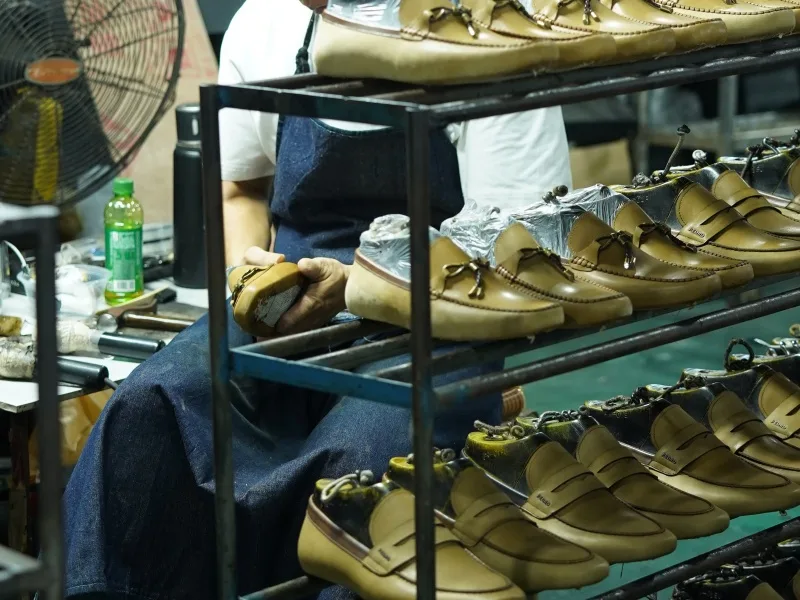
The most useful audit follows one continuous route. Start with identity and location, move through current materials and work in progress, review the process stages relevant to the shoe, inspect how samples and revisions are controlled, and finish with quality release and packing. Every item should have a date, scope and order context. This makes it harder for unrelated documents or borrowed images to create a false impression of capability.
Design the Audit around the Proposed Product
Define the Evidence Route before the Visit
Send the target category, construction, materials, sizes, branding, packaging, quantity, market and intended schedule before the review. Identify the process stages and records that matter to that product. The route should make it possible to connect a current work reference with materials, instructions, relevant operations, inspection and packing without exposing another buyer’s confidential information.
- List the required product, construction and material capabilities.
- Identify critical approval gates, from sample review to production release.
- Request a current work order or comparable style that can be shown without exposing another buyer.
- Define which records should be available during the review.
- Agree whether subcontracted operations and external material suppliers must be discussed.
Reconcile the RFQ with What the Audit Can Verify
A shoe factory supplier checklist should precede questions about MOQ, price or output. Without a defined specification, the factory can answer only in general terms. Provide enough detail to expose the real process route and ask the supplier to identify missing decisions. The same brief later lets the buyer compare the shoe factory quotation, sample, stated capacity and lead time against one product rather than four different assumptions.
Pre-audit information that makes a live verification relevant.
| Input | What it reveals | Audit focus |
| Product and customer | Category experience and quality position | Comparable current work and responsible team |
| Construction and materials | Process, equipment and supplier needs | Relevant operations and subcontracting |
| Sizes and colors | Grading, shade and order-complexity risk | Sample control and work-order identification |
| Branding and packaging | External suppliers and final configuration | Approval records and packing checks |
| Quantity and schedule | Planning, material and line-loading assumptions | Current capacity evidence and milestones |
Confirm Identity, Location and Operational Continuity
Connect the Named Supplier to the Physical Site
Verify the public or legal identity used for the transaction, the site address, the people hosting the review and the relationship between the website brand, manufacturing identity and contract entity. Contracts, payments and customs documents should use a verified legal entity. A website name or trading name can be legitimate, but buyers should understand how it connects to the factory and bank records before payment.
Dress Shoe Factory is the market-facing platform of Hengxin Shoe Factory. The supplied public factory address is in Yangjiang, Guangdong, China. Buyers should verify the legal entity for contracts and should not infer a Hengxin factory, office or warehouse in Guangzhou, Wenzhou or another country. Regional supplier networks may extend beyond the factory city, but sourcing relationships are different from an owned manufacturing site.
Reconcile names across the evidence set. The company name on a quotation, contract, bank instruction, export document and factory sign may not always appear in the same language or commercial form, but the relationship should be explainable and documented. Ask who owns the manufacturing site, who employs the production team and which entity accepts the order. Escalate unexplained changes in beneficiary, address or contract party before payment rather than treating them as administrative details.
Use a Continuous Video Route Instead of Edited Clips
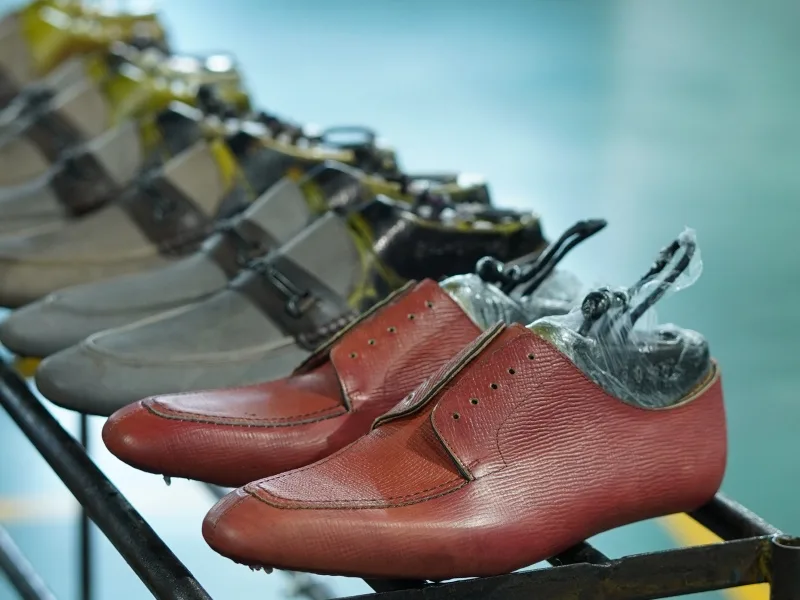
For a remote shoe factory audit, request a live route that begins outside or at an identifiable entry point and proceeds through the relevant areas without unexplained cuts. Ask the host to show current date references, work-order identifiers that can be safely disclosed, and the relationship between stored materials, production stages, inspection and packing. The purpose is operational continuity, not surveillance. Agree privacy limits and avoid filming other buyers’ confidential designs.
- Confirm the host, date, address context and purpose of the review.
- Follow one route from receiving or materials through relevant production stages.
- Match current work orders, approved samples and process instructions where permitted.
- Review quality checkpoints, hold areas and release responsibility.
- Finish with final inspection, packing and shipment preparation evidence.
Follow One Released Sample into Production Information
Check Brief, Version and Approval Continuity
Select one safely reviewable example and trace it from the technical brief through feasibility questions, material and component approval, sample comments, current approved reference and production instruction. The useful evidence is continuity between versions and owners. A shelf of samples or a presentation of finished shoes does not show which reference controls current production.
For private label or OEM projects, clarify who owns drawings, patterns, lasts, molds, artwork and packaging files. For ODM support, clarify which product decisions the factory proposes and which remain the buyer’s approval. Hengxin supports OEM, ODM and private label development, subject to project review. That service capability should be verified through the exact handoff, sample and approval path needed for the order.
Inspect How Revisions Reach Production
Ask how an approved correction moves from email or meeting notes into the technical file, sample reference and work order. Check whether obsolete versions are removed and who authorizes production release. A revision-control failure can recreate an old defect even when the factory knows the correct solution. The audit should therefore connect the development room with the production information used at the line.
Evidence chain for sample and production control.
| Evidence item | Continuity question | Risk if disconnected |
| Technical brief | Was it reviewed and were gaps recorded? | Unpriced or misunderstood requirement |
| Material approval | Does the approved article match current sourcing? | Substitution or shade inconsistency |
| Sample comments | Are revisions dated, owned and closed? | Repeated corrections |
| Approved sample | Is the version identified and available? | Production follows an obsolete reference |
| Work order | Does it carry the approved decisions? | Information is lost during handoff |
Observe the Process Route Needed by the Order
Verify People, Method, Material and Control together
A machine photo does not show whether the process is suitable, controlled or available for the order. Ask the host to explain the operation, operator skill, setup, inspection point and current product. Observe how materials and work in progress are identified. When an operation is subcontracted, record where it occurs, how specifications are transferred, how incoming work is checked and which party owns a failure.
Distinguish installed equipment from demonstrated capability. A machine may be idle, reserved for another product, waiting for maintenance or dependent on a specialist operator. Ask for the style or operation currently associated with it and how setup approval is recorded. For labor-intensive dress-shoe work, observe the work instructions, sample reference and skill handoff around the operation. Capability combines equipment, people, method, material and control; removing any one element can change the result.
- Material receiving and identification relevant to the proposed upper, lining and sole.
- Pattern, cutting, skiving, stitching and upper-preparation controls where applicable.
- Lasting, construction, sole and heel attachment processes required by the style.
- Finishing and color-control practices linked to an approved reference.
- Work-in-progress identification and separation of held or nonconforming items.
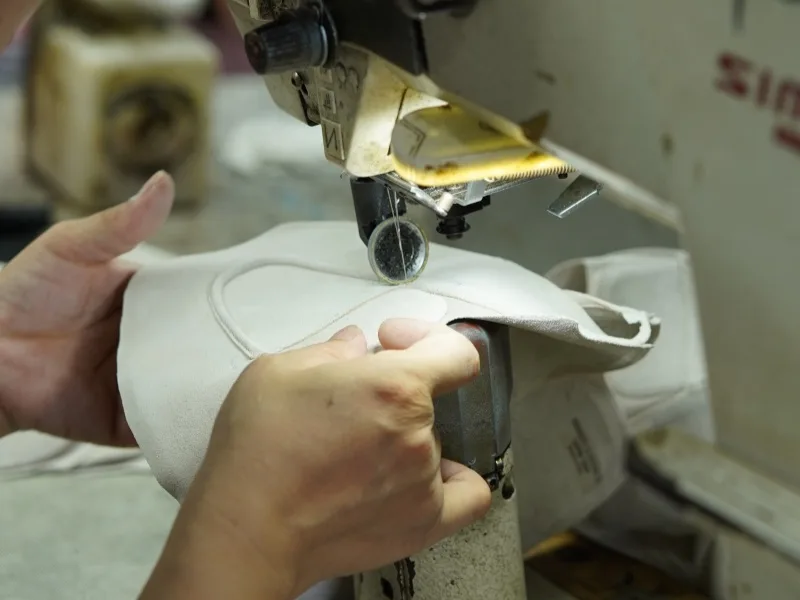
Hengxin specializes in premium men’s dress shoes, so an audit should focus on the processes required for the selected Oxford, Derby, monk strap, loafer, dress boot or related program rather than presenting a generic shoe factory tour. For a broader capability comparison across suppliers, use the footwear manufacturer capability checklist as a separate decision tool.
Test Holds, Release Authority and Corrective Action
Observe Controls Where the Risk Occurs
Shoe factory quality control should appear where a defect can still be prevented or corrected efficiently. Review incoming material checks, upper and stitching criteria, construction checks, finishing standards and final packing controls as relevant. Ask which criteria come from the buyer, which are factory standards and how conflicts are resolved. Inspectors should have access to the current specification and approved sample.
Follow One Exception through Disposition and Corrective Action
Ask for a safe example of nonconforming material or product. Determine how it was identified, segregated, recorded and resolved. Who approved rework, replacement or concession? Was the cause reviewed and did the process change? Hengxin’s restricted approved wording states that every finished pair undergoes final inspection before packing. Buyers should verify the criteria and records; the existence of a final stage does not remove the need for earlier controls.
Also observe how the factory prevents held goods from returning to the normal flow without authorization. A marked shelf is not enough if status labels are unclear or records cannot identify quantity and disposition. Ask whether reworked products are inspected again and whether repeated defects trigger a process review. This reveals the practical difference between sorting visible problems at the end and operating a quality system that learns from exceptions.
Factory audit checkpoints and the evidence they should produce.
| Checkpoint | Evidencia | Follow-up question | Uso de la decisión |
| Incoming material | Identity and condition record | How are shade or defects handled? | Material risk |
| In-process | Current criterion and result | Can production be held here? | Prevention strength |
| Nonconforming area | Status and disposition | Who authorizes release or rework? | Exception control |
| Final inspection | Order-linked inspection record | What standard and scope apply? | Shipment release |
| Packing | Assortment, label and carton check | How are last-minute changes controlled? | Delivery accuracy |
Reconcile Capacity and Commercial Claims with Current Conditions
Tie Every Answer to the Same Product and Time Window
Shoe factory production capacity should match the product route observed during verification. Ask how construction, line balance, material readiness, current orders and the requested window affect output. A capacity answer should identify constraints and contingency, not only a daily number. Likewise, shoe factory lead time should separate development, materials, production, inspection and logistics and should show which buyer approvals control each milestone.
Review shoe factory MOQ and price factors in the same context. Materials, colors, size mix, construction setup, branded components and packaging may create minimums. The shoe factory quotation should list assumptions and exclusions. If the live route reveals subcontracting, special equipment or material dependencies not reflected in the quote, reconcile them before considering the commercial review complete.
The audit should test schedule ownership as well. Ask who confirms material arrival, who updates line allocation, when the buyer receives a delay warning and which approvals can stop the clock. A realistic plan includes dependencies and decision dates, not only a shipment target. Record the evidence available today and the evidence that will exist after the order starts. This creates a verification plan that continues through sampling and production instead of ending when the factory call closes. Preserve the audit evidence index after the call or visit. Record each document, observation and demonstration with its date, product scope, owner and any confidentiality limit. Note what was not shown and why. This makes later sampling, order review and re-audit decisions depend on the actual scope rather than a general memory that the factory was checked.
- Request product-specific capacity assumptions and the current planning window.
- Separate sample, material, production, inspection and logistics milestones.
- Identify the material, setup, color, size or packaging constraint behind MOQ.
- Match quotation inclusions with the process route and quality scope observed.
- Record open evidence gaps as conditions before deposit or production release.
China Shoe Factory Verification FAQs
What is the strongest evidence that a shoe factory is operating?
Use a continuous, current route connecting identity, site, work references, materials, relevant processes, quality controls and packing. No single document or photograph proves the whole system.
What should buyers verify about the contract entity?
Reconcile the website or trading name with the legal entity, site, quotation, contract, payment beneficiary and export documents. Escalate unexplained changes before payment.
How should a remote live audit protect confidentiality?
Agree the route and evidence categories, avoid recording unrelated customer work, redact identifiers and use controlled document sharing while preserving enough continuity to verify operations.
How can subcontracted processes be verified?
Record where the process occurs, how specifications and work are transferred, how incoming results are checked, which records return and who owns a failure.
What makes a capacity statement credible?
Tie the product route, current order mix, material readiness, line availability, requested period and relevant recent output to the proposed schedule.
Does Hengxin have a factory in Guangzhou or Wenzhou?
The supplied public factory address is in Yangjiang, Guangdong, China. Regional sourcing relationships do not prove an owned site in another city.
What should the audit decision register contain?
Mark each requirement as verified, conditional, not verified or irrelevant and record evidence, date, scope, open action, owner, deadline and release consequence.
Convert the Audit Trail into a Release Decision
A factory review should end with a decision register, not a collection of photos. Mark each required capability as verified, conditionally verified, not verified or irrelevant. Record the evidence, date, scope, remaining action, owner and deadline. Use sample approval or additional records to close defined gaps. If the audit reveals a mismatch in process, ownership or commercial assumptions, update the risk decision before payment or production release.
For relevant men’s dress-shoe projects, buyers can request a continuous capability review from Hengxin using the target style, construction, materials, size range, branding, packaging, quantity and market. The next step is to agree which current process, sample and quality evidence can be shown and what still requires order-specific confirmation. For the final manufacturer-choice framework, continue to choose a dress shoe manufacturer; for design ownership and tooling risk, use custom shoe manufacturer selection.