Cliquez ici pour afficher la table des matières
Table des matières
Set the Quality Agreement before Inspection Begins
Footwear quality control begins before production, when buyer and supplier agree what will be checked, where it will be checked and who can decide the result. For a footwear quality control shoe factory review, the control plan must connect the released specification and approved sample to defect definitions, inspection stages, lot identity, sampling instructions, escalation and shipment authority. Without that chain, teams may inspect diligently yet apply different standards to the same shoe.
This page is for quality managers, sourcing teams, compliance owners and importers. N094 owns the complete order-level control plan. Detailed acceptance sampling belongs on the AQL page, while recurring supplier governance belongs on the supplier quality management page. Use the shoe factory capability checklist only when the decision expands from quality controls to broader factory capability; the footwear manufacturer capability checklist supports category-neutral supplier screening.
- Define product risks and the intended sales market before writing the inspection plan.
- Link every critical characteristic to a method, stage, record and decision owner.
- Approve defect examples and disposition rules before an inspection lot is presented.
- Use inspection data to prevent recurrence, not only to sort finished pairs.
- State who pays for containment, rework, retest, reinspection and authorized concessions.
Build the Inspection Plan around Product Risk
Map Characteristics to the Earliest Useful Checkpoint
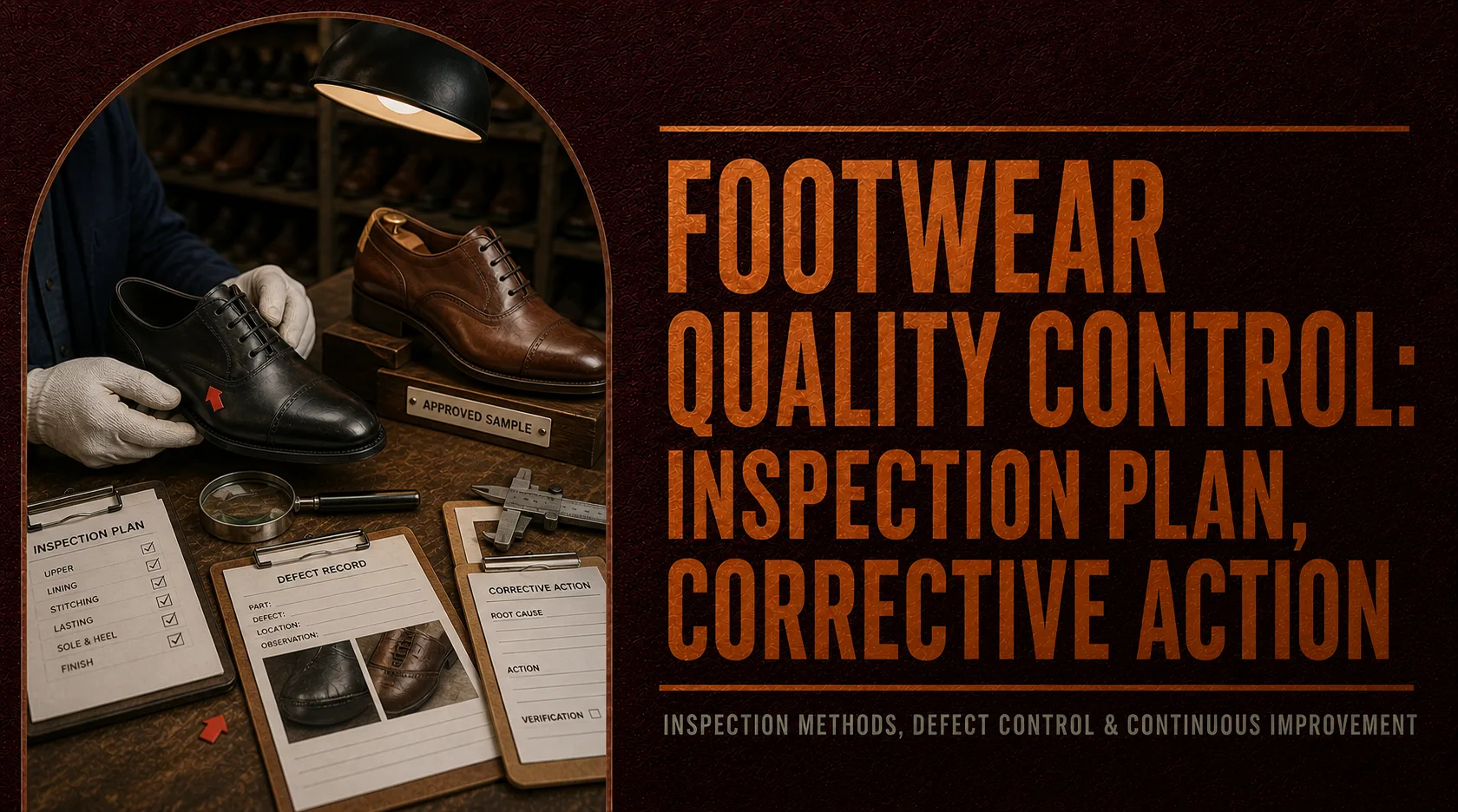
Begin with the actual shoe: intended market, construction, materials, last and size basis, colors, finish, branding, packaging and known failure modes. For each characteristic, identify the applicable drawing, physical reference or requirement; the inspection stage; the method; the evidence record; and the person authorized to stop or release work. High-consequence issues deserve earlier controls than appearance details that can be corrected at finishing.
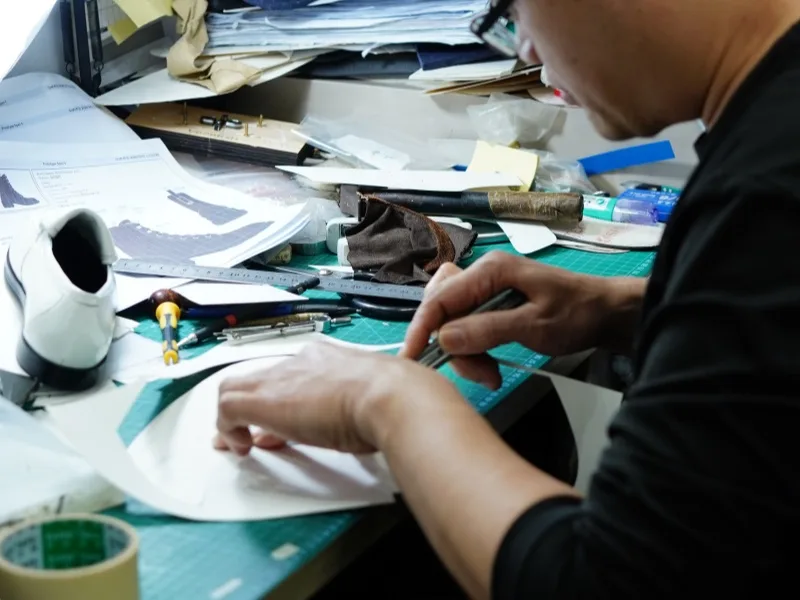
A footwear quality control inspection checklist should not be a universal list copied across styles. A cemented outsole program, a welted chaussure de ville and a soft loafer do not share every interface or defect risk. Build the checklist from the bill of materials, process route and customer requirements, then add order-specific examples so inspectors can distinguish an allowed natural variation from damage, mismatch or nonconformity.
Define Defects and Disposition Authority
A footwear quality inspections sorting & grading instruction must explain why units are separated and what may happen to each category. Sorting can contain affected work, but it does not identify cause or authorize shipment. Define critical, major and minor outcomes in terms of buyer risk, add photographs or masters where useful, and state who may accept a concession, require rework, reject a lot or hold shipment.
Minimum release fields for an order-specific quality plan
| Control field | Required definition | Preuve de diffusion |
| Product requirement | Specification, approved reference and revision | Current controlled file |
| Defect rule | Class, example, method and disposition | Approved defect catalogue |
| Inspection stage | Lot, timing, sampling and record | Signed inspection plan |
| Corrective action | Containment, cause, owner and verification | Closed action record |
Write Defect Rules That Two Inspectors Can Apply Consistently
Use Measurable Criteria and Controlled References
Translate subjective expectations into dimensions, tolerances, material identities, approved ranges and viewing conditions wherever practical. Pair matching, toe shape, lasting balance, stitch alignment, sole attachment, edge finish and packing presentation each need an acceptance basis. If a feature cannot be reduced to a number, identify the signed physical master or controlled image set and explain how inspectors should compare it.
Defect rules should follow interfaces and causes. An upper-pattern error may change fit and lasting; material variation may alter color pairing; poor preparation may weaken attachment; packing pressure may damage finish after a shoe passes final inspection. Recording only a generic defect total hides where prevention failed. Record product zone, symptom, suspected cause, quantity affected, containment and disposition.
Control Revisions, Samples and Inspection Versions
Every specification, approved pair, defect catalogue and inspection form needs a visible revision and effective date. Link each inspection result to the order, lot, style, color, size range and controlling version. The phrase ‘use the latest file’ is not adequate because different teams may hold different files. A change to material, construction or finish should trigger an impact review and, where necessary, a revised sample or inspection rule.
- Lister les caractéristiques critiques pour la qualité et leur méthode d’acceptation.
- Identifier les interfaces qui peuvent modifier l’ajustement, l’apparence, le coût ou le calendrier.
- Séparer les alternatives approuvées des substitutions non autorisées.
- Exiger une revue d’impact écrite avant toute modification d’une donnée d’entrée diffusée.
Choose Sampling and Inspection Stages Deliberately
Separate Development Approval from Production Inspection
A development sample proves decisions about fit, construction, materials and appearance; it does not prove that bulk production is stable. Production inspection checks whether released requirements are being repeated in the relevant lot. Preserve the approved sample as a comparator, but also inspect process evidence and current units. Conditional sample approval must list every open item and prevent the affected production decision from being released prematurely.
Plan incoming, in-process, pre-shipment and final checks according to risk. Incoming review can catch wrong articles or shade lots before cutting. In-process checks can reveal pattern, stitching, lasting or attachment drift while correction remains practical. Footwear quality control production inspection should use current work orders and lot identity. Footwear quality control pre shipment inspection should confirm the presented lot, completed corrective actions and packing scope before shipment disposition.

Use AQL Only as a Stated Sampling Decision
A footwear quality control aql instruction is incomplete unless the buyer states the governing sampling approach, lot definition, inspection level, defect classes and acceptance criteria. This page does not replace the dedicated AQL methodology. The commercial agreement should also explain what happens after a failed result: expanded inspection, rework, re-presentation, rejection or another authorized disposition. Never present a sampling result as proof that every unit is defect-free.
- Nommer la question et la preuve d’acceptation pour chaque série d’échantillons.
- Enregistrer ensemble les mesures, les matières, la construction, la couleur et la finition.
- Consigner l’effet sur le coût, l’outillage et le calendrier de chaque révision.
- Libérer la production en série uniquement par rapport à une référence de contrôle identifiée.
Connect Findings to Containment and Corrective Action
Contain First, Then Investigate Cause
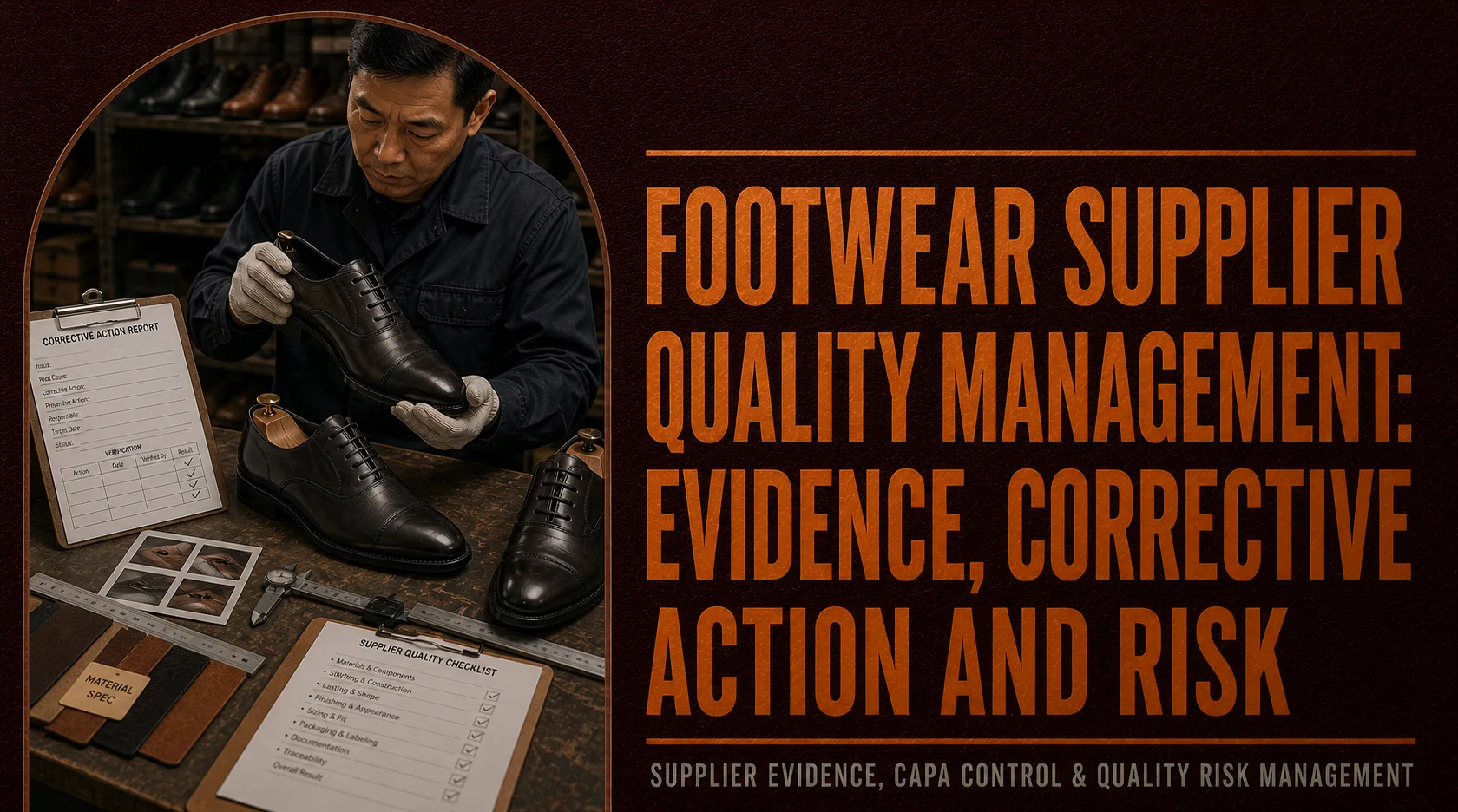
When a defect is found, identify and hold potentially affected materials, work in process and finished units before debating responsibility. Confirm the time window, machines, operators, material lots, sizes and processes that may share exposure. A footwear quality control corrective action record should then separate immediate correction from root-cause analysis, prevention, responsible owner, due date and effectiveness verification.
Do not close an action because a revised instruction was issued. Verify that the new control reached the relevant workstation, that affected stock received an authorized disposition and that later evidence shows the failure did not recur under comparable conditions. Recurring issues belong in supplier quality management; N094 remains focused on the order-level inspection and corrective-action system.
Keep Hengxin Statements within Order-Specific Evidence
Dress Shoe Factory, the market-facing platform of Usine de chaussures Hengxin, supports relevant premium men’s dress-shoe programs and OEM, ODM and private-label development subject to project feasibility. Hengxin states that every finished pair undergoes final inspection before packing. Buyers must still release order-specific criteria, sampling scope, records and corrective-action authority; final inspection is a process step, not a promise of zero defects. Timing is confirmed only after the specification and production schedule are reviewed.
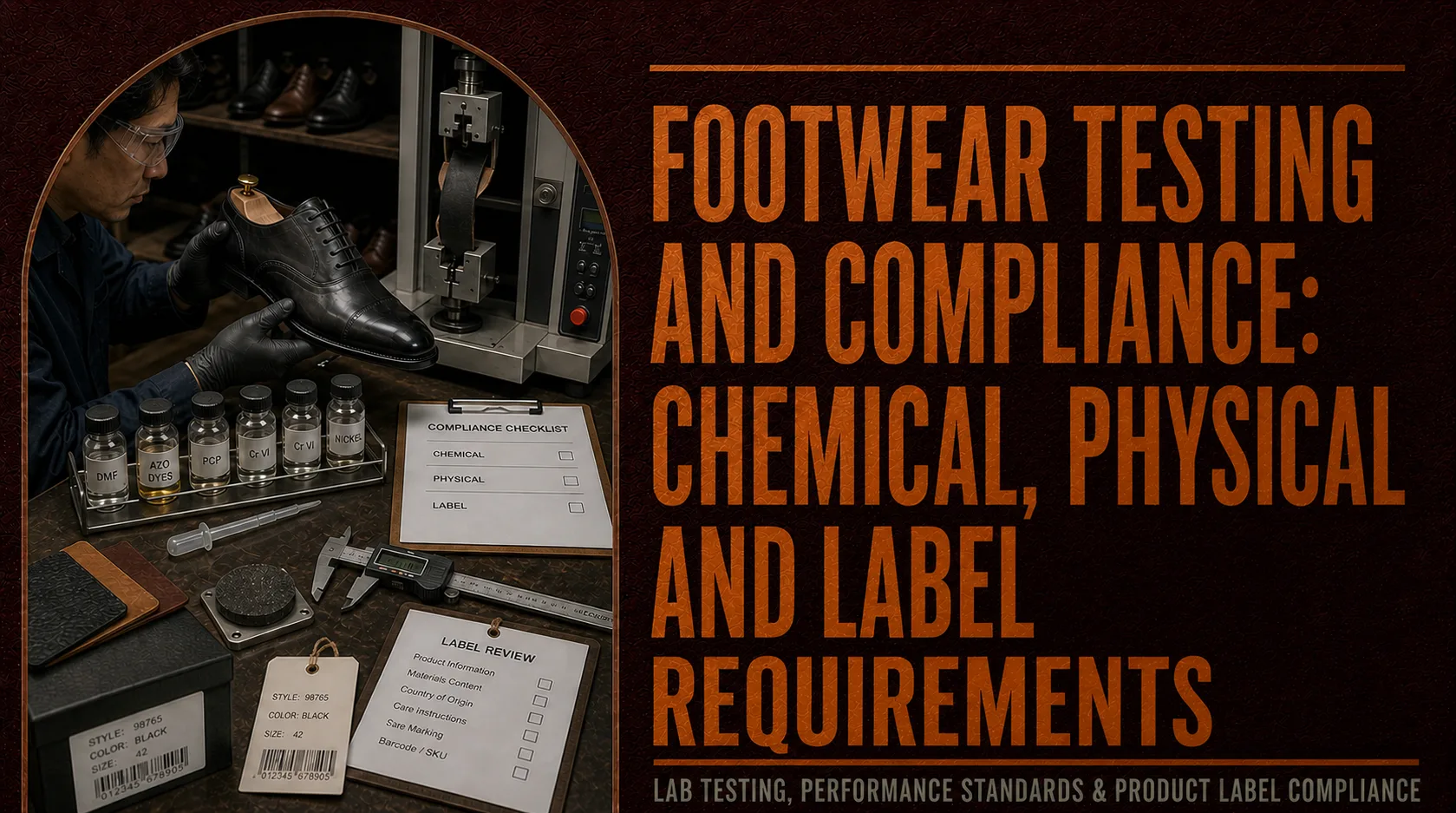
A footwear quality control test report should identify the product, method, date, sample and result, while a footwear quality control factory evidence file should connect that result to the current order or approved scope. A certificate, catalogue or isolated passing report cannot substitute for current lot identity and operating evidence. Ask what the record proves, what it does not prove and when it must be refreshed. Where an external laboratory or inspector is used, define who selects the sample, seals or identifies it, receives the result and decides the disposition. Preserve the report with the product specification and lot record so a later team can understand its scope instead of treating a detached pass statement as universal approval.
Evidence chain from requirement to release
| Scène | Main purpose | Décision de l’acheteur |
| Incoming | Confirm material and component identity | Release, segregate or reject |
| In-process | Detect drift while correction is practical | Continue, adjust or hold |
| Pre-shipment | Evaluate the presented finished lot | Accept, rework, reinspect or reject |
| Final packing | Confirm pair, label and pack status | Authorize packing or shipment |
Make Quality Cost and Release Authority Commercially Visible
Price Prevention, Appraisal and Failure Separately
Quality cost includes prevention work, sample and specification control, inspection, testing, sorting, rework, retest, delay, claims and disposal. A lower inspection fee is not necessarily a lower-risk offer if criteria are vague or failure costs sit outside the quotation. Normalize suppliers against the same product, lot, inspection stages, reporting, travel or third-party scope and failed-inspection responsibilities. Define whether a repeated inspection follows the original sampling basis or an expanded scope, and who approves the new lot presentation. Commercial clarity matters because rushed re-presentation can conceal incomplete rework, mixed inspected and uninspected stock, or a lot definition that changed after failure.
Un devis comparable sépare le développement, l’outillage, les essais, la mise en place de l’emballage et les autres frais non récurrents du coût unitaire récurrent. Il indique la spécification exacte, la quantité, la répartition taille-couleur, l’étendue de l’inspection, l’emballage, l’incoterm, la validité et les exclusions. Pour le travail en gros, prolongez le pont à travers le fret, les droits de douane, le dédouanement, le financement, les réclamations et l’exposition aux démarques. Pour le travail fournisseur ou de process, identifiez la partie responsable de chaque activité exclue.
Assign Stop, Concession and Shipment Authority
The quality agreement should name who can stop work, approve a deviation, order rework, accept a concession and authorize shipment. It should also set response deadlines and communication routes. Capacity and lead time remain order-specific: confirm timing after specifications, material readiness, inspection needs and current scheduling are understood, rather than using a broad production figure as evidence.
Commercial fields that prevent quality disputes
| Commercial field | What must be stated | Risk if omitted |
| Échantillonnage | Lot definition, scope and acceptance rule | Incomparable results |
| Failure cost | Sorting, rework, retest and reinspection owner | Post-failure dispute |
| Authority | Stop, concession and shipment approver | Unauthorized release |
| Records | Format, access, retention and reorder use | Weak traceability |
Audit the Control System, Not a Perfect Presentation
Trace One Requirement through Current Records
A footwear quality control supplier audit is useful when it traces a requirement from specification to work instruction, production observation, inspection record, hold area and corrective action. Select a current or recent relevant style and follow the record chain. A prepared showroom sample cannot demonstrate version control, lot traceability or response to a failed result. Interview the people who actually release materials, inspect work and authorize disposition, then compare their answers with records. If instructions differ between office files and the production floor, record the discrepancy and its exposure rather than accepting a verbal promise that the correct version will be used later.
Use a footwear quality control quality agreement to preserve criteria, responsibilities, access to records, change notification, inspection rights and disposition rules across reorders. Trend recurring defects and response effectiveness, but keep the detailed supplier-performance system on N097. For the present order, close every release condition and retain the approved evidence package as the reorder baseline.
- Lister chaque condition ouverte avec un responsable et une date de clôture.
- Reconfirmer le prix et le calendrier après la publication de la spécification finale.
- Protéger les outils, fichiers, matériaux et enregistrements d’approbation nécessaires aux réapprovisionnements.
- Enregistrer la performance réelle de qualité, de livraison et commerciale après réception.
Before award, test four failure scenarios: wrong material arrives, an in-process check finds drift, a presented lot fails the sampling rule, and a finished pair fails a required test. For each scenario, identify containment, evidence, authority, cost ownership and the condition for resuming work. This footwear quality control risk management review exposes gaps that a pass-only workflow hides.
The footwear quality control buyer checklist should end with a short decision log: requirement, available evidence, decision, owner, effective date and follow-up. The log explains why a concession or corrective action was accepted without replacing the released specification. It also gives the next buyer a reliable basis for reorders.
Footwear Quality Control FAQs for Buyers
What should the quality plan for footwear quality control include?
Start with footwear inspection plan and defect taxonomy and containment, root cause and corrective-action ownership, then define product criteria, process checkpoints, sampling, records, escalation and release authority.
When should inspection criteria be agreed?
Before production starts and before an inspection lot is presented. Late criteria create disputes because neither prevention nor consistent classification was possible.
How should defects be classified?
Classification should support the intended market and safety or compliance risk. The team must approve measurable criteria before production and verify them through samples and distinguish critical, major and minor outcomes with examples.
What evidence makes a quality result auditable?
Records should inspect materials, fit, construction, finish, pairing and packing by stage. Include order and lot identity, sampling method, observations, disposition, responsible owner and corrective-action closure.
What happens after a failed inspection?
Contain affected work, confirm scope, investigate cause, define correction and prevention, verify effectiveness and document who pays for sorting, rework, retest or reinspection.
How should quality cost be compared?
Do not compare inspection fees alone. Buyers should fund prevention, inspection, rework and claims as visible quality costs and include prevention, testing, rework, delay, claims and repeat-failure exposure.
How should supplier quality affect reorders?
Use trend data, change discipline, corrective-action effectiveness and delivery results in the next award. A passed final inspection does not erase recurring upstream failures.
Release Orders Only against Closed Quality Evidence
Before production release, confirm the current specification, approved physical references, defect catalogue, footwear quality control sampling plan, stage checks, report format, hold and escalation path, corrective-action process and commercial disposition rules. Before shipment release, confirm lot identity, inspection status, open deviations, corrective-action closure and the person authorized to accept residual risk. The release package should remain understandable without private chat history: dates, versions, owners and signatures or equivalent approvals must connect. Any open concession should identify the affected quantity, limitation, commercial remedy and whether the same condition is prohibited on the reorder.
For a Hengxin review, provide the style, construction, materials, size and color plan, branding, packaging, quantity, sales market and required evidence. Hengxin can confirm the feasible quality-control route for that project. Keep detailed AQL calculation on N095 and long-term supplier governance on N097 so this page remains the practical end-to-end control plan.