Clicca per espandere l'indice
Indice
Two dress shoes can bear the same size label yet fit differently because the label does not describe the wearer’s complete foot, the last’s three-dimensional shape or the finished shoe’s upper and heel hold. To understand an actual difference, compare the same person in both shoes under similar conditions, identify where the difference is felt, and relate that location to foot, last and upper geometry. A shared size number may still be useful, but it does not automatically justify identical fit advice for both styles. Nor does a difference prove that every customer should move up or down a fixed half size.
What does the printed size leave out?
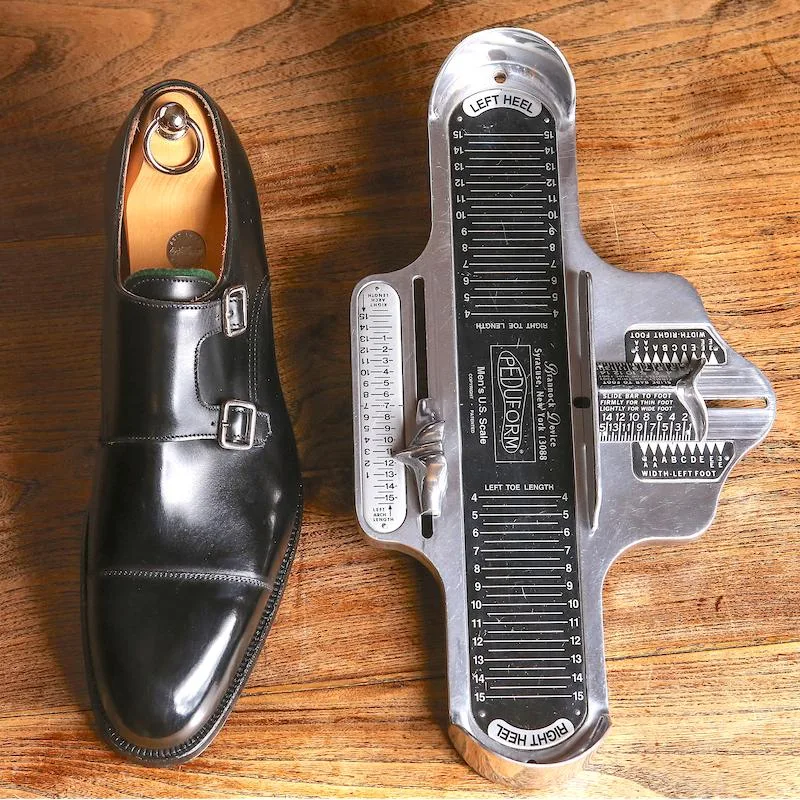
A printed size is a nominal reference, not a map of the entire space inside a shoe. It may help match a wearer to a length convention, but it does not encode the position of the foot’s ball, forepart width and girth, instep volume, heel shape or the way the upper secures the foot. The Brannock measuring instructions separate heel-to-toe length, heel-to-ball length and width. That distinction matters because a foot can reach the end of a shoe comfortably while its ball sits in the wrong place for the shoe’s flex point. Another foot of equal overall length may need a different combination of width and volume.
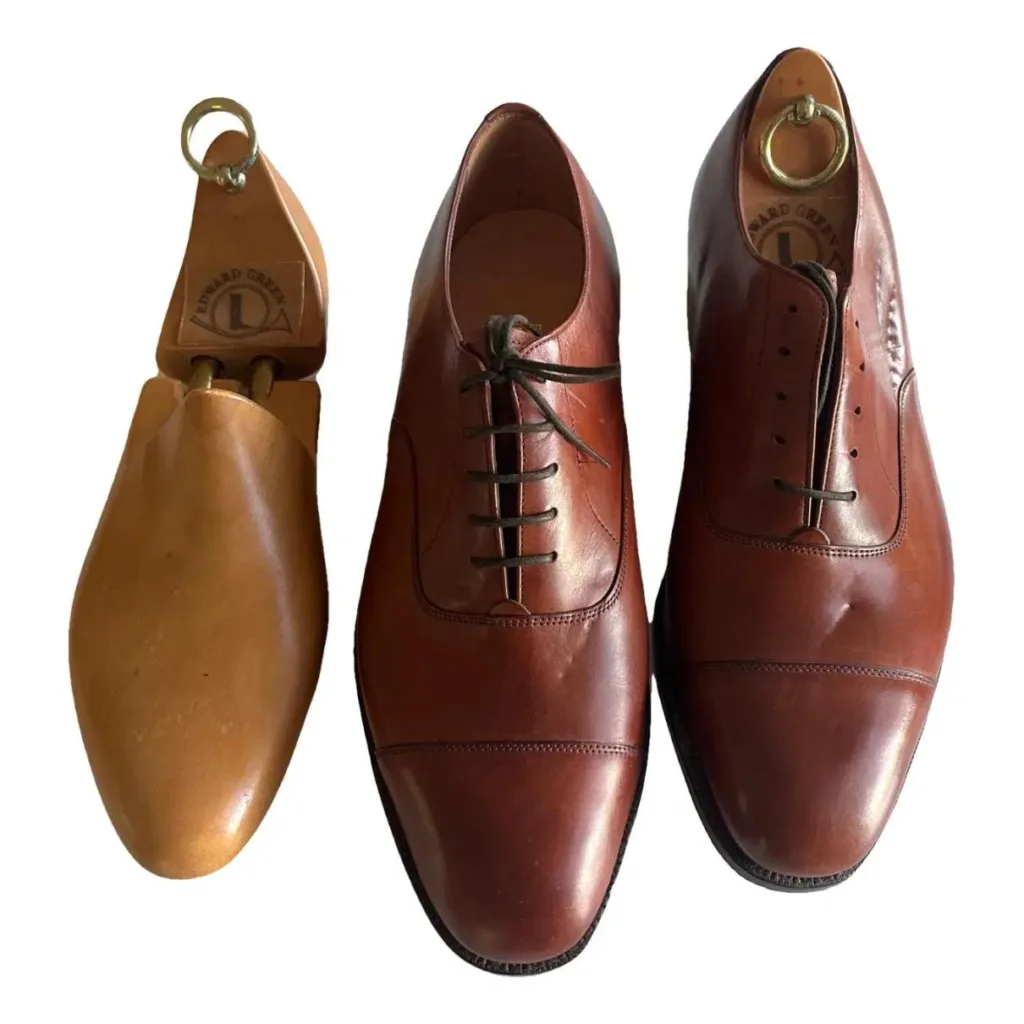
The shoe adds two more layers. A last supplies much of the shoe’s shape, while the finished article reflects its upper, lining, construction and fastening. SATRA’s discussion of last verification and fit explains why last geometry is important yet does not by itself dictate every finished-shoe sensation. A buyer comparing two styles should therefore ask which layer changed, not assume the size stamp was printed incorrectly. That layered explanation is the foundation for a practical size-guide decision: a chart can translate labels, while style notes may have to explain relevant differences in fit.
Why can equal foot length still require a different fit?
Equal heel-to-toe length does not imply equal heel-to-ball length or equal width. The ball of the foot is the region around which the forepart should work during walking; if it falls at a different point relative to the shoe’s flex region, the shoe may feel restrictive or awkward even though the toes are not pressed against the front. Width and girth add another dimension: a shoe may appear long enough yet press around the metatarsals. Brannock’s instructions treat those measurements as separate inputs and describe a marked size as a starting point for fitting. This does not mean a particular discomfort proves one dimension is wrong. It means that a length-only explanation cannot account for every same-label difference. First locate the foot’s relevant landmarks, then compare where the two shoes place or contain them.
Which last dimensions can create a different feel?
The last can differ at the ball, forepart, instep, waist and heel even when two shoes share a size label. A broader or higher-volume forepart changes available space around the ball; an instep shape changes contact over the top of the foot; a heel seat and rear shape influence how the back of the shoe holds the heel. The Shoemakers Academy guide to shoe lasts identifies these regions and measurements. A buyer need not own a three-dimensional scan to understand the principle: a single number cannot express every cross-section of two different forms.
These regions interact. A shoe that feels tight across the instep may not be too short. Changing to a longer size might relieve one pressure while leaving the heel less secure. A pointed external toe may look longer without supplying more usable space where the foot actually sits. The difference between exterior silhouette and internal fit is particularly important in formal shoes, where appearance can draw attention away from the ball and instep. The buyer’s task is not to diagnose an exact millimeter deviation from feeling alone. It is to compare the location of pressure or movement with the geometry most likely to affect that location, then test whether the observation repeats.
How do forepart and instep differences feel different?
Forepart pressure concerns the area around the ball and metatarsals. It may reflect width or girth, the position of the shoe’s widest point, or how the upper contains that region. Instep pressure is higher on the foot and may reflect the last’s vertical volume or the closure’s available adjustment. Both can be reported simply as “too tight,” but they imply different comparisons and different size guidance. If a wearer has adequate toe clearance and a secure heel but feels pressure across the instep, telling everyone to buy a longer shoe is a poor inference. Compare the two shoes at the same marked size and identify whether the difference is in spatial allowance, in upper contact or both.
How can the upper change fit when the last is similar?
The upper and its closure influence how the shoe holds the foot on the last-derived space. An adjustable opening can let a wearer change contact over the instep within its available range; a less adjustable opening relies more on the shape of its upper and opening to allow entry and maintain hold. Neither arrangement is categorically better or more comfortable. A style with similar last dimensions may still feel different when its upper contacts the foot at another place, its closure permits another degree of adjustment or its back holds the heel differently. Clarks’ FAQ on why same-size shoes can fit differently describes style, construction and material as possible factors within that brand’s range. It supports the mechanism, not a fixed rule for all brands.
This is why two visible dress shoe styles should be compared as finished shoes, not merely by their labels or exterior outlines. A buyer may browse Oxford dress shoe styles to see one category of uppers, but that category page provides style examples rather than measured proof of fit. If the buyer is comparing an Oxford with a more open or slip-on form, the meaningful question is where the upper permits adjustment and where it depends on close shape match. The answer may change with the actual sample, wearer and lacing or fastening state. It should not become a universal claim that one named style is always tighter.
Can material and lining change the first-wear sensation?
Yes. Upper material, lining, reinforcement and construction influence how the finished shoe contacts and responds to the foot. A softer material may feel different from a stiffer one at the same initial geometry, while a thick lining can change the usable space or pressure distribution. SATRA distinguishes the last from the finished shoe and notes that materials and making processes affect its result. Clarks likewise lists material as a possible reason that similarly labeled styles feel different. Those facts do not justify a universal “leather stretches by one size” claim. They also do not make severe initial pressure acceptable on the assumption that wear will cure it. Compare the actual shoes and describe the initial sensation accurately; treat expected material change as a conditional possibility requiring product-specific evidence.
Why might heel movement differ?
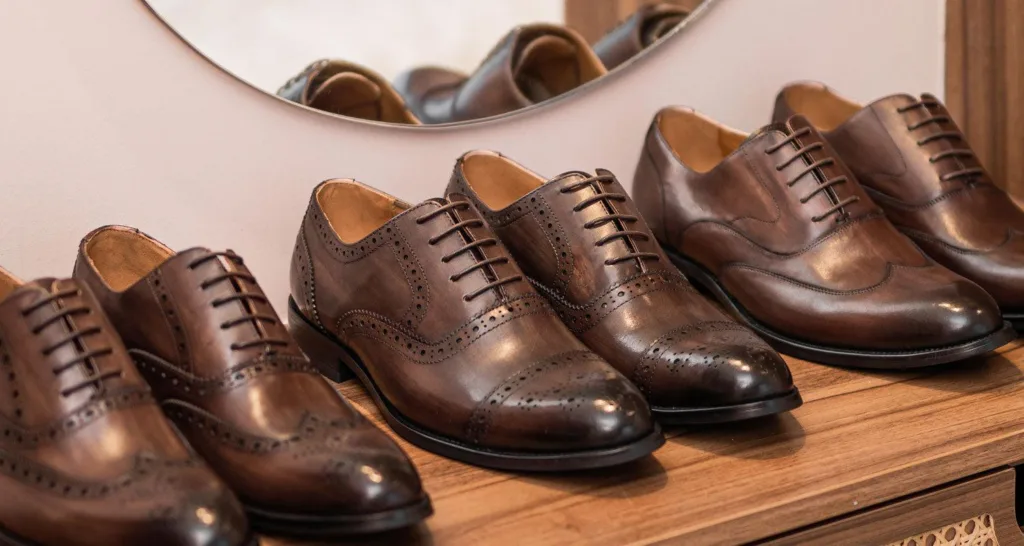
Heel movement can arise even when the forepart feels similar. Heel-seat shape, rear upper and topline position, and closure may influence whether the back of the shoe follows the foot during walking. SATRA notes that rear topline height can affect rubbing or slip. A wearer may therefore notice heel lift in one same-size style but not the other without a simple length difference. The immediate response should be to locate the movement, compare both shoes while walking and inspect the back-of-shoe relationship. Advising a smaller size before doing so could create forepart pressure while leaving the underlying hold problem unresolved.
How can a buyer distinguish the likely causes in two samples?
Compare like with like. Have the same wearer try both samples in the same marked size, with the same socks and a similar lacing or fastening state, then use the same standing and walking actions. Record the location and timing of the difference rather than asking only which shoe is “more comfortable.” Toe-end contact, ball alignment, forepart pressure, instep pressure and heel movement point toward different features. One observation is a clue, not proof of its cause.
The table helps direct attention to an appropriate comparison. A reported sensation is a clue; the buyer still needs to inspect the two shoes and repeat the observation before changing a chart. The information is most useful when it separates a true marked-size problem from a style-specific fit feature.
| Observed difference | Compare under the same conditions | Plausible mechanism to separate | Size-guide implication |
|---|---|---|---|
| Different ball or flex position | Foot heel-to-ball landmark and each shoe’s flex region | Ball alignment rather than toe-end length alone | Add a style note only if the difference repeats. |
| Forepart pressure in one shoe | Ball width and girth, upper contact | Last space versus material or upper response | Describe forepart fit; do not automatically advise a longer size. |
| Instep pressure in one shoe | Instep space and closure position | Volume versus adjustability | Give style-specific instep guidance if reproducible. |
| Heel movement or rubbing | Heel seat, topline and walking state | Hold versus local rear contact | Avoid an automatic downsize rule. |
| Approved and bulk shoes differ within one style | Same last, specification, size and sample version | Possible production change | Do not encode the difference as a permanent cross-style offset. |
After identifying a likely layer, make a second comparison that could disprove the first guess. If the pressure seems to be an instep-volume issue, check whether changing closure state changes it; if it does not, the last or upper structure may deserve closer attention. If the heel moves in both shoes only when a particular sock is used, the style comparison is not yet stable. This discipline prevents a subjective first impression from becoming a broad customer instruction. It also gives the buyer a defensible basis for saying what is known about the samples and what remains uncertain.
When does the comparison point to production drift instead?
If the two shoes represent the same style, last, specification and marked size, but an approved sample and a later production batch fit differently, the likely explanation shifts toward a manufacturing or version difference. A cross-style size note may conceal that change. Compare the specifications and approved samples, then investigate the production-stage deviation. Do not publish a permanent style sizing rule from a one-batch anomaly.
When may two styles share a size chart?
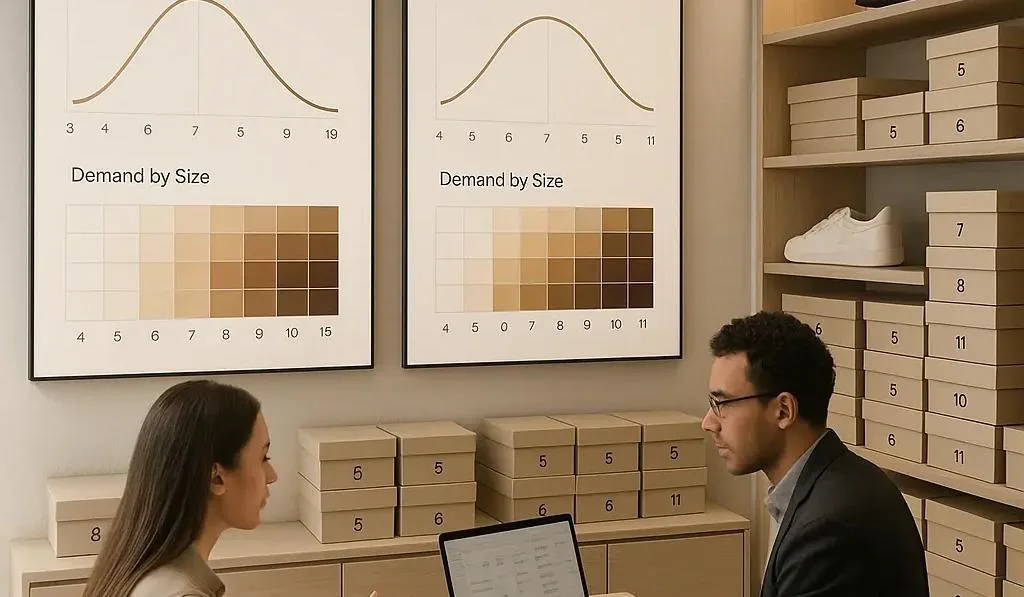
Two styles may share a base size chart when their marking basis is the same and their relevant fit behavior is sufficiently alike for the intended customer to use the same selection guidance. Sharing a chart is a communication decision, not a claim that every internal dimension is identical. If a reproducible difference changes how a buyer should choose a size or width, add a clear style-specific note. If the differences are larger or point in different directions for important foot shapes, separate guidance may be easier to use. No source supplies a universal numeric threshold or an automatic half-size correction for these choices. The decisive issue is whether the observed difference changes the customer’s selection action.
Keep the language tied to what was actually compared. A note about comparatively snug instep contact in the tested samples can be meaningful; “all customers must size up” requires a much broader basis. The SATRA account of last verification explains why geometry and finished-shoe structure deserve comparison, but it does not certify any specific chart for these styles. The buyer should therefore treat a shared chart as a practical starting point with documented exceptions, not as evidence that every wearer will experience both shoes identically.
What wording helps a buyer without overpromising?
Describe the location, style and condition of a repeatable difference. For example, an explicitly hypothetical note might say that the tested style has less instep adjustment than the other style while using the same marked-size reference, and that customers with a high instep should consider the style-specific fitting information. That is more useful than an unexplained “runs small.” It tells the reader which fit dimension matters and avoids implying that length alone will solve it. Apply a style note only when comparable samples show the stated difference repeatedly. If the evidence is inconsistent, publish no confident offset and obtain a better comparison first.
When should the shoe change instead of the size guidance?
Change the product rather than its wording when comparable wear checks point to a consistent structural mismatch for the intended wearer that another size label cannot resolve. A repeatable conflict between the foot’s ball position and the shoe’s flex region, or forepart pressure that remains while length and heel hold are appropriate, calls for examining the last and finished upper. Telling every customer to size up could move the pressure without fixing the location of the mismatch and might loosen the heel. The earlier size-chart decision applies to acceptable, reproducible differences between otherwise approved styles; it is not a way to publish an unsuitable shoe with a permanent offset. SATRA’s foot–last–finished-shoe distinction and the measurable last regions support this conditional judgment, although they supply no universal numerical rejection threshold.
Consider two hypothetical observations. In one, a wearer can use the same marked size in both approved styles, but one closure offers less instep adjustment; repeated comparisons show a bounded difference that a clear style note can explain. In the other, comparable intended wearers repeatedly encounter ball misalignment in one style while adjacent sizes create toe or heel problems. A note saying that the shoe “runs small” does not tell them how to select a workable fit. The second pattern warrants holding the style for a targeted last or upper review before issuing broad size guidance.
If the evidence comes from one uncontrolled try-on, compare matching samples before publishing either a size offset or a product-defect claim. A repeatable structural mismatch calls for the actual last and sample versions so the responsible team can assess a change.