Clicca per espandere l'indice
Indice
Select for Translation Discipline, Not Sample Theatre
Custom shoe manufacturers should be compared by the quality of their development controls, not by how quickly they agree to a reference image. A buyer needs evidence that the candidate can convert commercial intent into a defined last, pattern, construction, material package, branding plan and acceptance standard. The selection decision should also expose who owns new files and tooling, who may use them, and who can approve a change after cost or exclusivity is affected.
Start by classifying the requested change. A logo and color update on a proven platform creates a different rights, sampling and risk profile from a new last, outsole mold or original upper pattern. Send the same controlled brief to each candidate, record questions and assumptions, and compare the proposed development route before comparing unit prices. A disciplined custom shoe manufacturer will challenge missing information and separate feasibility from approval.
Classify the Product Change before You Shortlist
Classify the Development Level
Customization exists on a spectrum. At the light end, a buyer may select an existing style and change color, leather, logo, sock, outsole mark or packaging. A deeper private-label project may adjust materials, components and fit. OEM development normally begins with a buyer-controlled technical specification. ODM work gives the supplier a larger role in product direction. A fully custom program may require a new last, pattern, tooling, construction or finish system.
- Brand customization: logo, labels, insole, outsole mark and packaging.
- Material customization: upper, lining, color, finish, sole and components.
- Fit customization: last selection or development, measurements and grading.
- Structural customization: pattern, construction, sole unit, heel or tooling.
- Original product development: combined design, technical and ownership work.
Set the Product Boundary before Requesting a Quote
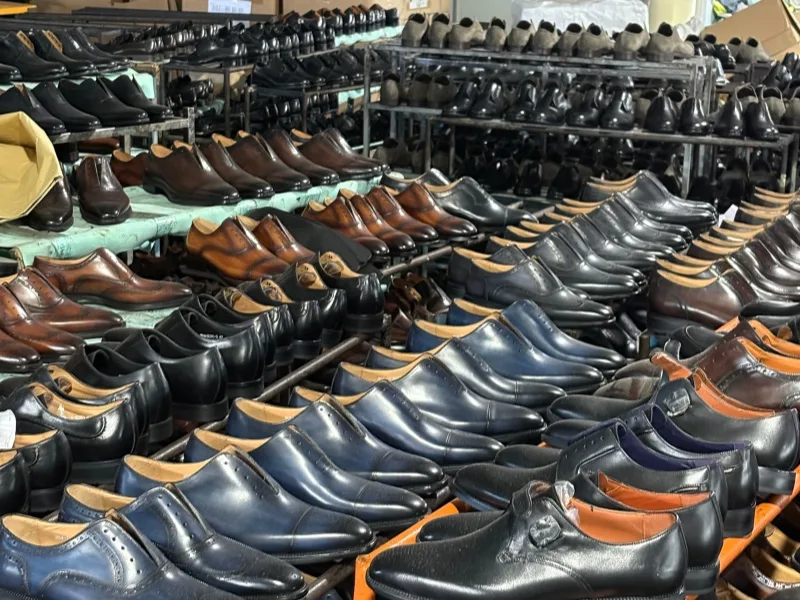
A photograph may communicate silhouette or mood, but it cannot define a quotable shoe. State the target customer, channel, price position, category, construction, fit basis, materials, size range, colors, branding, packaging, quantity, market and timing. Use a custom shoe manufacturer supplier checklist to label every field as fixed, supplier-proposed or unresolved. That distinction prevents an attractive suggestion from becoming an unauthorized product decision and gives each candidate the same quotation basis.
Match development level to the controls the buyer needs.
| Development level | Typical inputs | Main control | Ownership question |
| Brand update | Existing platform, artwork and pack plan | Artwork and approved sample | Who owns artwork and branded materials? |
| Material variation | Material, color and component brief | Article and shade approval | Can the selection be reused for another buyer? |
| Fit or pattern change | Measurements, last or pattern direction | Version and fit approval | Who owns the modified pattern or last? |
| New construction | Technical specification and process needs | Feasibility and production reference | Who funds and controls tooling? |
| Original product | Commercial brief plus technical development | Rights, milestones and release authority | What remains confidential or exclusive? |
Set Design, IP and Tooling Rules before Value Is Created
Separate Background Know-How from Project Deliverables
Separate pre-existing know-how from buyer inputs and project-created deliverables. The manufacturer may contribute standard processes and supplier knowledge; the buyer may contribute drawings, brand assets, consumer insight and specifications. Development can create patterns, graded files, samples, artwork, lasts, molds and color standards. The agreement should state permitted use, confidentiality, custody and access for each category instead of relying on a single broad ownership sentence.
Avoid assuming that payment automatically transfers every right. Contract treatment varies, and ownership should be reviewed by qualified counsel where material. Operationally, record who can access files, whether the factory may show the product, how confidential samples are stored, and what happens to unused branded materials. The goal is a clear production relationship, not an abstract IP clause that the sample team cannot implement.
Use a deliverables register throughout development. For each drawing, pattern, artwork file, material standard, last, mold or sample, record the source, version, custodian, permitted use and approval status. This register reduces confusion when the buyer changes staff, the manufacturer assigns a new technician or the product is reordered after a long interval. It also makes the exit process practical because both parties can identify what must be returned, retained for compliance, transferred or securely removed.
Define Tooling Access, Storage and Exit Terms
If the buyer funds lasts, molds, dies, patterns or special fixtures, define identification, custody, maintenance, storage period, permitted use and transfer conditions. Ask what happens if the project pauses or moves. Some tooling may be supplier-specific or difficult to transfer, so distinguish legal ownership from practical portability. Include replacement responsibility when damage results from normal wear, misuse or a buyer-requested design change.
- List buyer inputs, supplier background know-how and new project deliverables.
- Assign ownership or permitted use for drawings, patterns, lasts, molds and artwork.
- Define confidentiality, access, photography and sample-display restrictions.
- Label funded tooling and state storage, maintenance and transfer conditions.
- Set the return, deletion or disposal process when the relationship ends.

Use Technical Questions as the Capability Test
Review Custom Shoe Manufacturer Technical Specifications
Technical specifications should identify dimensions, last or fit assumptions, pattern details, construction, materials, components, tolerances, colors, branding, packaging and acceptance criteria. The manufacturer’s questions are part of the capability test. A strong review identifies conflicts between design, construction, materials, price and schedule. It also distinguishes a recommendation from a required deviation and records who approves the decision.
Dress Shoe Factory, the market-facing platform of Hengxin Shoe Factory, supports OEM, ODM and private label development for relevant men’s dress-shoe programs. Product categories include Oxford, Derby, monk strap, loafer, dress boot and related styles. These approved capabilities define a starting scope, not an unconditional promise. The factory and buyer must verify the exact last, pattern, construction, material, finish and volume for the proposed product.
Verify Specialized Construction and Finish Claims
Hengxin supports Goodyear welted footwear and patina color and finish development. If either capability is required, inspect a relevant sample and process explanation. Goodyear construction should be selected for the product and market rather than treated as automatically preferable. Patina is hand-applied work, so approve the base leather, reference color, lighting conditions and acceptable variation instead of requiring every pair to look mechanically identical.
Technical feasibility questions for an original dress-shoe project.
| Design decision | Factory question | Approval evidence |
| Last and fit | Existing last, modification or new development? | Measurements, fit review and version |
| Pattern and upper | How do lines, seams and reinforcement affect fit? | Pattern revision and sample comments |
| Costruzione | Which equipment, skills and components are required? | Feasibility record and section sample |
| Material and color | What availability, yield or variation applies? | Approved article and color range |
| Branding and pack | Which supplier minimums and tolerances apply? | Artwork, component and pack approval |
Run Sample Development through Controlled Gates
Use Each Sample to Close a Defined Risk
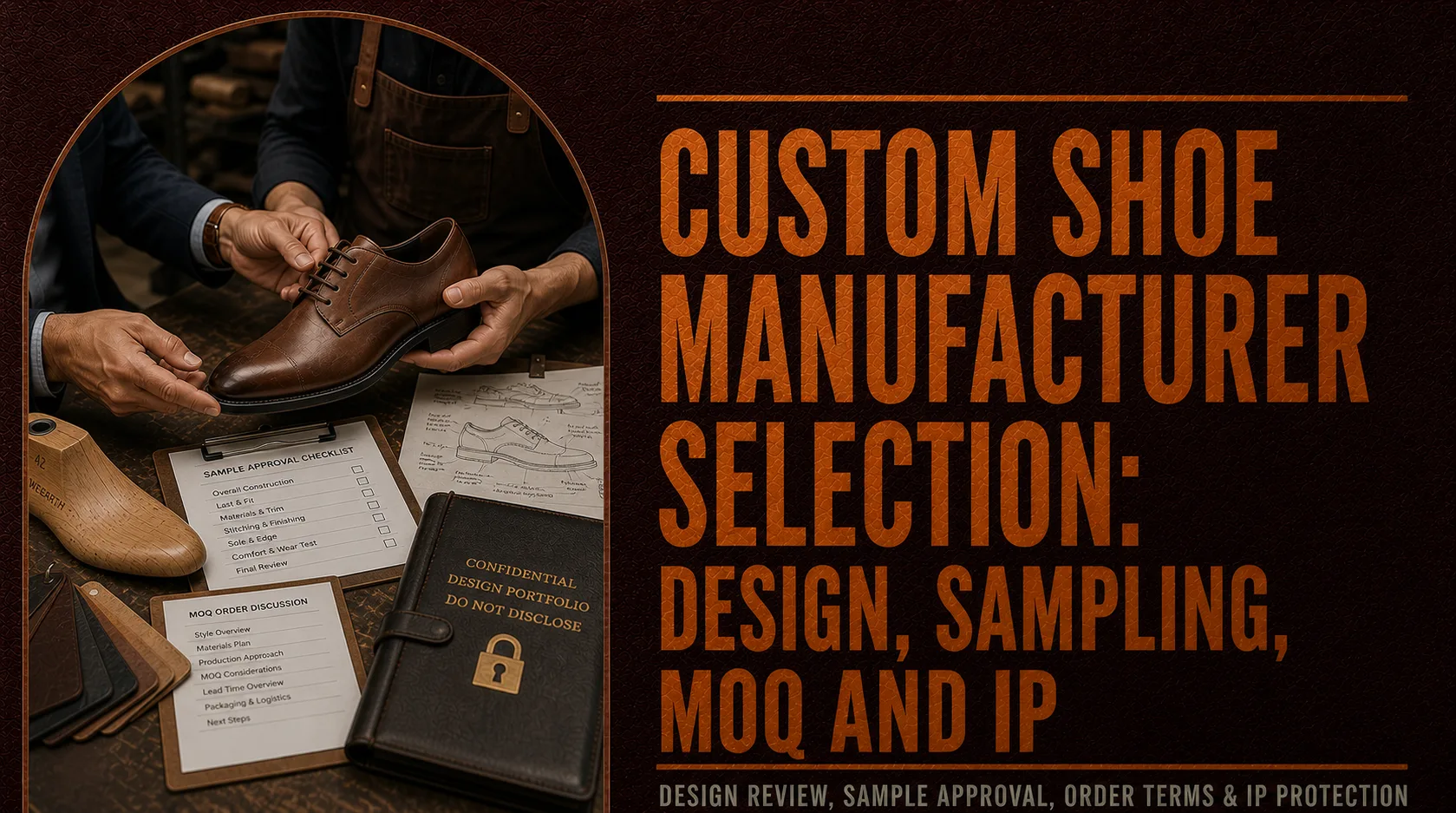
Custom shoe manufacturer sample development should close one defined uncertainty at a time. A concept sample can test proportion and construction direction; a fit sample tests measurements and wearer response; a size set checks grading; a pre-production sample freezes intended materials, branding, finish and packaging. The route may be shorter for a light customization, but every sample still needs an identity, purpose, evidence requirement and named approver.
- Record sample purpose, version, date, size, material and construction.
- Separate fit, technical, appearance, branding and packaging comments.
- Identify mandatory corrections, optional preferences and open questions.
- Confirm the effect of every change on tooling, price, MOQ and schedule.
- Release production only from the approved version and change log.
Control Changes after Approval
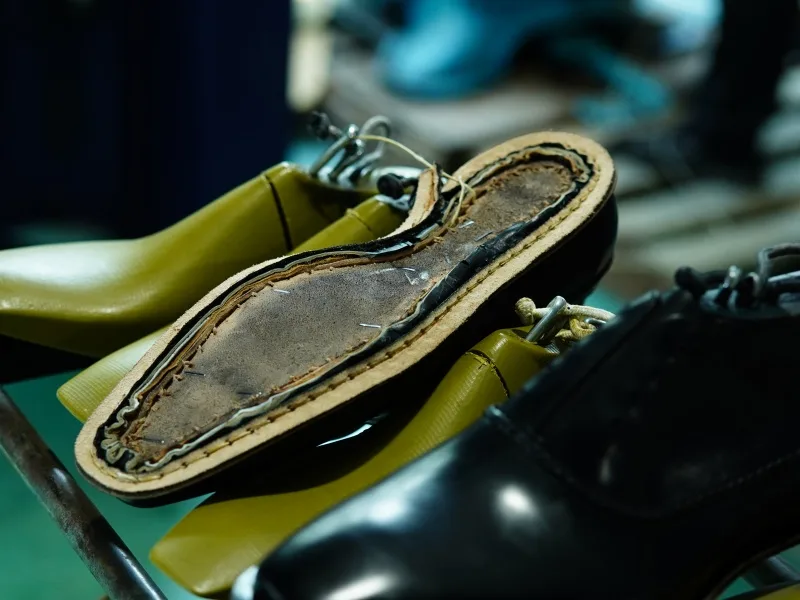
Late changes carry more risk because materials may be ordered, tooling completed or production scheduled. Define a change request that states the reason, affected files, inventory impact, new cost, schedule effect, required resampling and approval owner. If a material becomes unavailable, the factory should not substitute it silently. The buyer should receive a documented alternative and approve the effect on appearance, performance and price.
Set a decision deadline for each change. An unresolved comment can hold materials, tooling and line allocation even when no physical work is occurring. The manufacturer should distinguish a blocking issue from a preference that can be scheduled later. The buyer should consolidate feedback through one authorized owner. This prevents parallel instructions from design, merchandising and sourcing teams from creating incompatible sample revisions and an unclear production reference.
Turn the Approved Design into Inspection Decisions
Convert Design Intent into Inspectable Criteria
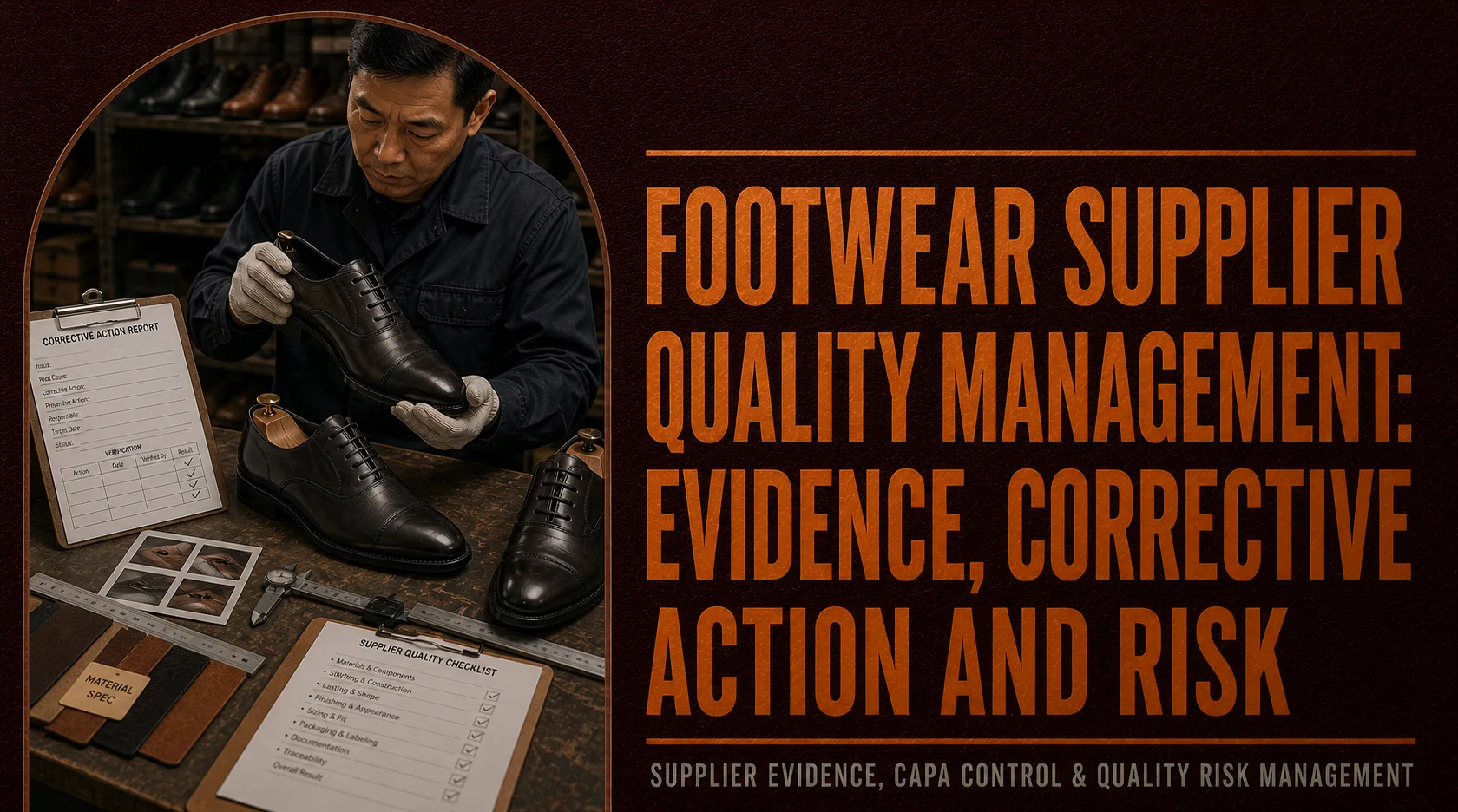
Custom shoe manufacturer quality control depends on a measurable product definition. Convert subjective language into approved references and tolerances where practical. Identify critical construction points, material identity, measurements, stitch or pattern alignment, color range, finishing, branding placement and packaging. Decide which issues are critical, major or minor for the order and who can approve a deviation.
Quality gates should appear before defects become expensive. Check materials before cutting, pattern and upper work before assembly, construction and fit at the relevant stage, and finished appearance before packing. The approved sample must be available to production and inspection teams. A custom shoe manufacturer factory audit can verify whether current work orders, samples, instructions, holds and records remain connected.
Release authority must remain clear throughout the custom-development process.
State who approves materials, samples, production start, deviations and shipment. A factory may identify an issue correctly but still need a buyer decision. Conversely, the buyer should not authorize a cosmetic change that affects construction without technical review. Release authority works when the decision reaches all affected files and teams, not when it remains in a private message between two people.
Custom-development release gates.
| Cancello | Required approval | Commercial effect | Release condition |
| Feasibility | Product route and open decisions | Initial development basis | Risks and assumptions recorded |
| Materiale | Article, color and components | MOQ and cost inputs | Availability and alternatives confirmed |
| Campione | Fit, construction and appearance | Revision cost and timing | Comments closed by version |
| Pre-production | Frozen specification and pack | Production price and schedule | Controlled reference released |
| Shipment | Inspection and approved deviations | Claims or rework exposure | Authorized disposition recorded |
Compare MOQ, Cost and Time on the Same Development Scope
Understand Custom Shoe Manufacturer MOQ and Price Factors
Custom shoe manufacturer MOQ may be driven by leather or component minimums, construction setup, color count, size mix, branded parts, packaging or tooling economics. Ask which variable sets the minimum and whether an alternative changes the design or quality expectation. Custom shoe manufacturer price factors include materials, labor, construction, development rounds, patterns, lasts, tooling, finishing, branding, packaging and inspection scope.
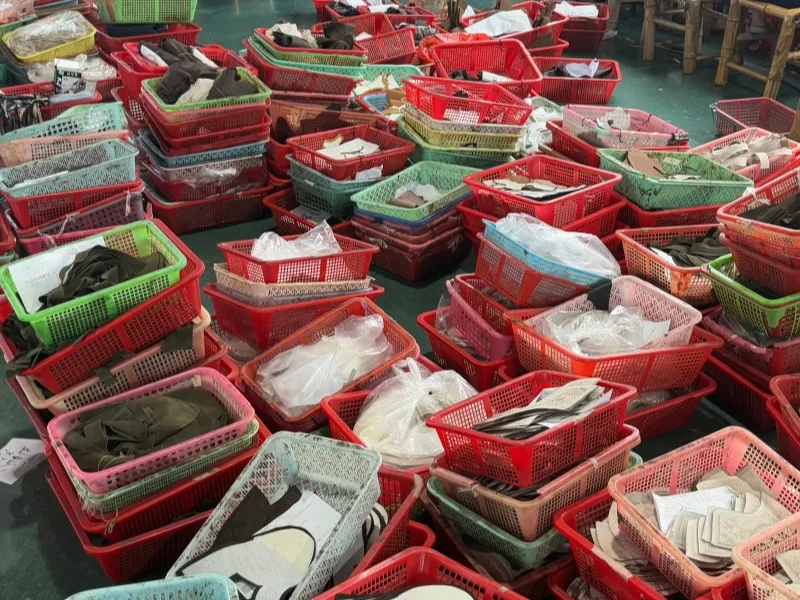
Normalize quotations before choosing. Confirm which technical work, sample rounds, tooling, artwork, packaging, testing and delivery terms are included. Identify deposits, ownership and refund conditions for development expenses. A low unit price may exclude work that appears later as tooling or sample charges. The footwear manufacturer capability checklist can support general factory screening, while this page keeps the comparison centered on custom-development rights and release.
Separate Development Lead Time from Production Lead Time
Custom shoe manufacturer lead time begins with unanswered decisions. Separate feasibility review, material sourcing, sample rounds, fit approval, tooling, pre-production confirmation, bulk production, inspection and logistics. State which milestones depend on buyer feedback and how a rejected sample changes the plan. Production capacity matters only after the specification and production route are stable enough to schedule.
- Issue one RFQ with the same development level and ownership assumptions.
- Separate unit price, development fees, tooling, packaging and delivery basis.
- Identify MOQ constraints by material, component, color, size and setup.
- Build a milestone schedule with buyer and factory decision owners.
- Hold contingency for resampling, material change or tooling correction.
Frequently Asked Questions about Custom Shoe Manufacturing
What should buyers include in a custom shoe manufacturer RFQ?
Include the customer and price position, drawings or references, construction, materials, fit and size range, colors, branding, packaging, quantity, market, schedule, acceptance criteria and ownership expectations. Ask the factory to state assumptions, exclusions and open technical decisions.
What information is needed for a custom sample?
Provide the design direction, last or fit basis, construction, materials, color standards, sizes, branding, packaging and sample purpose. Label which features are fixed and which may be recommended by the manufacturer. Define how comments and approval will be recorded.
What can be customized on private label scarpe eleganti?
Depending on product feasibility, options may include logo, insole, outsole mark, color, upper and lining materials, components, finishing, labels and packaging. Deeper changes to fit, pattern, construction or tooling require more development and cannot be treated as unlimited.
What is the difference between OEM and ODM shoes?
OEM usually starts from a buyer-controlled specification, while ODM includes more supplier-supported development. Mixed models are possible. Define who owns each input and deliverable, who approves changes and which files or tooling may be reused.
Who owns lasts, molds and patterns?
Ownership depends on the written agreement, funding and applicable law. Operational terms should identify each item, permitted use, storage, maintenance, access and transfer conditions. Legal advice may be appropriate when these assets are important to exclusivity or business continuity.
What determines MOQ for a custom shoe?
Materials, components, construction setup, colors, size mix, branding, packaging, tooling and order economics shape MOQ. Ask which constraint sets the minimum and whether an alternative preserves the intended product.
How can a buyer approve a patina color?
Approve a physical reference or controlled sample range using the intended base leather and agreed lighting. State acceptable variation and batch-review responsibility. Hand-applied color has controlled variation, so approval should not depend on a single digital image.
Release a Custom Project Only When Rights and Product Match
Release only when the product and the commercial record agree. Confirm the controlled specification, approved sample, tooling and file rights, material availability, MOQ basis, quotation scope, change authority, quality criteria and milestone owners. If an item remains open, record whether it blocks tooling, material purchase, production or shipment and define the evidence required to close it.
To review a relevant men’s dress-shoe project with Hengxin, send the product brief, reference design, ownership requirements, construction, materials, size range, colors, branding, packaging, quantity and market. Hengxin can evaluate the development route and identify sample, tooling, evidence and commercial decisions before production planning. For a general manufacturer choice, use choose a dress shoe manufacturer; for a private-label shortlist and quote process, continue to private label shoe manufacturer shortlisting.