Clicca per espandere l'indice
Indice
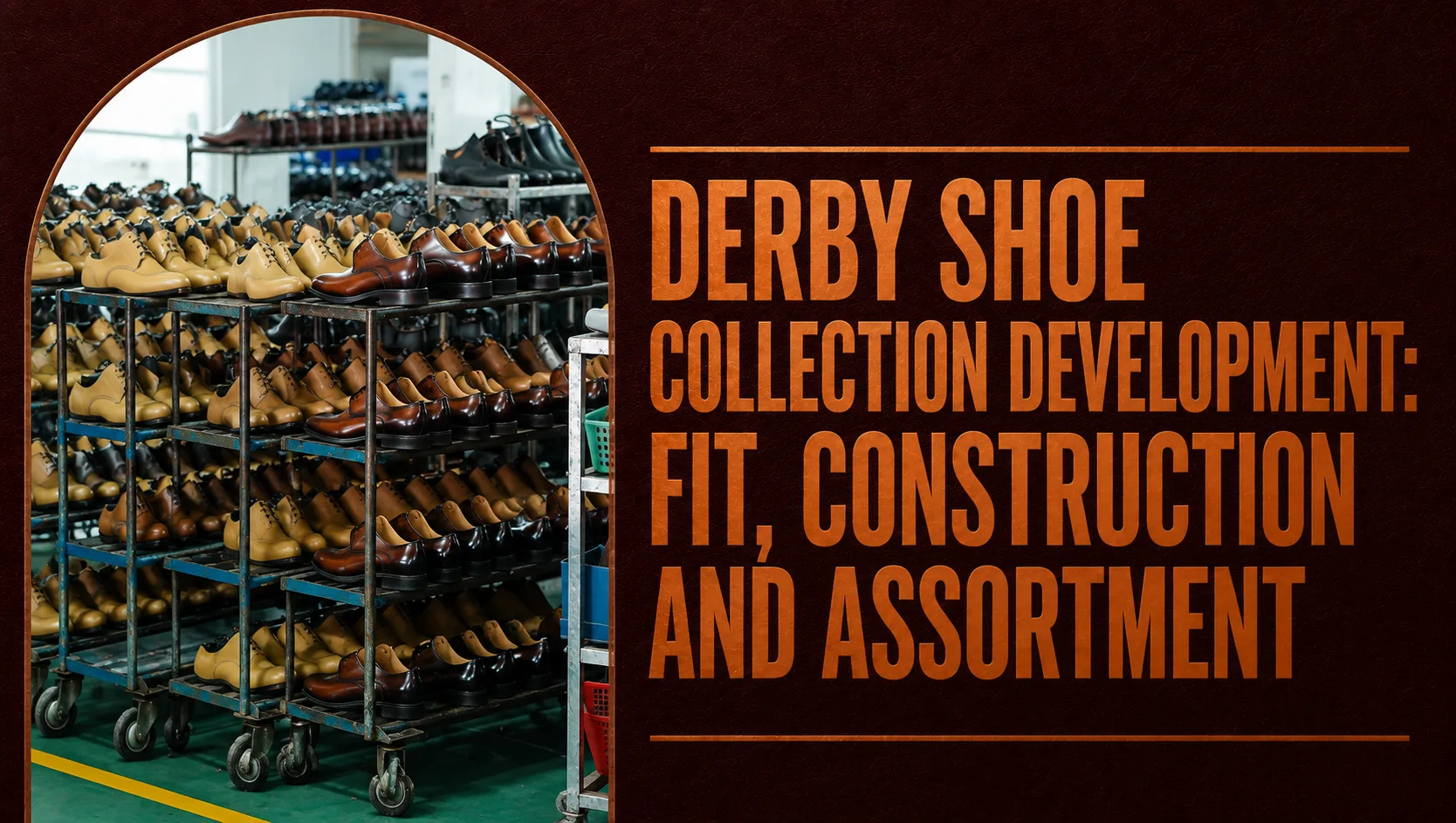
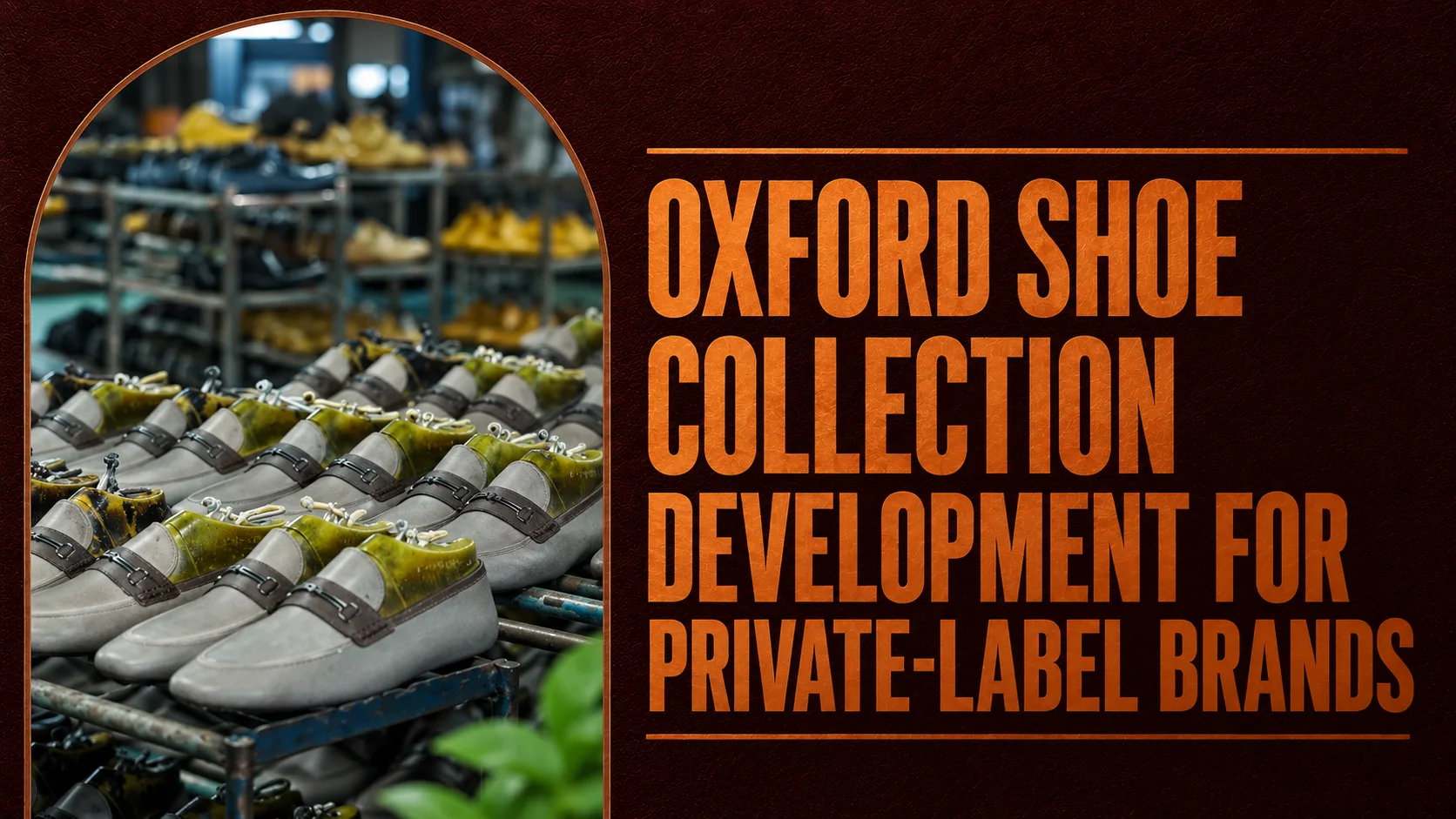
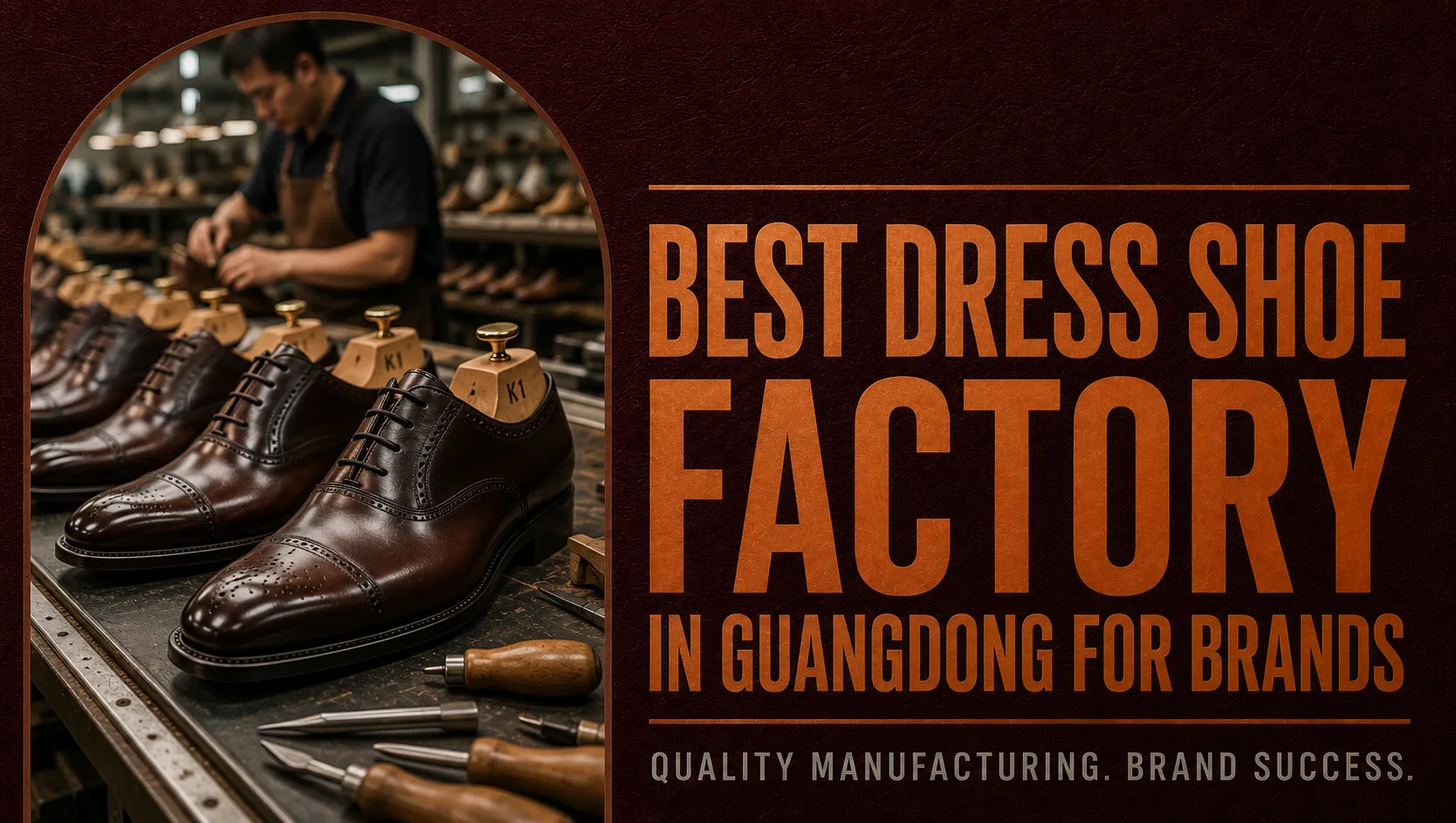
The best dress shoe factory in Guangdong for a brand is a specialist whose product engineering, construction, finishing, sampling, and quality controls match the planned collection. A Guangdong location alone does not establish that fit, and a broad shoe catalog is not the same as dress-shoe depth. Buyers should define the role of every style, test the factory with relevant samples, verify how approved details become production instructions, and compare commercial terms on the same specification. For brands building Oxford, Derby, monk strap, loafer, or dress-boot ranges, specialist fit is demonstrated through controlled decisions—not an unsupported ranking.
1. Decide Whether the Collection Needs a Specialist
A general footwear supplier can be suitable for some programs. A specialist becomes more valuable when the collection depends on dress-shoe-specific lasts, pattern balance, leather handling, structured construction, edge finishing, or formal presentation.
Use product complexity as the first test
Ask which requirements would be difficult for a broad supplier to execute consistently. A sharply defined Oxford, a more relaxed Derby, a monk strap with balanced buckle placement, and a loafer with secure heel fit create different technical demands even when they share materials or branding.
The decision should follow the collection, not a preference for one factory label. If the range uses simple constructions and established components, broad capability may be enough. If the brand needs several related styles with a controlled design language, specialist experience can reduce interpretation risk.
Require relevant evidence
Specialization should be supported by current products, specifications, sample records, process visibility, and quality criteria relevant to the proposed range. A catalog can show category exposure, but it does not prove that the current team, lasts, patterns, materials, or schedule fit the new project.
For a broader regional supplier scorecard, use the migliore fabbrica di scarpe nel Guangdong page. This page focuses on whether dress-shoe specialization improves the brand’s collection decision.
2. Build the Collection Architecture First
A manufacturer cannot demonstrate fit until the buyer explains how the collection is intended to work. Collection architecture defines the role, hierarchy, and shared design language of the styles.
Assign a job to each style
Identify the core commercial style, supporting silhouettes, seasonal variation, entry or premium position, and intended wearing occasion. An Oxford might anchor the formal offer, while a Derby adds versatility and a loafer supports less formal use. The exact roles depend on the brand.
Define which elements should remain consistent across the range: toe shape, last family, leather character, lining, outsole language, color palette, logo treatment, edge finish, packaging, or size strategy. Then identify where deliberate variation is needed.
Separate shared platforms from unique development
Using related lasts, components, materials, or packaging can simplify control, but forced standardization can weaken product fit. Ask the factory which elements can share a platform without changing appearance, comfort, or construction goals.
Record which styles require a new last, pattern, outsole, heel, buckle, or other development. That distinction affects sample planning, tooling, material commitment, approval timing, and commercial terms.
3. Verify Dress-Shoe Engineering Depth
Dress-shoe engineering links the intended silhouette to a workable last, pattern, material, construction, and finishing process. Buyers should test this chain, not simply request a visual copy.
Examine last and pattern control
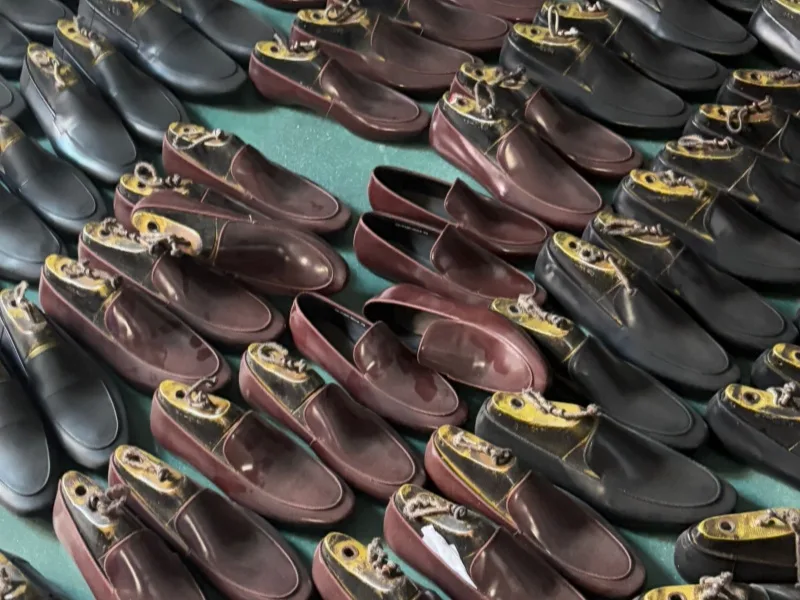
The last drives shape and fit. Ask how the proposed toe, instep, waist, heel seat, and size grading will be evaluated. Confirm how the last is identified in specifications and how sample feedback is recorded.
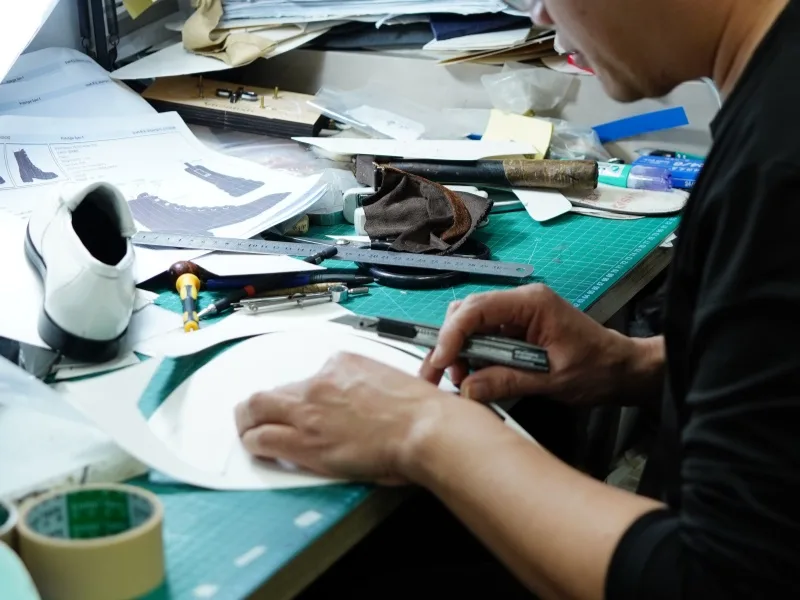
Pattern balance affects throat opening, quarters, vamp position, topline, facings, seams, and symmetry. A factory should explain how the pattern interacts with the last and material rather than treating upper shape as a surface graphic.
Test category breadth with purpose
Hengxin specializes in premium men’s dress shoes. Its relevant categories include Oxford shoes, Derby shoes, monk strap shoes, loafers, and dress boots. This supports a specialist evaluation, but the buyer should still request evidence for the exact styles and constructions in the range.
Dress Shoe Factory, the market-facing platform of Hengxin Shoe Factory, has a publicly listed factory address in Yangjiang, Guangdong, China. Buyers should verify the legal contracting entity separately and should not infer a Guangzhou or Wenzhou location.
4. Match Construction and Finishing to Brand Positioning
Construction should support the intended silhouette, flexibility, weight, price architecture, repair expectations, and customer use. No construction is automatically correct for every premium brand.
Evaluate construction as a system
Hengxin supports Goodyear welted footwear. For a Goodyear welt project, review the approved material stack, welt execution, outsole, heel, edge finishing, symmetry, and final shape. Buyers can use the pagina del produttore di scarpe con guardolo Goodyear in Cina per una revisione specifica della costruzione.
If another construction is considered, compare the trade-offs against the same product brief. Ask which design or commercial goals the construction supports, which controls change, and what evidence the factory can provide.
Define finishing standards
Finishing affects edge color, upper appearance, polish, burnishing, and the relationship between paired shoes. Hengxin supports patina color and finish development, but hand-applied effects require a reference sample, agreed viewing conditions, and an acceptable variation range.
Do not request “identical handmade color” without defining what consistency means. Control the base leather, color reference, lighting, placement of effects, pair matching, and approval process.
5. Test Sample-to-Specification Control
A strong sample is useful only when its approved details can be transferred into repeatable production instructions. Sampling therefore tests both product skill and information control.
Control the brief and revisions
The buyer should provide category, last or fit direction, construction, materials, components, colors, branding, packaging, size range, and acceptance criteria. The manufacturer should identify missing inputs, manufacturability constraints, and proposed substitutions before acting.
Every revision should record what changed, why it changed, who approved it, and which version is current. Verbal approvals create risk when several styles, colorways, or component suppliers are involved.
Freeze the production reference
Before bulk production, confirm the approved sample, specification, material and component references, branding artwork, packaging, and inspection criteria. If any item remains conditional, name the owner and deadline.
The production reference should also identify allowed variation. Leather grain, natural markings, patina, stitching, and finishing may need criteria that distinguish acceptable character from a nonconformity.
6. Evaluate Quality Across the Collection
Collection-level quality is more than judging one attractive sample. The brand needs consistency within a style, across sizes, between left and right shoes, and among related models.
Define shared and style-specific checkpoints
Shared checkpoints may include leather identity, color, logo position, labeling, packaging, and pair matching. Style-specific checkpoints may address Oxford facing behavior, loafer heel fit, monk strap alignment, boot topline, or Goodyear welt execution.
For every critical point, define the standard, checking stage, record, decision authority, and corrective action. This makes quality expectations usable by both the factory and the buyer.
Read final inspection as one control
Every finished pair undergoes final inspection before packing. That is an important final control, but it does not guarantee zero defects or replace upstream checks. Buyers should define the inspection scope, acceptance criteria, segregation method, and escalation rules for their order.
Collection consistency should be reviewed against approved references, not only within the production batch. If different styles share a leather, finish, logo, or package, the comparison should be included in the quality plan.
7. Align the Service Model and Commercial Variables
Hengxin supports OEM, ODM, and private label development. The right model depends on who owns the concept, technical direction, development decisions, and final approvals.
A mature product team may prefer an OEM structure with detailed specifications. A brand seeking more development input may use ODM or a mixed model. Private label can begin from an existing platform or a new project, depending on the scope.
Il pagina del produttore di scarpe eleganti private label page explains the service in more depth. Here, the key is whether responsibilities, ownership, sample gates, and change control are explicit.
MOQ depends on design, materials, construction, colors, sizes, branding, and packaging. Lead time should be confirmed after the specifications, sample status, material availability, order quantity, packaging, and production schedule are reviewed.
Compare quotations only when the same development, tooling, product, quality, packaging, and delivery responsibilities are included. Avoid fixed assumptions that ignore style count or collection complexity.
The comparison should also identify which dependencies remain outside the factory’s direct control and who is responsible for resolving them before production approval.
8. Apply a Specialist-Fit Matrix
The specialist should pass every material requirement for the proposed collection.
| Decision Area | Evidence of Fit | Reason to Hold |
| Collection architecture | Factory understands each style’s role and shared design language | Responses treat all styles as isolated products |
| Last and pattern | Identified lasts, fit review and controlled pattern revisions | Shape changes are not documented |
| Costruzione | Relevant samples and process controls support the brief | Construction name replaces technical evidence |
| Finishing | Approved reference and variation range are defined | Subjective approval with no control standard |
| Collection quality | Shared and style-specific checkpoints connect to records | Only one finished sample is evaluated |
| Service and commercial fit | Responsibilities, scope, variables and schedule assumptions are clear | Vague promises hide unresolved dependencies |
For an overall supplier-selection process beyond specialization, see come scegliere un produttore di scarpe eleganti.
Domande frequenti
Is a dress-shoe specialist always better than a general shoe factory?
No. A specialist is more useful when the collection relies on dress-shoe lasts, patterns, constructions, finishing, and related style consistency. Simpler or different programs may fit a broader supplier.
What should a brand send for a specialist-fit review?
Send the collection map, target customer, style roles, reference images, last or fit direction, construction, materials, colors, size range, branding, packaging, quantity profile, and acceptance criteria.
Can several styles share one last?
Sometimes, but the decision depends on silhouette, fit, pattern, construction, and intended use. The buyer should approve the result for each style rather than assuming platform sharing is invisible.
Does Goodyear welt make a collection premium?
Not by itself. Premium positioning depends on the complete product, execution, materials, fit, finishing, brand proposition, and customer expectations. Goodyear welt must serve those goals.
How should a brand approve patina finishing?
Use an approved reference, defined lighting, confirmed base leather, pair-matching criteria, placement guidance, and an acceptable color or effect range. Do not demand an undefined promise of identical hand finishing.
10. Conclusion: Choose the Specialist That Fits the Collection
The best dress shoe factory in Guangdong for a brand is the specialist that can connect collection architecture to lasts, patterns, construction, finishing, controlled samples, production references, and collection-level quality. The decision should be based on relevant evidence, not a regional label or ranking.
Hengxin can be evaluated through its specialization in premium men’s dress shoes, support for relevant product categories, OEM, ODM and private label development, Goodyear welt capability, and patina finish development. Each capability should still be tested against the proposed collection and current project conditions.
Send the collection architecture, target styles, construction, materials, finish, branding, packaging, size range and order profile for a specialist-fit review.