Tunajua viatu vya ngozi si kitu unachovaa tu — ni uwekezaji. Katika mwongozo huu tutaeleza jinsi ya kusafisha viatu vya ngozi au buti: mwongozo wa utunzaji wa viatu vya juu vya mavazi, hatua kwa hatua, kwa lugha rahisi unayoweza kufuata nyumbani au kabla ya kupeleka jozi kwa fundi wa viatu. Mapendekezo yetu yanatoka kwa uzoefu mrefu na viatu vilivyoshonwa kwa Goodyear, vilivyomalizwa kwa mkono (ikiwa ni pamoja na mistari yetu ya Hengxin iliyotengenezwa kwa mkono) na mbinu bora za sasa kutoka kwa wataalamu wakuu wa utunzaji wa ngozi.
Kwa Nini Utunzaji wa Viatu vya Ngozi Bado Ni Muhimu
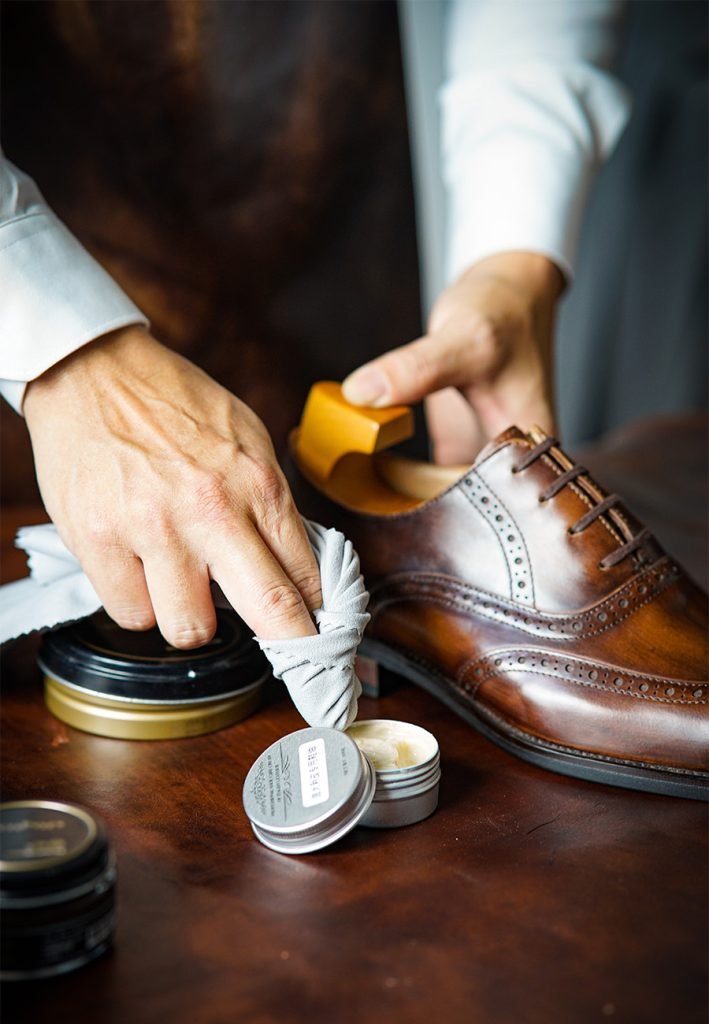
Ngozi huzeeka kama watu: kwa utunzaji sahihi inakuwa bora; ikipuuzwa, inaonekana kuzeeka kuliko ilivyo. Hata miundo ya hali ya juu kama vile viatu vilivyoshonwa kwa Goodyear, ambavyo vinaweza kupewa soli mpya na ni vya kudumu kwa muundo, hutegemea utaratibu thabiti wa utunzaji ili kufanya kazi vizuri na kudumu kwa miongo kadhaa. Kwa mshono wa Goodyear muundo huongeza utepe wa ngozi na ushonaji unaofanya ubadilishaji wa soli kuwa rahisi — lakini haulindi sehemu ya juu ya ngozi dhidi ya chumvi, uchafu, au ukavu.
Jedwali la haraka — Kwa nini utunzaji ni muhimu
| Tatizo | Nini kinatokea ikipuuzwa | Kwa nini utunzaji unasaidia |
| Uchafu na chumvi | Madoa, ngozi kukauka na kupasuka, kubadilika rangi | Kusafisha huondoa chumvi na uchafu kabla ya kuharibu nyuzi |
| Kukauka | Mipasuko na mikunjo mirefu | Kulainisha kunarejesha mafuta na unyumbufu |
| Kupuuza ubadilishaji wa soli | Uharibifu wa kudumu wa soli | Ukaguzi wa mara kwa mara unakuwezesha kubadilisha soli kwa wakati |
Tunapendekeza kutumia muda kidogo kila wiki kwa utunzaji wa msingi. Je, umewahi kununua jozi ya gharama kubwa na kuiona ikiharibika baada ya majira ya baridi moja mbaya? Sisi pia tumewahi kuwa huko. Uangalifu mdogo unaenda mbali.
Kuelewa Ngozi Kabla ya Kusafisha
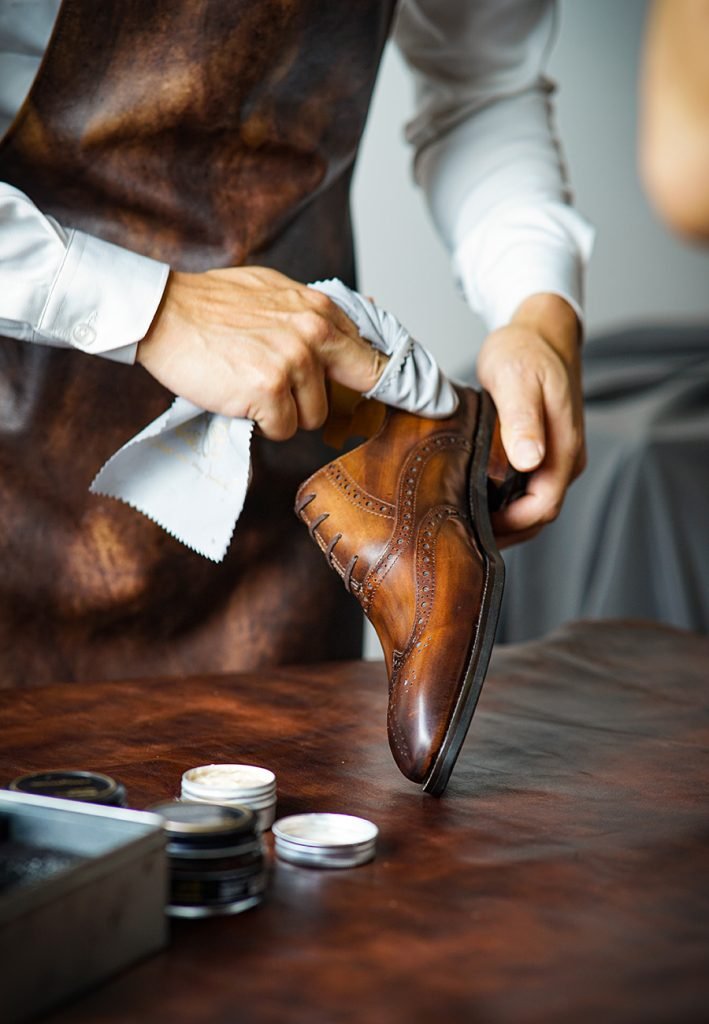
Sio ngozi zote zinafanana. Kujua unachoshughulika nacho huzuia makosa.
Ngozi za kawaida za viatu vya mavazi na jinsi zinavyotenda
- Ngozi ya nafaka kamili — tabaka la juu la ngozi; imara, hutengeneza patina ya kuvutia kwa kulainisha. Inapokea rangi vizuri.
- Ngozi iliyosahihishwa / iliyopakwa — uso umesuguliwa/kutibiwa; hudumisha rangi lakini huenda isipate patina ya kina.
- Suede / nubuck — nyuzi zilizosuguliwa; nyeti kwa maji na rangi, zinahitaji brashi maalum na dawa za kunyunyizia.
Ngozi huitikia unyevu na bidhaa kwa njia tofauti: ngozi laini ya nafaka kamili huvumilia kusafisha kwa upole kwa sabuni za ngozi zenye glycerin na visafishaji maalum; suede inahitaji kusafisha kavu na vifutio vya suede. Kwa kusafisha na kung'arisha ngozi laini tunategemea mwongozo wa tasnia ulioimarika kutoka kwa watengenezaji kama Saphir na Leather Honey.
Jedwali — Aina za ngozi kwa muhtasari
| Aina ya ngozi | Mwitikio wa maji | Mbinu bora ya msingi |
| Nafaka kamili laini | Huzuia unyevu mwepesi; inaweza kuwa nyeusi ikilowa | Safisha → lainisha → ng'arisha |
| Iliyosahihishwa/iliyopakwa | Mara nyingi hustahimili maji; tabaka la uso linaweza kupasuka liking'arishwa kupita kiasi | Kisafishaji cha upole; lainisho kwa kiasi |
| Suede / nubuck | Hufyonza haraka; hupata madoa kwa urahisi | Kusafisha kwa brashi kavu → kisafishaji cha suede → dawa ya kinga |
Nini USITUMIE
- Visafishaji vya nyumbani (Windex, bleach) — huondoa mafuta na vinaweza kuondoa kumalizia.
- Joto la moja kwa moja (vikaushaji vya nywele, vipashio joto) — ngozi hujikunja na kupasuka.
- Dawa nyingi za “kung'aa haraka” — zinaweza kujenga nta na kuziba vinyweleo.
Utaratibu wa Kusafisha Hatua kwa Hatua
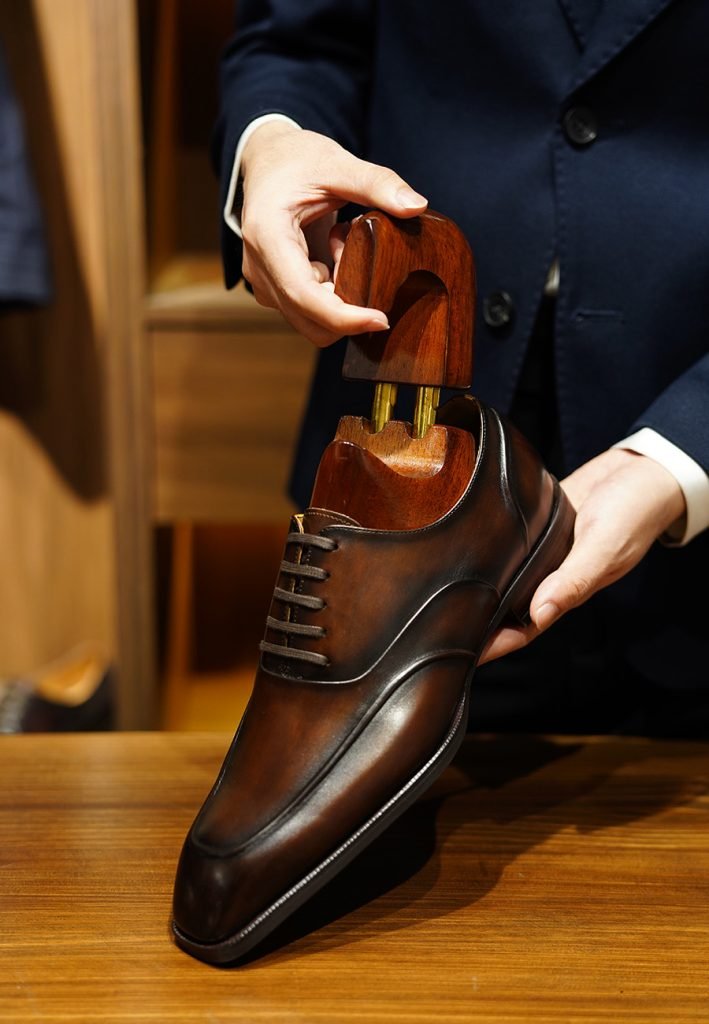
Hapa chini ni utaratibu wetu unaopendekezwa kwa ngozi laini viatu vya mavazi vya ngozi na buti. Ikiwa una suede, angalia Maswali Yanayoulizwa Mara kwa Mara mwishoni.
Kuandaa kiatu
- Remove the laces and any inserts.
- Insert a cedar shoe tree if the shoes are dry — this keeps shape while you work. Cedar shoe trees absorb moisture and help prevent odor; they’re a small investment that pays back in lifetime of good shape.
- Use a soft horsehair brush to remove surface dust and dry dirt.
Table — Prep checklist
| Item | Lengo |
| Laces removed | Prevents uneven polish |
| Cedar shoe tree | Shape + moisture absorption |
| Horsehair brush | Remove loose dirt before wet cleaning |
Cleaning the leather
- For light dirt: a damp (not wet) lint-free cloth is enough. Wipe in small circles.
- For built-up grime or old polish layers: use a glycerin-based saddle soap or a modern leather cleaner. Work a small amount into the leather with a cloth or a soft brush, then wipe away residue. Avoid oversaturating the leather — we repeat: never soak the leather. Expert shoemakers recommend cleaning products designed for leather rather than household soaps.
Quick guide — Cleaner choice
| Issue | Product type |
| Dirt & salt residue | Vinegar/water (1:1) for spot first, then leather cleaner. |
| Old wax buildup | Saddle soap / glycerin soap |
| Oily stains | Specialized degreaser or professional service |
Short case study: A client sent us a pair that had white winter rings — road salt. We first brushed off crystals, applied a 1:1 white vinegar/water solution on a cloth to neutralize salt, then used a gentle leather cleaner and conditioned overnight. The grain relaxed and the white rings disappeared without bleaching the dye. (This vinegar method is recommended by several home-care authorities for salt stains.)
Conditioning and moisture control
- After cleaning, allow shoes to dry naturally (at room temperature, away from direct heat).
- Apply a thin coat of good-quality leather conditioner — never pour the conditioner directly onto the shoe. Use a cloth and work evenly. Conditioners restore oils that drying wears away; Leather Honey and similar conditioners soak in and prevent cracking when used moderately.
Table — Conditioning cadence
| Wear level | Recommended conditioning |
| Regular office wear (2–3 days/week) | Conditioning every 6–8 weeks |
| Heavy winter use | Conditioning monthly during season |
| Rare use | Condition before long storage |
Polishing for protection and shine
- Match polish color to the leather (or use neutral).
- Apply a thin, even coat of cream or wax polish.
- Let it dry for a few minutes, then buff with a horsehair brush and finish with a soft cloth for a mirror shine.
We recommend creams for restoring color and wax for protection. For professional finishes (patina, glazing), or if your pair is a Hengxin patina model, follow the specific finish guidance on the product page to protect the hand-colored layers.
Long-Term Shoe Care Habits
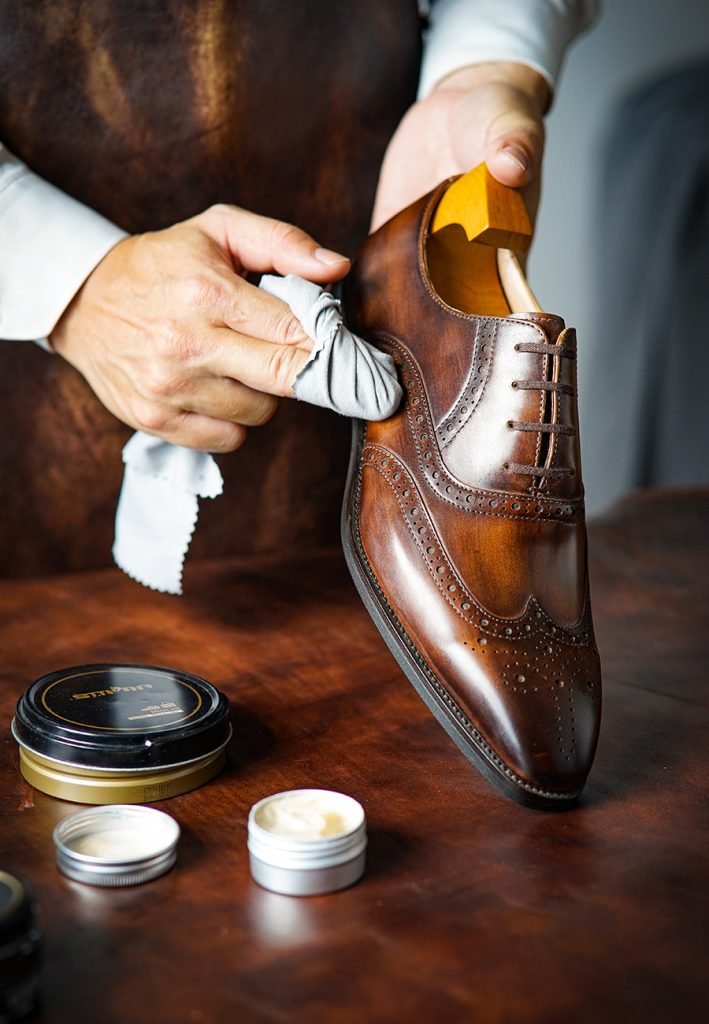
Caring for leather isn’t a one-off; it’s habits.
Storage and rotation
- Use cedar shoe trees after every wear if you can; they pull moisture out and prevent toe-curling. (Yes, really — cedar trees make a difference.)
- Rotate your shoes. Wearing the same pair every day shortens their life because moisture and compression don’t have time to recover.
Table — Rotation strategy
| Number of pairs owned | Rotation plan |
| 1–2 | Rest 48 hours between wears |
| 3–5 | Rotate daily for even wear |
| 6+ | Match shoe to occasion; rest time naturally increases |
Seasonal maintenance
- Rainy/winter months: Use a dedicated waterproofer or Saphir Winter care products to neutralize salt and protect the leather. If wet, stuff with newspaper (for absorbency) and cedar shoe trees after the outer surface dries.
- Heat and summer: Keep shoes out of direct sunlight to avoid dye fading and drying.
When to call a professional
Deep cracks, separated linings, or sole-edge damage should go to a trained cobbler. Goodyear-welted footwear is designed to be resoled, and a cobbler can replace soles many times over the shoe’s life. Leaving these issues untreated accelerates permanent failure.
Conclusion: Care Today, Quality Tomorrow
We believe great leather rewards simple, repeatable care. Whether you wear our Hengxin Goodyear-welted Oxfords to boardrooms or black-tie events, the basics — clean, condition, polish, and store properly — will keep them performing and looking their best. Make maintenance a small ritual, not a chore: a ten-minute evening routine once a week will protect hundreds of walking hours.
Ready to give your pair the attention they deserve? Visit our materials page to learn about the leathers we use and how they respond to care, or see specific product care notes on individual models.
Call to action: Explore our maintenance kits and cedar shoe trees, or get a consultation for professional restoration — because great shoes are worth a great routine. We’ll walk with you.
Maswali Yanayoulizwa Mara kwa Mara
How often should I clean my leather shoes?
For light office wear, dust and wipe weekly; a deeper clean plus conditioner every 6–8 weeks. Heavy or winter use needs more frequent attention.
How do I remove salt or water stains from leather boots?
Brush off crystals, then wipe with a 1:1 solution of white vinegar and water. Follow with a leather cleaner and conditioner to restore oils. Avoid scrubbing harshly.
What is the best leather shoe cleaner?
We recommend glycerin-based saddle soaps or specialist cleaners from established brands (e.g., Saphir) for smooth leathers; Leather Honey and similar conditioners are good for restoring oils. Always spot tests.
How do I keep leather shoes from cracking?
Routine conditioning, avoiding direct heat, and using cedar shoe trees after wear are the core defenses. If cracks are deep, see a cobbler before the damage spreads.
How can I make my leather shoes shine like new?
Clean, condition, then apply cream for color and wax for protection. Buff in stages — horsehair brush, then soft cloth. For a high gloss, finish with small circular motions and patience. A mirror shine is a craft; it rewards repetition.