Bofya ili kupanua Jedwali la Yaliyomo
Yaliyomo
A rack mount battery should be selected as a defined rack module, not as a loose combination of voltage and Choose among Qualified Manufacturers through Comparable Evidence
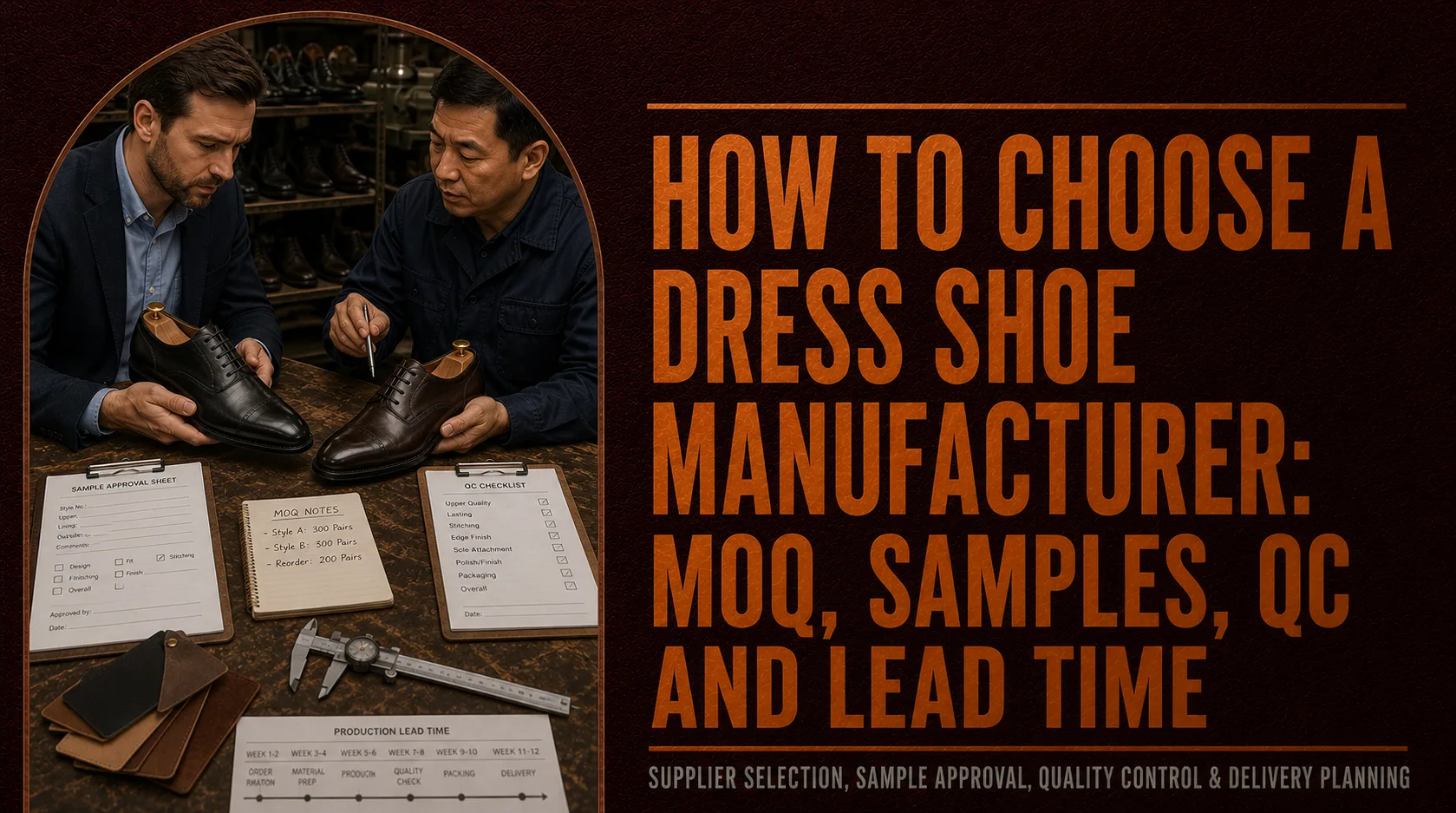
Dress shoe manufacturers should be selected through a chain of comparable evidence, not by the first quotation, catalog breadth or an unsupported capacity number. A B2B buyer should give candidates the same product brief, confirm category and construction fit, test how each supplier translates decisions into controlled samples, and verify quality authority, current production conditions and commercial assumptions. The final comparison should connect the approved sample with materials, process controls, MOQ drivers, schedule dependencies, packing and written deviations. N001 owns the final choice among qualified dress-shoe manufacturers; N002 supplies the broad capability checklist, N003 provides live factory verification, and N004 covers original customization, IP and tooling risk.
Start with the intended customer, retail position and product specification. Then compare factories against the same brief, approve a physical sample, review how defects and changes are controlled, and confirm MOQ, capacity and lead time only after the specification is stable. This sequence makes a dress shoe manufacturer quotation comparable and prevents a low initial number from hiding material substitutions, missing tooling, vague packaging or an unrealistic schedule.
Build Selection Gates before Weighted Scoring
Translate the Range Plan into Pass-Fail Requirements
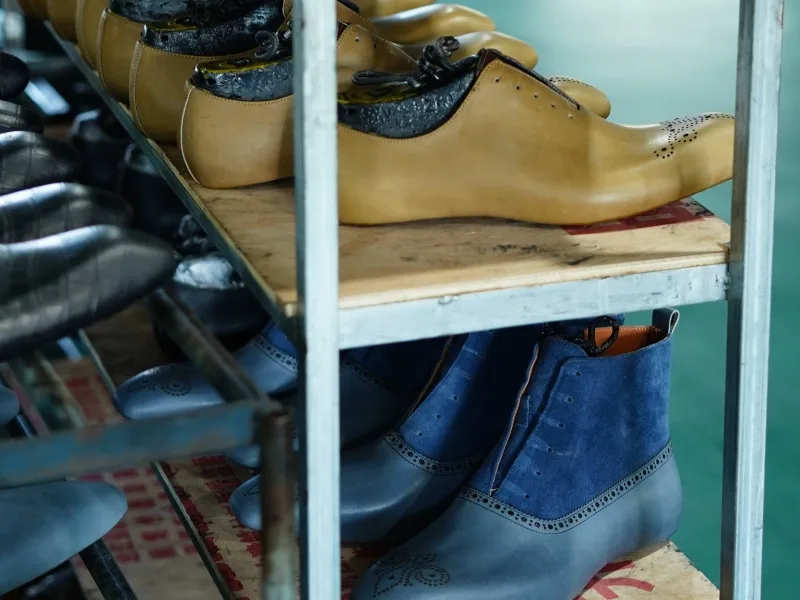
Start with category, construction, target wearer, last and fit, materials, components, finish, sizes, branding, packaging, market and launch requirements. Mark the capabilities that must exist before sampling and those that may be proven during development. A supplier that fails a non-negotiable product or ownership gate should not recover through a low price or polished presentation.
- Confirm recent production in the relevant men’s dress-shoe category and construction.
- Ask who owns pattern engineering, last development, sample coordination and final approval.
- Check whether material sourcing, color control and packaging can follow the same written specification.
- Identify which work is performed in-house and which operations are subcontracted.
- Request the records that connect an approved sample to bulk production.
Score Current Evidence, Not Sales Confidence
A confident email is not evidence of control. Ask for a continuous explanation of the production route, current work orders, sample records, inspection criteria and change approvals. A dress shoe manufacturer evidence checklist should connect each buyer requirement with something observable: a sample, specification, production record, inspection form, material document or responsible owner. Evidence also needs context. One attractive sample does not prove repeatability across colors, sizes and delivery lots.
Score the evidence by project risk rather than giving every checklist line the same weight. A new last, unfamiliar construction or hand-applied finish deserves more validation than a standard box label. A tight launch window increases the importance of material readiness and current line loading. A wide size range increases the importance of grading and fit approval. This weighting turns the checklist into a decision tool: buyers can identify which uncertainties must be closed before sampling, which can be resolved during development, and which commercial risks require a contingency plan before the purchase order. Require candidates to disclose uncertainty in a comparable way. An unanswered point, proposed alternative and confirmed capability are different states and should receive different scores. Record what evidence would move a conditional item to confirmed, who owns that evidence and when the decision must close. This keeps the scoring matrix from rewarding a confident but unsupported yes over a careful, testable response.
Selection matrix: convert supplier claims into verifiable buying decisions.
| Buyer requirement | Ushahidi wa kuomba | Decision question |
| Category fit | Recent comparable styles, construction details and sample workmanship | Has the factory solved a similar product problem? |
| Development control | Tech pack review, sample comments and version history | Can changes be traced before bulk production? |
| Udhibiti wa ubora | Inspection points, defect criteria, records and corrective action | Is quality managed before final packing? |
| Commercial fit | Assumption-based quotation, MOQ logic and capacity plan | Are price and schedule tied to the same specification? |
| Communication | Named owners, response path and approval responsibilities | Will decisions reach the production team accurately? |
Compare Product Fit and Operating Model together
Test Category, Construction and Technical Translation
Dress shoes concentrate risk in details that can look minor in a quotation. Last shape affects fit and silhouette. Pattern lines influence balance and creasing. Leather selection changes appearance, yield and cost. Welt, outsole, heel and finishing choices change equipment, labor and lead time. Ask the factory to explain these interactions in relation to the proposed style. A technical answer should identify trade-offs rather than declare that every option is easy.
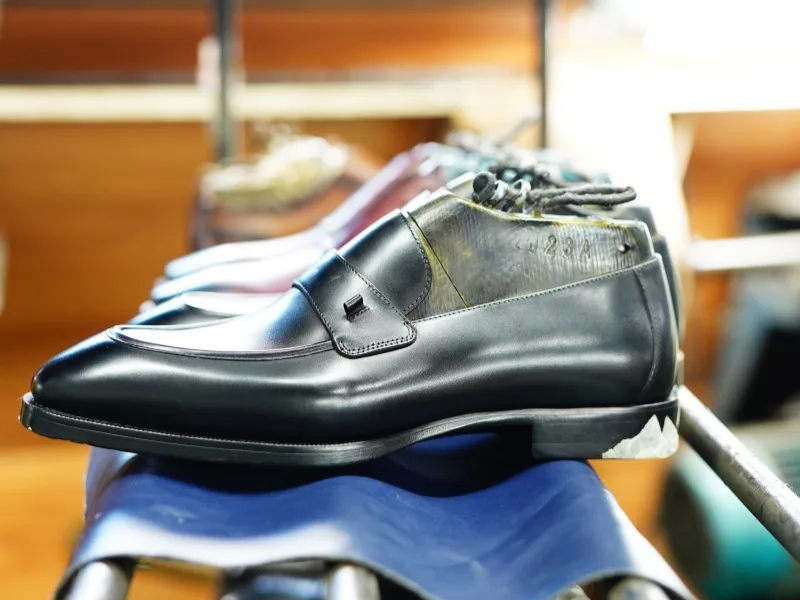
Dress Shoe Factory, the market-facing platform of Hengxin Shoe Factory, specializes in premium men’s dress shoes. Relevant categories include Oxford, Derby, monk strap, loafer and dress-boot programs. That positioning is useful when the project falls inside the category, but buyers should still verify the exact construction, material, last and finishing requirements for the order. A specialization statement narrows the search; it does not replace sample approval.
Commercial Fit for the Buyer Model
Footwear brands may need design translation and private-label control. Importers may emphasize documents, inspection and delivery coordination. Wholesalers and distributors may care more about size runs, repeatability and packaging efficiency. The same factory can serve these buyers differently, so clarify the operating model. Determine whether the project is OEM, ODM or private label, who supplies the technical specification, and who approves materials, samples and production changes.
Use Sample Development to Reduce Selection Risk
Give Each Sample Round an Approval Question
Dress shoe manufacturer sample development should reduce uncertainty in stages. Begin with a written brief and reference materials. Confirm feasibility and identify missing decisions before physical work starts. Review the first sample for concept, construction and visible workmanship; then separate fit corrections from cosmetic requests. When a revised sample is approved, freeze the version, materials, color references, components and packaging details used for production.
- Issue one controlled brief with drawings, measurements, materials, construction and target market.
- Record feasibility questions and decisions before the first sample is made.
- Review the first sample against labeled criteria rather than general comments.
- Separate fit, construction, appearance and packaging corrections.
- Approve a dated reference sample and change log before production release.
Write Acceptance Criteria for the Approved Sample
An approved sample should function as a production reference, not as a photograph in a chat history. Record last code, size, pattern revision, leather article, color standard, lining, reinforcement, construction, outsole, heel, edge finish, branding and packing method. Add tolerances where they matter. If hand finishing such as patina is involved, define the acceptable color range and review conditions instead of expecting every pair to look mechanically identical.
Verify Quality Authority before Commercial Award
Trace Criteria from the Approved Sample to Release
Quality control is stronger when it starts before assembly. Buyers should ask how incoming materials are checked, how patterns and components are identified, where in-process checks occur, how an approved sample is available to production, and who has release authority. Final inspection matters, but it cannot efficiently correct a wrong last, mixed leather shade or construction error discovered after the shoe is complete.
- Material identity, shade grouping and visible defect screening before cutting.
- Pattern, stitching, symmetry and component checks during upper preparation.
- Lasting, construction, sole and heel checks at defined production stages.
- Appearance, measurements, labeling and packing checks against the approved reference.
- Defect classification, disposition and corrective-action records for recurring issues.
Ask for Records That Explain Exceptions
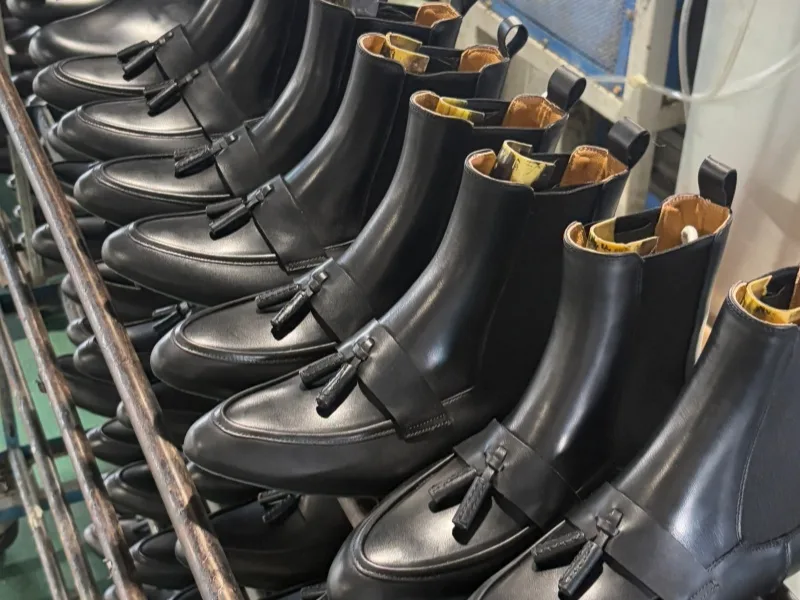
A useful dress shoe manufacturer factory audit looks beyond a clean workshop. Review how the factory records nonconforming material, rework, rejected pairs and approved deviations. Ask who can stop or release production and how buyer approval is captured. Hengxin’s approved wording states that every finished pair undergoes final inspection before packing. This should be read as a control stage, not as a promise that every outcome will be flawless; criteria and records still require project-level verification.
Sample-to-production quality gates for a men’s dress-shoe order.
| Lango | Buyer approval | Factory record | Main risk controlled |
| Vipimo | Tech pack and material decisions | Feasibility review | Unpriced or impossible requirement |
| Development sample | Construction and appearance | Sample comments | Wrong product direction |
| Fit or size set | Measurements and fit decisions | Size review record | Grading or fit inconsistency |
| Pre-production | Frozen reference and changes | Production release | Uncontrolled revision |
| Final inspection | Acceptance criteria | Inspection and disposition | Shipment of nonconforming goods |
Normalize MOQ, Price and Schedule after the Product Is Stable
Identify the Binding Commercial Assumptions
MOQ is an outcome of the specification and supply chain. Design, construction, leather article, color count, size mix, branded components, packaging and setup all affect the workable minimum. Hengxin’s approved commercial wording is that MOQ depends on these project variables. Buyers should not expect a universal number or a lowest-MOQ promise. Instead, ask which constraint sets the minimum and whether changing a color, component or pack plan would alter it.
Price should be compared with the same logic. A dress shoe manufacturer price factors review separates upper leather, lining, outsole, heel, construction labor, tooling, finishing, branding, packaging, quality requirements and order quantity. Request assumptions in writing. If two bids differ, identify whether the gap reflects material grade, included development work, inspection scope, packaging, payment terms or delivery basis before treating either as cheaper.
Verify Production Capacity and Lead Time
A headline capacity figure is not enough for planning. Capacity depends on product mix, construction, available line time, material readiness, current orders and the requested delivery window. Ask for a product-specific line plan and the assumptions behind it. Dress shoe manufacturer lead time should likewise be confirmed after specifications, sample status, materials, quantity, packaging and scheduling are reviewed. Separate sample time, material preparation, production, inspection and logistics. Build the schedule backward from the required release and show sample decisions, material readiness, tooling, production, inspection, packing and logistics separately. Compare candidates on the same approval dates and buyer response assumptions. A manufacturer should identify the earliest warning point for a threatened milestone and the recovery choices available; a shipment promise without dependencies is not a usable lead-time plan.
Normalize quotations before selecting a manufacturer.
| Quote element | Required clarification | Why it changes the decision |
| Product scope | Exact style, construction, materials, sizes and colors | Prevents unlike product assumptions |
| Development | Sample rounds, tooling, patterns and approval responsibilities | Reveals work excluded from unit price |
| MOQ | Constraint by material, color, size, branding and packaging | Shows whether the minimum is operational |
| Ubora | Inspection stages, acceptance criteria and third-party access | Connects price to control level |
| Ratiba | Sample, material, production, inspection and shipping milestones | Exposes unsupported delivery promises |
Resolve Supplier Risk through Staged Commitment
Escalate Contradictions before Deposit or Bulk Release
Risk often appears as inconsistency between answers. A supplier may quote before reading the specification, avoid naming subcontracted operations, resist sample documentation, give a fixed MOQ without explaining the constraint, or promise capacity without a current schedule. None of these alone proves failure, but each should trigger a deeper question. The goal of a dress shoe manufacturer sourcing guide is to make uncertainty visible before money, materials and launch dates are committed.
Use a staged commitment. Start with document review, then a capability conversation, sample development and evidence review. Add a live video route or on-site audit when risk justifies it; the detailed shoe factory capability verification process can support that step. Do not treat a business license, edited factory video or single sample as complete proof. Evidence should be continuous and connected to current work.
Issue One RFQ and Require Written Deviations
A dress shoe manufacturer RFQ checklist should give every candidate the same decision inputs. Send enough detail to expose assumptions without disclosing more proprietary information than the stage requires. Ask candidates to list deviations and open questions rather than silently replacing materials or construction. For a broader screening framework, use the footwear manufacturer capability checklist before narrowing to dress-shoe specialists.
- Target customer, retail position, destination market and planned sales channel.
- Reference design, technical drawings, construction, last and fit requirements.
- Upper, lining, reinforcement, outsole, heel, finish and color specifications.
- Size range, size mix, color count, branding, labels and packaging.
- Sample expectations, quantity, target schedule, inspection plan and quotation basis.
When a project requires original design ownership, special tooling or confidentiality controls, the custom shoe manufacturer selection guide provides a more specific path. Keep the current decision focused: select a factory only when its evidence, sample and commercial explanation remain consistent across the same written brief.
Dress Shoe Manufacturer Selection FAQs
What is the first gate when choosing dress shoe manufacturers?
Confirm category and construction fit, identity, operating model and willingness to work from a controlled brief before comparing samples or price.
How should buyers make factory quotations comparable?
Give each candidate the same product, quantities, size-color plan, development, testing, branding, packing, inspection, delivery basis and deadline, then require exclusions and deviations.
What should a selection sample prove?
It should prove named questions about fit, construction, material, workmanship and technical handoff. Later approval must identify the production-controlling version and open conditions.
When is a live factory audit necessary?
Use it when identity, current operations, subcontracting, process capability or capacity materially affects the award. N003 provides the continuous verification route.
What determines dress shoe manufacturer MOQ?
Materials, colors, size mix, construction setup, tooling, branded components, packaging and commercial policy can bind. Ask which event controls the actual order.
How should buyers verify production capacity?
Tie the required process route, current order mix, material readiness, available line window and relevant recent output to the proposed schedule.
What belongs in the final award record?
Record verified strengths, sample-dependent conditions, commercial assumptions, unresolved risks, evidence owners, closure dates and the stage that cannot proceed until each condition closes.
Make the Final Choice through a Controlled Award
The selected manufacturer should have passed the non-negotiable product and ownership gates, produced a controlled sample, shown usable quality authority and supplied commercial terms based on the same released brief. Record conditions and evidence owners rather than converting unresolved points into informal promises.
Hengxin supports OEM, ODM and private-label development for relevant premium men’s dress-shoe programs subject to project review. Send the style, construction, materials, sizes, colors, branding, packaging, quantity, market, sample needs and schedule so feasibility and open evidence can be assessed before a bulk commitment.